Best Countries for Affordable Graduate School in 2026
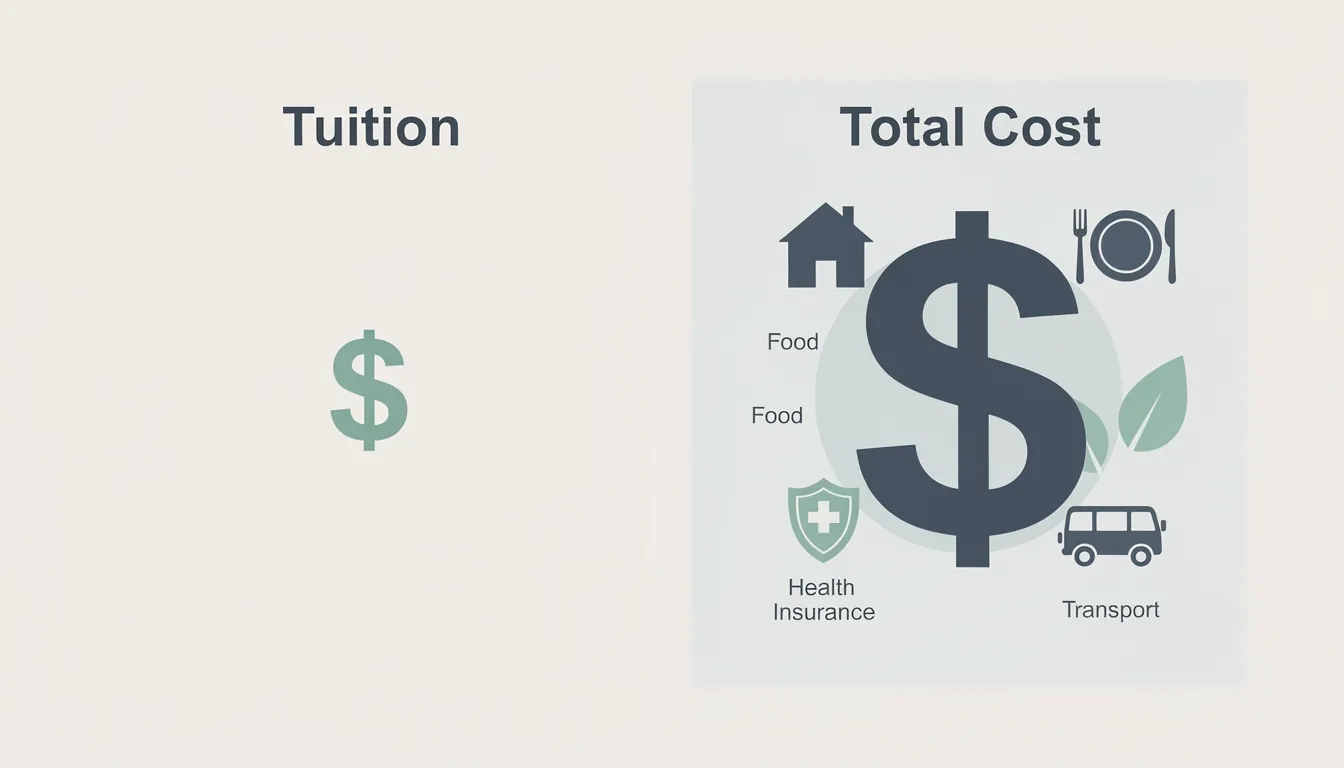
When people say "go to Germany for free," they're not wrong — but the full picture in 2026 is messier than the viral Reddit posts suggest. Norway changed its rules in 2023. Finland did the same in 2017. And the "zero tuition" countries often come with living costs that quietly outrun a cheap US state school. The good news: genuinely affordable options still exist. Several countries let you earn a research master's from a respected institution for under $12,000 total per year, tuition and rent combined. This guide maps the real numbers, the catches, and how to decide which country actually fits your situation.
The Total Cost Equation Most Students Get Wrong
Everyone fixates on tuition. That's the wrong number.
The honest comparison is total annual spend: tuition plus rent plus food plus health insurance plus transit. A country with free tuition but €1,800/month in rent can cost more over two years than one charging €4,000/year in fees with €400/month in living expenses.
Here's a rough all-in comparison for a standard 12-month year:
| Country | Tuition/Year | Living Costs/Month | Est. Annual Total |
|---|---|---|---|
| Germany | €500–€700 (fees only) | €800–€1,100 | €10,100–€13,900 |
| Czech Republic | €1,000–€4,000 | €500–€750 | €7,000–€13,000 |
| Lithuania | €1,150–€5,000 | €200–€380 | €3,550–€9,560 |
| Hungary | €1,000–€8,000 | €350–€550 | €5,200–€14,600 |
| Portugal | €500–€1,500 | €500–€750 | €6,500–€10,500 |
| Italy | €0–€2,000 | €600–€1,500 | €7,200–€20,000 |
| France | €3,770 | €700–€1,000 | €12,170–€15,770 |
| Taiwan (TIGP) | ~$1,866 | $600–$900 | ~$9,066–$12,666 |
| Malaysia | ~$2,000–$5,000 | $330–$660 | ~$6,000–$12,920 |
(TIGP = Taiwan International Graduate Program at Academia Sinica. Costs at May 2026 exchange rates.)
The biggest surprise in this table: Lithuania and Hungary produce the lowest all-in totals in Europe, yet almost no one mentions them. Germany wins on tuition but Munich's living costs can push monthly spend past €1,300.
Germany: Still the Best Default for Most Students
Let me state this plainly: Germany's public universities charge no tuition for most master's programs, regardless of your nationality. You pay a semester contribution of €250–€350 covering administration, student services, and usually a regional transit pass you'd buy anyway.
One critical exception — Baden-Württemberg. That southwestern state charges non-EU students €1,500/semester. Universities like Heidelberg, Freiburg, and Stuttgart all sit inside it. Check the state before you apply, not after.
Work authorization is where Germany genuinely separates itself. International students can work 120 full days or 240 half-days per year, enough to meaningfully offset living costs. Post-study, the 18-month job-seeker visa gives graduates real runway to find employment without scrambling. TU Munich (consistently ranked top 50 globally for engineering) charges those same token semester fees as a regional university.
The trade-off is language. Most programs at German public universities run in German. English-taught master's programs exist, particularly in STEM and business, but you'll spend more time finding one that matches your specialty than in the Netherlands or Ireland. Budget extra research time before committing.
Western Europe: France, Italy, Portugal, Spain
France raised fees for non-EU students in 2019, jumping from roughly €243/year to €3,770/year for master's programs. That's a real increase, but it's still under 10% of comparable US program costs. Living costs outside Paris run €700–€950/month. The grandes écoles (Sciences Po, HEC, ESSEC) are a different story at €12,000–€15,000/year, but the standard public university system stays genuinely affordable for a Western European capital-city education.
Italy deserves more attention than it gets. Public universities charge €0–€2,000/year based on a means-tested income calculation — lower-income international applicants often pay nothing at all. The University of Bologna (founded 1088, the oldest continuously operating university in the world) charges international graduate students roughly €900–€1,400/year. Living costs vary sharply by city: Rome and Milan run €900–€1,500/month, but university towns like Trento, Pavia, or Perugia sit under €800.
Portugal has emerged as a genuine contender over the past four years. Tuition runs €500–€1,500/year, living costs are among the lowest in Western Europe at €500–€750/month, and Lisbon has become a legitimate tech and startup hub. For students in tech or business fields where industry access during school matters, that location context is real.
Spain rounds it out at €300–€3,500/year at public universities with living costs of €600–€1,000 outside Madrid. Quality varies more than in Germany or France, so research specific programs rather than defaulting to the cheapest city.
Central and Eastern Europe: Where the Real Bargains Hide
Most budget-conscious students stop looking at Western Europe. That's where they leave money on the table.
Czech Republic charges €1,000–€4,000/year for English-taught master's programs. Charles University in Prague — ranked in the global top 300 — costs a fraction of peer institutions. Prague's living costs run €500–€750/month for a student budget, which is low for a city with a real cultural scene and a growing tech sector. Programs in Czech are free, though most international students arrive without that language background.
Hungary runs €1,000–€8,000/year depending on program, with living costs of €350–€550/month in most cities. The Stipendium Hungaricum scholarship, offered to students from 80+ participating countries, covers full tuition and a monthly living stipend. Apply to that program before paying anything out of pocket — it fundamentally changes the math.
Lithuania is the sleeper pick in this entire list. Monthly living costs in smaller cities run €200–€380, the lowest in the EU by a wide margin. Vilnius University offers English-taught programs starting at €1,150/year. The degree carries EU recognition. For students who want the lowest possible total spend while keeping a credible European credential, Lithuania is the answer most guides don't mention.
Asia: Taiwan and Malaysia
Taiwan's TIGP program is genuinely underrated — to the point where most US academic advisors have never heard of it. The Taiwan International Graduate Program, run by Academia Sinica (Taiwan's national research academy), charges NTD 28,847 per semester for the first four semesters. At current rates, that's $933 per semester. Programs are taught entirely in English. PhD candidates commonly receive monthly stipends that cover most living costs.
Taiwan's MOE Scholarship extends the value further: it covers up to NT$40,000/semester in tuition plus NT$20,000/month in living stipend for qualifying students. The effective out-of-pocket cost approaches zero for funded students. For STEM researchers specifically, TIGP offers 40+ interdisciplinary PhD programs in fields ranging from molecular science to earth systems.
Malaysia is a different kind of arbitrage. Tuition runs $2,000–$5,000/year, living costs $330–$660/month. Graduate programs are taught in English. The specific angle worth knowing: British-curriculum branch campuses operate there — Monash University Malaysia, University of Nottingham Malaysia, Heriot-Watt University Malaysia — at roughly 30–40% of the home campus price. If a UK-brand degree matters for your career but UK fees are off the table, this path is worth a hard look.
The Norway and Finland Warning
Both countries appear on every "free tuition" list published before 2022. Both have significant caveats that outdated articles consistently miss.
Norway changed its policy in 2023. Non-EU/EEA students now pay €8,000–€15,000+ per year at most universities. Only PhD programs remain tuition-free for all nationalities. Norway's living costs also run €1,000–€1,400/month — among Europe's highest. For non-EU graduate students, Norway is no longer a budget destination.
The mistake isn't planning to study in Norway. The mistake is trusting a 2021 blog post to plan a 2026 budget.
Finland made the same move earlier — non-EU/EEA students have paid tuition for English-taught master's programs since 2017, with fees ranging €4,000–€18,000/year. The partial offset: Finnish universities are legally required to offer scholarship opportunities covering 50–100% of tuition for non-EU applicants. So Finland can still be affordable, but only if you actively apply for those scholarships — the fee-free assumption is gone.
Sweden follows the same pattern. Non-EU students pay tuition, but the Swedish Institute scholarship is one of Europe's more generous programs, covering full tuition plus a living stipend. Apply even if the odds feel long.
How to Choose: A Decision Framework
The country-first approach is usually backwards. Start with your field and degree type, then filter by country and cost.
Step 1: PhD or master's? PhD programs in Germany, Finland, and Norway are often fully funded regardless of nationality — the tuition situation changes completely. If research is your goal, those options reopen even in expensive countries.
Step 2: Language flexibility? Committing 6–12 months to learning German or Czech before enrollment unlocks programs that are effectively free. English-only students have solid options in Central Europe and Asia Pacific, but fewer than the language-flexible path.
Step 3: Post-study work plans? Germany, France, and Portugal have established post-study work visa frameworks. If staying in Europe after graduation is part of the plan, this matters more than saving €500/year on tuition.
Step 4: Check scholarships before finalizing any country.
- Hungary: Stipendium Hungaricum (80+ eligible countries, covers tuition + stipend)
- Taiwan: MOE Scholarship (covers tuition + NT$20,000/month stipend)
- Sweden: Swedish Institute Scholarship (full tuition + living allowance)
- Finland: University-specific scholarships (legally required to offer them)
Apply to scholarships before locking in a country. They change the math completely.
Step 5: Verify rankings for your specific field. A degree from an unranked institution is an expensive mistake regardless of tuition. Check QS World University Rankings by Subject before committing. Charles University, TU Munich, and University of Bologna all hold strong field-specific rankings that matter to employers.
My position: Germany is the right default for most students, but Czech Republic and Hungary deserve serious consideration if low living costs matter and you're open to being slightly off the standard path. For STEM-focused researchers, Taiwan's TIGP program is a legitimate world-class option that most Western advisors have never recommended.
Bottom Line
- Calculate total annual cost — tuition plus living plus health insurance — not tuition alone. Lithuania and Hungary often beat Germany on the all-in number.
- Germany is the strongest default: no tuition at most public universities, real work rights, 18-month post-study visa, globally recognized degrees. Confirm your state isn't Baden-Württemberg.
- Apply for scholarships before choosing a country. Stipendium Hungaricum, Taiwan MOE, and Swedish Institute scholarships can eliminate most costs entirely.
- Norway is no longer a free-tuition option for non-EU students. Update your sources if you've been reading anything published before 2023.
- Taiwan's TIGP program is worth researching if you're in STEM — the price-to-quality ratio is among the best on this list.
Frequently Asked Questions
Is Germany actually free for international graduate students?
Mostly yes, with two exceptions. Most German public universities charge only a semester contribution of €250–€350 covering admin and a transit pass. Exception one: Baden-Württemberg state, where non-EU students pay €1,500/semester. Exception two: specialized executive and MBA programs at public universities can charge tuition. Check your specific university and its state before assuming the fee is zero.
Didn't Norway used to be free for everyone?
Yes, and it no longer is. Norway introduced tuition fees for non-EU/EEA students in 2023 — most programs now cost €8,000–€15,000+ per year. PhD programs remain free for all nationalities. EU/EEA students still pay nothing. If you're not from the EU or EEA and you're pursuing a master's, Norway should be off your budget list unless you have substantial external funding.
What's the best country for STEM graduate programs on a tight budget?
Germany for master's programs — TU Munich, RWTH Aachen, and KIT are world-class and essentially free. For PhD-level research, Taiwan's TIGP program at Academia Sinica offers fully English-taught programs with stipends that cover living costs, totaling around $933/semester in fees. Czech Republic's Charles University and Brno University of Technology are strong mid-tier options with good research infrastructure.
Do I need to learn the local language to study cheaply?
No, but language flexibility cuts costs significantly. Committing to German or Czech before enrollment unlocks programs that English-only students can't access. For students who need English-taught programs, Central Europe has expanded its offerings considerably — Charles University in Prague alone lists 200+ English-taught degree programs.
How does health insurance factor into the real cost?
It's easy to miss and genuinely significant. Germany requires documented health insurance for enrollment; student rates through public insurers like TK or AOK run €110–€120/month if you're under 30. France covers most students under the national health system for about €217/year. Hungary and Czech Republic have lower mandatory costs. Budget €100–€200/month as a placeholder and verify the specific requirement for each country early in your research.
Are degrees from these countries recognized by US or international employers?
Yes, with nuance. Degrees from major public universities in Germany, France, Czech Republic, and other EU countries are recognized by global employers, especially in STEM, business, and research. The deciding factor is the institution's ranking in your specific field, not the country name. A degree from TU Munich carries real weight; a degree from an unranked regional school does not. Check QS World University Rankings by Subject for your program before you commit.
Sources
- 7 Affordable EU Countries to Study a Masters Abroad in 2026 | Mastersportal
- Tuition-Free Universities in Finland, Norway, and Germany | Mastersportal
- Europe on a Budget: Best Countries for Affordable Master's Degrees | Nomad Credit
- Countries With Free or Low Tuition Universities | Scholars4Dev
- Taiwan International Graduate Program Tuition & Costs | TIGP Academia Sinica
- Tuition Fees and Living Costs in Malaysia in 2026 | Mastersportal