The Best Resources for Self-Studying AP Classes in 2026
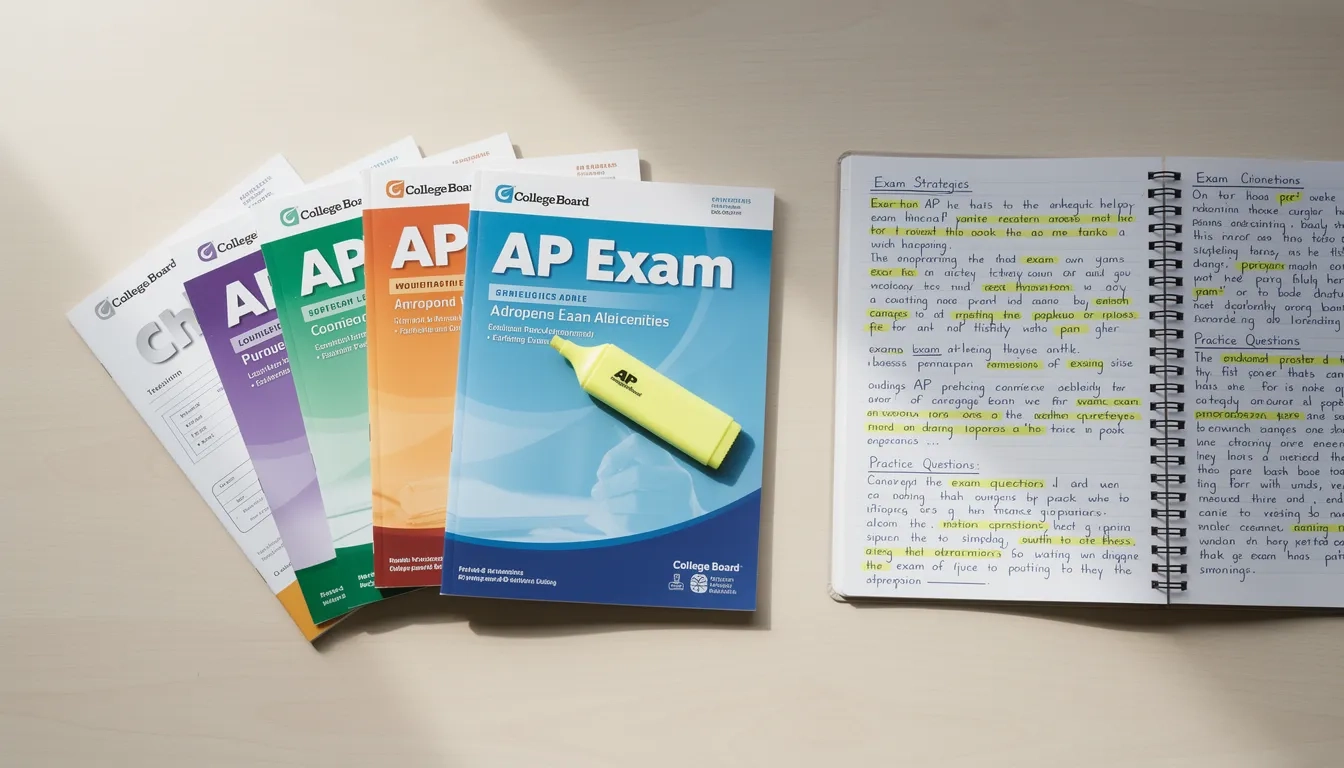
AP exams cost $98 each in 2026, and your school doesn't need to offer the class for you to register. Thousands of students walk into May testing centers every year having never sat in the corresponding classroom. A good chunk of them walk out with a 4 or 5. What separates them isn't raw intelligence. It's knowing which exams reward solo study and which resources are actually worth the hours.
Which AP Exams Are Actually Worth Self-Studying
Not every AP exam is built the same for solo learners. Some test content mastery and concept application, which maps well to self-directed study. Others depend on skills that only sharpen through repeated feedback, and those skills don't develop reliably in isolation.
The self-study-friendly APs share two traits: clear content frameworks and predictable question formats.
- AP Psychology
- AP Human Geography
- AP Environmental Science
- AP Comparative Government and Politics
- AP Microeconomics and AP Macroeconomics
- AP Computer Science Principles
AP Psychology is the standout example. According to 2025 College Board data, 70.5% of test-takers scored a 3 or higher. The exam tests well-defined psychological concepts with rubric-driven FRQs, which is exactly the kind of structure self-study handles well.
Exams that are harder to self-study split into two buckets. Lab-heavy sciences (AP Chemistry, AP Biology, AP Physics C) assume firsthand laboratory experience that gets tested indirectly. Essay-driven exams (AP English Language, AP US History, AP World History) reward argumentation skills that need real feedback to develop.
The question to ask before committing: does this exam primarily test what you know, or how well you can write and reason under open-ended conditions? The first type favors self-study. The second requires more than prep books and practice problems.
The Free Resource Stack
Before spending anything, exhaust the free options. For AP self-study, they're genuinely good.
Khan Academy became an official College Board AP partner in 2017, which means its content aligns directly with exam specifications rather than just the general subject area. Khan Academy offers free four-week study plans that start with a course challenge to identify weak spots, then map out 15-minute daily sessions from there. The platform is strongest for math and science APs, where watching someone work through a calculus problem step-by-step beats any textbook passage.
The College Board's Course and Exam Description (CED) is the most underused free resource available. Every AP course has one — a downloadable PDF that maps each unit to its exact exam weight. AP Psychology Unit 3 covers roughly 8-10% of the test; Unit 7 covers 8-10% too. Your study time should track those percentages, not be distributed evenly. Students who ignore the CED consistently waste hours on low-weight content while under-studying what actually shows up in May.
The College Board releases real FRQ prompts and scored sample responses for every AP exam going back over a decade. Reading a 5-scoring student response next to a 2-scoring one reveals more about what graders actually reward than any prep book summary. Most students skip this. That's a mistake.
AP Daily videos live in your College Board account after registration. Each video covers a single unit topic, runs about 10-20 minutes, and ends with a real released practice question. Free and updated for the current exam year.
YouTube fills the remaining gaps. Bozeman Science (Paul Andersen) is the gold standard for AP Biology, Chemistry, and Environmental Science. Crash Course handles AP Psychology, AP US History, and other humanities exams with enough depth to use as a primary video source, not just a supplement.
Paid Tools Worth the Investment
Once the free foundation is in place, a few paid tools make a meaningful difference.
Albert.io is the most effective paid platform for AP-specific practice (and unlike most ed-tech tools, its free tier is actually useful). Questions are organized by unit and difficulty, wrong-answer explanations are detailed, and Albert offers score calculators that give reasonably accurate readiness estimates based on your practice performance. A premium subscription runs around $25/month, but the free version already has enough material to be worth bookmarking before you ever spend anything.
For prep books, three publishers dominate the market:
| Publisher | Best For | Main Weakness |
|---|---|---|
| Barron's | Deep content review | Dense; better for strong readers |
| Princeton Review | Strategy and FRQ frameworks | Lighter on raw content depth |
| 5 Steps to a 5 | Structured day-by-day study plans | Less practice question variety |
Princeton Review is the better starting point for most students approaching a subject from scratch. Barron's earns its reputation once you have a content base and want to go deeper. 5 Steps to a 5 works well if you'd rather have someone dictate the daily study plan than design one yourself.
One detail that matters: verify the edition. College Board restructured AP US History in 2020 and has made format changes to AP Biology and AP World History in recent years. A prep book from 2021 or earlier may drill content that no longer appears on the exam or miss question formats that now make up 20% of the multiple-choice section. Cross-check the table of contents against the current CED before committing to a book.
How to Build Your Study Schedule
The biggest factor in AP self-study success isn't which resource you use. It's when you start.
Estimated study hours by exam category:
- Mid-difficulty content exams (Psychology, Human Geography, APES): ~100 hours
- History exams (APUSH, World, European): 150-200 hours
- Technical exams (Calculus, Chemistry, Physics): 200+ hours
A September start gives you 7-8 months at a comfortable pace. January is workable for shorter content exams at roughly 6-7 hours per week. March is difficult territory — only realistic for shorter exams where you already have genuine background knowledge.
A practical 4-month framework:
- Month 1: Survey the full course. Read the CED to internalize unit weights. Skim your prep book's unit introductions without stopping to master anything yet.
- Months 2-3: Deep unit-by-unit study. Use AP Daily or Khan Academy for video explanations, then do Albert.io practice questions on that specific unit before moving forward.
- Month 4: Shift almost entirely to timed practice. Do released FRQs weekly. Take at least two full-length practice exams under realistic conditions.
- Final two weeks: Review weak units only. No new material.
Distribute your time roughly 60/30/10: 60% on new content, 30% on practice problems, 10% on timed sections. Most self-studiers over-rotate on passive content review and under-invest in practice, then can't explain why their study hours didn't produce the score they expected.
The FRQ Problem Nobody Warns You About
Free-response questions count for roughly 50% of the score on most AP exams. They're where self-studiers leave the most points on the table.
For content-based FRQs — AP Psychology, AP Gov, AP Microeconomics — scoring rubrics are published and predictable. You can train yourself to hit the expected points by reading College Board's sample scored responses and matching your answers to the rubric. This is learnable without a teacher.
Essay-heavy AP exams are a different situation. AP English Language, AP US History, and AP World History involve extended argumentation graded on nuanced criteria: thesis development, evidence integration, complexity of reasoning. Without someone reading your essay and pointing to where the argument breaks down, you're practicing in the dark.
The underrated workaround is peer feedback. Reddit's r/APStudents and several AP-focused Discord servers run regular study exchanges where students swap practice FRQs for review. It's not a trained AP reader, but outside feedback is meaningfully better than none.
For students serious about scoring well on a DBQ-heavy exam, one targeted tutoring session — around $45-60 through platforms like Wyzant — specifically to review a practice essay can be more valuable than weeks of additional solo practice. You don't need ongoing tutoring. You need to know what you're doing wrong once, then fix it.
One more FRQ mistake: treating released prompts as light reading instead of timed writing practice. Downloading a 2023 AP US History FRQ and reading the sample responses is useful. Writing your own response under timed conditions and then scoring it against the rubric is four times more useful.
Mistakes That Tank Self-Studiers
A few patterns show up repeatedly in students who log real hours but score below a 3.
Passive studying is the biggest trap. Watching videos and re-reading prep book chapters feels like progress. Without matching each content hour to active practice, it isn't. If you can't work a problem on a topic after reviewing it, you don't actually know it. Recognition and recall are different skills, and AP exams test recall.
Never taking a full timed exam before May is a planning failure. A 3-hour AP exam has its own fatigue pattern. Students who've only studied in 45-minute chunks often spend too long on early questions, then rush sections they know just as well. Take at least two full-length practice exams under realistic conditions.
Using too many resources simultaneously is the paradox of choice made concrete. Four prep books, three YouTube channels, two practice apps — and the student goes 40% deep on all of them instead of finishing any one. Pick one prep book, one practice platform, and the College Board's free materials. That stack is enough.
Using outdated study materials causes quiet damage. A prep book from 2021 might drill content that was removed, or miss formats added since. Always verify your prep book's unit list against the current CED before committing to it.
Bottom Line
- Start with free resources: College Board CED, AP Daily videos, Khan Academy for math and science APs, Bozeman Science or Crash Course on YouTube.
- Add one prep book (Princeton Review for most students, Barron's for depth) and supplement with Albert.io's practice questions.
- Match your start date to the exam type. Content exams can begin in January. Technical or history-heavy exams need a September or October start.
- Don't skip FRQs. Download released College Board prompts, write under timed conditions, and score your responses against real rubrics.
- The single highest-leverage habit is simulating real exam conditions at least twice before May. A student who takes two full timed practice exams will almost always outperform a student who studied twice as many hours passively.
Frequently Asked Questions
Can you self-study an AP exam without ever taking the class?
Yes. The College Board allows any student to register for an AP exam through their school's AP coordinator regardless of whether they enrolled in the course. You pay the exam fee ($98 in 2026) and show up in May. Your score still appears on the AP score report you send to colleges, and it counts the same for credit purposes.
How many AP exams can you realistically self-study in one year?
Most students who succeed recommend no more than two at a time, especially alongside a full course load. A mid-difficulty exam like AP Psychology requires around 100 study hours. Running two simultaneously while managing regular coursework means you're adding roughly 200 hours of prep to your academic year — which is workable but not trivial.
Is Khan Academy alone enough to pass an AP exam?
For shorter content exams like AP Psychology or AP Human Geography, Khan Academy combined with College Board's released FRQs and practice questions can get you to a 3. For most exams, though, Khan Academy works best as a video complement to a prep book or Albert.io, not as the entire study plan. The platform is notably stronger on math and science than on humanities depth.
Myth vs. Reality: Does a self-studied AP score count the same as a class-enrolled score?
For college credit, yes. A 4 on AP Psychology earns the same credit whether you took the class or not. Where self-study falls short is your high school transcript. The class doesn't appear, so you don't get a weighted GPA boost, and some colleges evaluate transcript rigor separately from exam scores. The credit itself is equivalent; the transcript signal is not.
What's the hardest part of self-studying an AP exam?
Consistent self-motivation over several months without external deadlines. A classroom gives you quiz grades, homework due dates, and a teacher checking your progress (the kind of accountability that's easy to take for granted). Self-study provides none of that. Students who succeed set personal milestones by unit, block study time into their calendars, and treat Albert.io practice scores as a substitute for teacher feedback. The tools exist. The structure has to come from you.
When is it too late to start self-studying an AP exam?
For a shorter content exam like AP Psychology or AP Human Geography, starting in late February gives you roughly 10-12 weeks — tight but possible with 8-10 hours per week. For history or technical exams that require 150-200 hours of preparation, March is generally too late to build both content knowledge and exam fluency by May. A failed attempt costs $98 and resets your timeline by a full year.
Sources
- Ultimate Guide to Self-Studying AP Exams - Scholarships360
- How to Self-Study for AP Exams: The Complete Guide (2026) - FinalsPrep
- Resources for Self-Studying AP Classes - Simple Studies
- Five Tips for Studying for AP Exams - Khan Academy Blog
- AP Classes 2026: Complete Guide & Study Resources - Fiveable