Best SAT Prep Courses Under $200: Honest Rankings for 2025
College Board — the organization that writes the SAT — partnered with Khan Academy to build their official free prep tool. That's not a minor footnote. It means the most authentic SAT practice available on the internet costs exactly $0. And yet the test prep industry charges anywhere from $199 to $2,199 for the privilege of their instruction.
The elephant in the room: a higher price tag rarely means a bigger score jump. What it usually means is more structure, more accountability, or more hand-holding — which some students absolutely need, but many don't. If you're shopping for SAT prep under $200, you're not shopping in the bargain bin. You're shopping where the actual value is.
What Changed With the Digital SAT
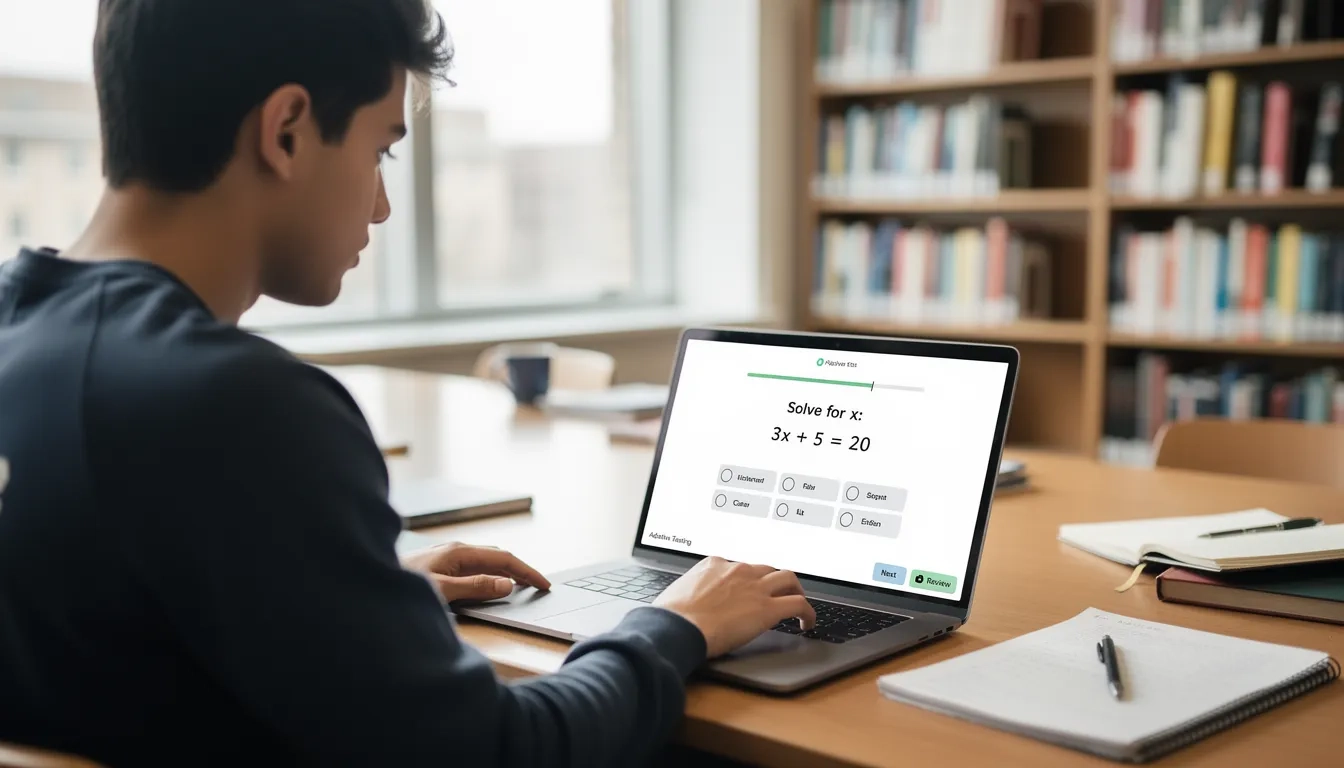
The paper SAT is gone. Since 2024, the test runs entirely through College Board's Bluebook app in an adaptive format — your second math module gets harder or easier based on how you performed on the first. The total test time dropped to 2 hours and 14 minutes, down from 3+ hours.
This matters because not all prep courses have updated their materials. Some budget options still teach pacing strategies and question formats from the old paper test. Before you buy anything, verify the course explicitly covers Digital SAT structure and adaptive strategy.
The adaptive format has an underappreciated upside, though: it makes prep more targeted. You're not preparing for 154 questions of unpredictable difficulty. You're preparing for a score band based on where your skills actually land.
The Top Courses Under $200, Side by Side
Here's how the main options compare:
| Course | Price | Practice Tests | Video Lessons | Score Guarantee | Best For |
|---|---|---|---|---|---|
| Khan Academy | Free | 4+ | Many | None | Self-directed learners |
| Magoosh | $129 | 3 | 200+ | +100 pts | Flexible, mobile learners |
| ePrep Express | $129 | 2 | 76 | +100 pts | Short-timeline prep |
| Testive | $99/month | Unlimited | None | None | Students needing accountability |
| Kaplan On-Demand | $199 | Several | Hundreds | +100 pts | Structured learners |
Each fills a different role. The right pick depends less on price than on how you actually study.
Khan Academy: Free and Genuinely Competitive
Khan Academy is the only SAT prep built with direct input from College Board, which makes its practice questions more trustworthy than any third-party simulation. College Board tracked over 160,000 students and found that 20+ hours of practice on the platform correlated with an average 115-point score gain. That's not a paid endorsement — that's College Board's own outcome data.
The personalized recommendation engine is the most underused feature. Link your PSAT scores (or take a diagnostic), and Khan Academy generates a practice plan tailored to your weak areas. Students who use it this way consistently outperform students who random-browse the question bank.
The real gap is strategy coaching. Khan Academy teaches you the content but not the meta-game: how to approach question types you've never seen, how to pace yourself under adaptive conditions, how to recognize wrong-answer traps. That's where paid courses add value — for students who need it.
Who Should Start With Khan Academy
- Students with 3+ months before their test date
- Learners who do well without a set curriculum
- Anyone already scoring above 1,100 who wants targeted topic drilling
- Students pairing it with a paid strategy course
Magoosh: The Best Paid Option at $129
At $129 for 12 months of access, Magoosh gives you 1,750+ practice questions, 200+ video lessons, 3 full-length practice tests, and email access to real tutors. The 100-point score guarantee comes with a 7-day money-back policy as a backup. For students who've done the math, that works out to roughly $0.07 per practice question.
What separates Magoosh from Khan Academy is the strategy layer. The video lessons teach test-specific approaches: how to use process of elimination on reading questions, how to use the built-in Desmos calculator, how to spot wrong-answer traps in the Writing section. Khan Academy teaches the content; Magoosh teaches how to take the test.
The main criticism is fair: no live instruction, and 3 practice tests is lean if you're prepping across 3+ months. Most coaches recommend 4–6 full-length tests across a standard prep cycle. Fill the gap with free tests from College Board's Bluebook app, which offers several at no cost.
One mistake students make with Magoosh: treating it like a passive video series. The students who see big gains use the question bank obsessively, review every wrong answer using the video explanations, and track error patterns by topic week over week.
ePrep Express: Built for a Sprint
ePrep Express costs $129 and is designed for students prepping 6–8 weeks out. You get 76 subject-specific video lessons, 268+ video answer explanations, 2 full-length practice tests, and a vocabulary builder called WordSmith — something neither Magoosh nor Khan Academy includes.
Vocabulary matters more on the Digital SAT than most students expect. The Reading and Writing section pulls in context-based word meaning questions that reward students who can quickly recognize whether a word fits a specific connotation. A dedicated vocabulary program accelerates that recognition in a way content-only prep doesn't.
The tradeoff is limited depth. Two practice tests won't carry most students through a full prep cycle. ePrep also has a smaller community than Magoosh or Khan Academy, which means fewer Reddit threads, fewer peer-tested strategies, and less third-party guidance built around its specific format.
Testive: For Students Who Keep Quitting Self-Paced Prep
Testive starts at $99/month and works differently from everything else on this list. You get a real tutor who assigns your practice, meets with you weekly, adjusts focus areas based on your results, and creates a deadline structure that pure self-study can't replicate. Practice tests are free and digitally proctored.
The honest case for Testive is narrow but real. If you've tried self-paced prep before and abandoned it, one month of Testive coaching might unlock more points than three months of Magoosh you open twice. Accountability isn't a soft benefit. For some students, it's the whole game.
The downside is cost creep. Two months of Testive runs $198 and still lacks a video curriculum. For a longer prep timeline, you'd need to pair it with Khan Academy's free content, which adds coordination overhead. Know what you're buying.
Kaplan On-Demand: $199 for Structured Sequencing
Kaplan's On-Demand course sits right at the $200 ceiling. The main differentiator is structure: Kaplan sequences content from concept review to strategy coaching to timed practice, rather than dropping you into an open library. Recorded instructor lessons (actual teachers, not just slides) walk through content in a way that resembles a classroom experience more than most courses at this price.
Kaplan's track record is real. They've been training students for standardized tests since 1938, and their Digital SAT materials are updated and format-specific. If you want a brand with decades of outcome data behind it and a sequenced roadmap to follow, Kaplan is the credible pick at this price.
The honest knock: the on-demand version is a meaningful step down from their live courses. You're getting structured recorded content, not a mentor relationship. If the brand name is the reason you're considering Kaplan, take a second look at what you're actually getting for $199 versus what a $129 Magoosh subscription includes.
How to Pick: A Simple Decision Framework
Price isn't the deciding variable. Learning style is. Work through these four questions before you spend a dollar:
- Do you study well without external pressure? Yes — Khan Academy plus Magoosh. No — Testive or Kaplan's guided format.
- How many months until your test? 3+: Start with Khan Academy, add Magoosh for strategy. 6–8 weeks: Magoosh or ePrep. Under 4 weeks: Testive coaching for a focused sprint.
- What's your starting score? Below 1,000: You need content instruction first — Kaplan or Magoosh provides structure. 1,100–1,300: The Khan plus Magoosh combo is typically the highest-ROI approach. Above 1,300: Topic-targeted drilling on Khan Academy plus full-length test practice.
- Have you tried self-paced prep before and quit? Be honest. A $99 Testive month beats a $129 Magoosh plan you open twice and abandon.
The Score Guarantee Fine Print
Every course in this range that advertises a guarantee buries conditions in the details. Common requirements across platforms:
- Minimum 40+ hours of documented study time
- An official SAT score (not a diagnostic) as a baseline before starting
- Completion of a defined percentage of the course curriculum
Score guarantees are marketing tools that also happen to protect serious students. Don't buy a course because of the guarantee. Buy it because the format fits how you learn.
They're not gimmicks — companies don't offer money-back policies on products that consistently fail. But they're backstops for committed users, not safety nets for casual ones.
Bottom Line
- Start with Khan Academy regardless of budget. Link your PSAT scores, follow the personalized plan, and put in 20+ hours. It's the most authentic SAT practice available and it costs nothing.
- Add Magoosh at $129 for strategy coaching, practice variety, and email support. The Khan plus Magoosh combination covers nearly everything a $1,000 course covers.
- Consider Kaplan On-Demand at $199 if you need structured sequencing and don't thrive with open-ended question banks.
- Try Testive at $99/month only if accountability is genuinely your weak link. One focused month of coaching often beats three months of abandoned self-study.
My honest position: most students who put in 20+ hours on Khan Academy and work through Magoosh's video lessons systematically will see results that justify the $129 spend many times over. Premium courses aren't bad — they're just solving problems most students in this price range don't actually have.
Frequently Asked Questions
Is Khan Academy really strong enough for serious SAT prep?
Yes, for many students. College Board's own research, tracking over 160,000 students, found that 20+ hours of Khan Academy practice produced an average 115-point score gain. The content is the most authentic available because it's built directly with the test-makers. The main gap is strategy coaching, which students can supplement with a paid course like Magoosh or guidance from a teacher.
What's the real difference between Magoosh and Kaplan On-Demand?
Magoosh gives you an open library of 1,750+ questions and 200+ videos to use however you want, with email support available. Kaplan sequences the material in a fixed path from concept to strategy to practice. Magoosh suits students who know how to pace themselves; Kaplan suits students who want a defined roadmap. The $70 price difference shouldn't drive the decision — the format fit should.
Do score guarantees actually mean anything?
They do, with conditions. Most require 40+ hours of documented practice, an official prior SAT score for a baseline, and completion of a defined chunk of the curriculum. The guarantee won't trigger for students who use a course casually. Read the terms before treating it as a safety net — but don't dismiss them either. Companies that offer guarantees tend to have products that deliver for committed students.
How many practice tests do I need before the real SAT?
Most coaches recommend 4–6 full-length practice tests across a 3-month prep cycle. Courses under $200 typically include 2–3 tests, which is lean. Fill the gap with free official tests from College Board's Bluebook app, which offers several free Digital SAT practice exams that replicate the actual testing interface.
Can I combine multiple SAT prep resources?
Yes — and for most students, you should. Khan Academy (free content plus official questions) paired with Magoosh (strategy coaching plus question variety) covers the gaps in each platform individually. The rule of thumb: two resources used consistently outperform five resources used occasionally. Pick two and commit to both.
Is the Digital SAT harder to prepare for than the old paper version?
Not harder — different. The adaptive format means pacing strategy shifts slightly (you can't agonize over one question when the module is timed as a whole), and the built-in Desmos calculator changes how you approach math prep. The test is shorter, so endurance prep matters less. Just make sure any course you use explicitly covers Digital SAT content and the Bluebook testing interface, not materials designed for the old paper format.
Sources
- 7 Best SAT Prep Courses in 2026 (Objectively Tested) - Sojourning Scholar
- 8 Best SAT Prep Courses & Classes (2025) - Campus Library
- Best Online SAT Prep Courses & Classes (Free or Paid) in 2025 - EducationData.org
- 12 Best SAT Prep Courses for 2026 - PrepMaven
- Best SAT Prep Courses (Reviewed & Ranked) - Test Prep Insight