Best STEM Projects for College Applications 2026: What Actually Works
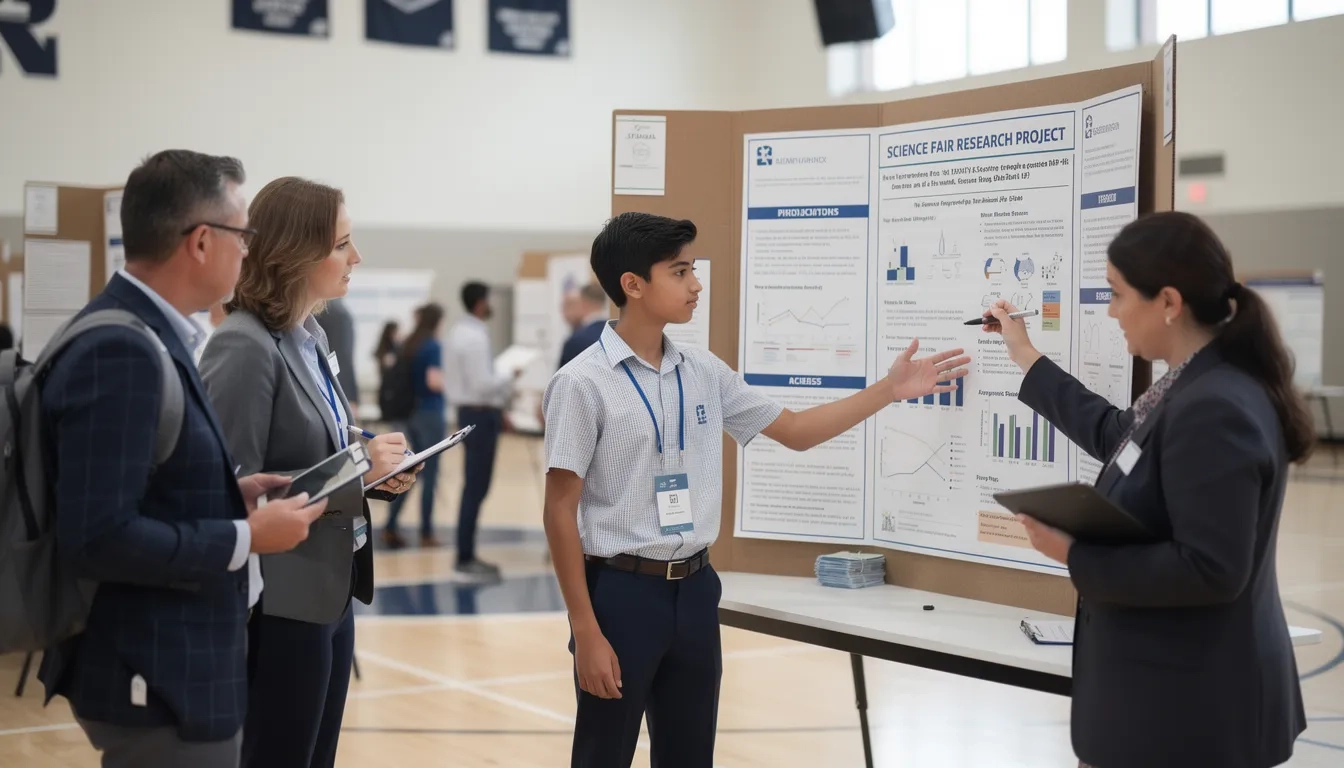
Every year, thousands of students list "Science Olympiad member" and "robotics club" on their college applications. Those activities are not bad choices. But by themselves, they're table stakes — the same entries that appear on tens of thousands of other applications from students with identical GPAs and test scores. The students who get circled by readers at MIT, Caltech, and the Ivies do something harder: they produce original work with a story only they can tell.
Why Participation Is No Longer Enough
The shift from participation to output is the defining change in STEM admissions over the past three years. Admissions officers have said it directly: selective schools are flooded with strong transcripts. What they're looking for is evidence that you think like a scientist or engineer, not just that you enrolled in AP Physics.
A 2026 RISE Global Education report put a number on this. Students who completed original independent research were three times more likely to receive offers from Top 20 universities than comparable applicants who hadn't. That gap has only grown as test-optional policies normalized near-perfect academic profiles across the applicant pool.
The practical implication: two or three deep, documented projects outperform ten club memberships every time. Depth signals intellectual identity. Breadth signals anxiety.
The Tier System: Know Where You're Competing
Not every STEM project sends the same signal. Here's a clear-eyed framework for how admissions readers actually weight these activities:
| Tier | Project Type | Example | Admissions Signal |
|---|---|---|---|
| 1 | Published or nationally awarded research | ISEF finalist, peer-reviewed paper | Rare, differentiated, hard to fabricate |
| 2 | Acceptance to selective programs | RSI, MITES, Caltech SRC, Simons | Rigor, external validation |
| 3 | Competitions with measurable results | Science Olympiad state, USAMO qualifier | Performance, not just participation |
| 4 | School clubs and self-study | Robotics club member, coding class | Common without supporting depth |
The key distinction between Tier 3 and Tier 4 is result. "Competed in Science Olympiad" is Tier 4. "Medaled at the state invitational in two events" is Tier 3. That difference matters.
A Tier 1 project won't guarantee admission. But in a pool where nearly every applicant has a 4.0 and multiple AP courses, it's often the thing that makes a reader pause.
Research Projects: The Highest-Return Investment
Original research is the single most powerful differentiator for STEM applicants. And the research doesn't need to be Nobel-worthy. What admissions readers want to see is that you can formulate a question, gather data, analyze results, and defend your methodology. The process signals scientific maturity more than the conclusion does.
Where can high schoolers actually get published? The Journal of Emerging Investigators (run out of Harvard) exists specifically for middle and high school science research and puts submitted papers through real peer review. Stanford's Intersect journal is another legitimate outlet. IEEE publishes student papers from strong competition programs. In 2025, 78% of published papers from RISE program alumni appeared in STEM or interdisciplinary peer-reviewed journals — outlets including Springer Nature and the Journal of Emerging Investigators — which suggests the bar for student publication is achievable with the right project and mentorship.
Structured programs that give you access to real labs:
- Simons Summer Research Program at Stony Brook University: roughly 40 high school juniors get matched with faculty mentors, spend a full summer in real research groups, and present at a formal poster session
- NYU's Pinkerton Foundation program: a 10-week experience where the first four weeks build research skills, then students spend six weeks working in one of more than 80 NYU labs, earning a $1,000 stipend
- Caltech Summer Research Connection: one of the few pre-college programs offering direct mentorship from Caltech faculty and graduate students — which matters when you're applying to Caltech
No access to a formal program? Email professors directly. A specific, brief email asking to help with a named ongoing project — not a generic "I'm interested in your work" — gets replied to more often than students expect. Faculty like students who've read their recent papers and identified a concrete way to contribute.
Competitions: Know the Hierarchy Before You Commit
Science competitions have a clear pecking order, and entering the wrong tier for your level wastes months you could spend building something real.
"ISEF finalists have distinguished themselves as some of the most outstanding young researchers from their regions and around the globe." — Society for Science
The Regeneron International Science and Engineering Fair sits at the top. About 7 million students enter affiliated regional and national feeder fairs each year. Roughly 1,800 reach the international competition — that's 0.03% of the starting field. At the 2025 fair (the 75th anniversary event, held in Columbus, Ohio), nearly $9 million in awards were distributed, including a $100,000 grand prize. MIT's own Dean of Admissions has noted that many MIT students and faculty are ISEF alumni. If you have a strong independent project, entering a regional fair that feeds into ISEF is worth the time.
For math-focused applicants, the pathway is sequential:
- AMC 10 or AMC 12
- AIME (American Invitational Mathematics Examination)
- USAJMO or USAMO
Qualifying for USAMO puts you in a group of fewer than 500 students nationally. That speaks for itself.
FIRST Robotics is the strongest competition signal for engineering applicants, not because it's the most academically demanding, but because Carnegie Mellon, Michigan, and WPI actively recruit from competitive FIRST teams. Leadership roles within a team — running the software subgroup, managing robot design, coordinating with sponsors — show project management skills that engineering programs spend four years trying to teach.
Science Olympiad still carries real weight at state and national levels. What makes it more useful than a standard club is the breadth: members compete across 23 events spanning biology, chemistry, physics, and engineering, which is genuinely valuable background for students who haven't fully committed to one discipline.
The Maker Portfolio: Underused, Legitimately Powerful
A portfolio of documented, completed projects is an underused strategy. MIT, Columbia, Caltech, and Tufts explicitly accept maker portfolio submissions as part of the application. Brown and Harvard allow supplementary materials. Carnegie Mellon does not accept supplemental content (their policy is explicit), so always check before investing time building something for a specific school.
A strong portfolio is not a GitHub link with eight unfinished repos. It's three to five completed projects, each with documentation that shows your thinking: what problem you were solving, what you tried, what failed, and what you ultimately shipped.
Strong examples look like this:
- A crop disease classifier trained on photos from a local farm, with a write-up comparing accuracy across three model architectures and a section on why one approach failed
- An air quality sensor network deployed across four school classrooms, with real data correlating readings to HVAC performance cycles
- A study schedule optimizer with 340 active users at two high schools, including survey data measuring before/after planning habits
That last one has a number. Numbers matter. "340 users" reads as real impact. "Several hundred students" reads as an estimate.
The Timeline: When to Start What
Students with strong STEM profiles in 12th grade almost always started building them in 9th or 10th grade. Not because they were plotting everything, but because they had time to fail, pivot, and go deep.
9th grade: Join one or two STEM clubs or competitions. Start AMC prep if math interests you. Try things. The whole point of 9th grade is exploring broadly enough to identify one or two genuine interests — not locking in.
10th grade: Narrow to one or two areas. Apply to summer programs (most deadlines fall between January and April). Start a small independent project if you haven't already, even if it's something modest like a data analysis of publicly available environmental data.
11th grade: This is the critical year. Apply to selective programs like RSI (acceptance rate: under 2.5%, drawing over 2,500 U.S. applications alone), MITES, or the Simons program. Enter your strongest project in a regional science fair as a qualifying path toward ISEF. Results from junior year are what appear most prominently in applications.
Summer before 12th grade: Finalize research. Compile your maker portfolio if relevant. Write up your project abstract so it's ready to adapt for application essays.
12th grade: The work should be done. The application is a representation of that work, not a substitute for it.
Mistakes That Undercut Strong Projects
Listing activities without results is the most common problem. "Member, robotics club, three years" is almost meaningless. "Led the software team that built a custom vision tracking system for a FIRST Robotics regional finalist, debugging a camera calibration failure the morning of semifinals" is a story that shows specific competence.
Chasing prestige over fit is the second mistake. RSI is one of the most selective pre-college programs in the country. Applying without a genuine project in development means writing a weak personal statement, which leads to rejection, which costs you application time you could have spent on something attainable. A strong local research experience with a committed professor mentor will do more for your application than an RSI rejection letter.
Third: starting research in 11th grade and expecting a published result by application season. A realistic research timeline runs 12 to 18 months from question to submission. Students who get published almost always started in 9th or 10th grade, got rejected by one journal, revised, and submitted again.
The elephant in the room for 2026: AI-assisted projects. Admissions officers are increasingly alert to projects that sound sophisticated but reveal shallow understanding under questioning. If you used AI tools for code generation, data analysis, or writing assistance, be ready to explain every methodological decision in detail. The project belongs to you only if you understand it completely.
What Actually Separates Applicants
I'll say what most college prep content won't. The project matters less than your ability to explain it.
An ISEF finalist who fumbles describing their experimental controls, or who can't articulate why their research question was interesting in the first place, will not impress a sharp admissions officer. A student who built something modest — a water quality sensor, a small machine learning classifier — but can trace every decision, every failure, and the next logical step sounds like someone who actually does science.
The application is not the work. It's a representation of the work. The work has to be real first.
Bottom Line
- Produce original work with documented output. A paper, a deployed app, a competition result — something external that validates your effort and shows you can finish projects.
- Prioritize depth over breadth. Two or three well-developed STEM activities will outperform a long list of club memberships every time.
- Start in 9th or 10th grade. Research, competitive results, and real projects take 12 to 18 months to develop properly. There is no shortcut that produces the same signal.
- Know which competitions and programs match your level. Entering the wrong tier wastes months. A regional ISEF-qualifying fair is the right target for most students; USAMO is not a beginner competition.
- Be able to explain your project cold. If you can't walk through your methodology, your failures, and your next steps in a 5-minute conversation, the project isn't ready to anchor your application.
Frequently Asked Questions
Do I need to win a science competition for it to help my application?
No — but you need a result worth mentioning. Advancing to a state-level competition, placing in a regional fair, or qualifying for the AIME all carry weight. Simply entering and not placing doesn't add much. The signal admissions officers are reading is: did external evaluators recognize your work? A strong result at the regional level is more useful than a generic ISEF entry that doesn't advance.
Is a self-directed project as valuable as one done through a university program?
A self-directed project with a real output — published paper, deployed product, documented prototype — can be more impressive than participation in a structured program with no concrete result. What university programs provide is credibility and access: you can name a faculty mentor, reference lab equipment, and point to institutional validation. If you can replicate those elements independently, the outcome is what matters.
How many STEM activities should I have on my application?
Two to four, with real depth, is better than eight with surface-level involvement. Admissions readers at selective schools have explicitly said they prefer applicants who go deep in one or two areas over those who sample every club available. For a STEM applicant, that means one or two high-effort projects or competitions that you can describe in detail, plus supporting context that shows intellectual curiosity beyond assignments.
My school doesn't have a robotics team or research connections. What can I do?
Start something, or go around your school entirely. Science clubs can be founded with one interested teacher as a sponsor. Professors at nearby colleges respond to specific, well-researched emails from motivated students more often than people assume. Online programs like Lumiere Education, Veritas AI, and others connect students with university mentors for research projects when local access isn't available. The barrier is lower than it appears.
Is it a myth that Ivy League schools expect published research?
Mostly yes, for the Ivies specifically. Harvard, Princeton, and Yale do not require or expect research publications — they're admitting undergraduates, not graduate students. Published research becomes a meaningful differentiator at those schools but is not a baseline requirement. At MIT and Caltech, scientific or engineering output carries significantly more weight because those schools explicitly look for students who have already thought like researchers. Know your target schools before calibrating your effort.
When is it too late to start a STEM project for college applications?
If you're in 12th grade with applications due in four months, you cannot start a research project from scratch and expect it to matter. What you can do: document a project you've already been working on, apply to gap-year or deferred-admission research programs, or lean into explaining your STEM trajectory through essays. For students in 10th or 11th grade reading this: right now is the right time. Not next semester.
Sources
- Regeneron International Science and Engineering Fair — Society for Science
- Creating a STEM or Maker Portfolio for College Applications — IvyWise
- Which Extracurriculars Actually Matter for Admission to College STEM Programs? — College Transitions
- How to Get Into Caltech With Research — RISE Global Education
- 15 STEM Extracurriculars That Impress College Admissions Officers — AdmissionSight
- 21 STEM Project Ideas for High School Students — Nova Scholar Education