Which College Majors Lead to the Highest Job Satisfaction?
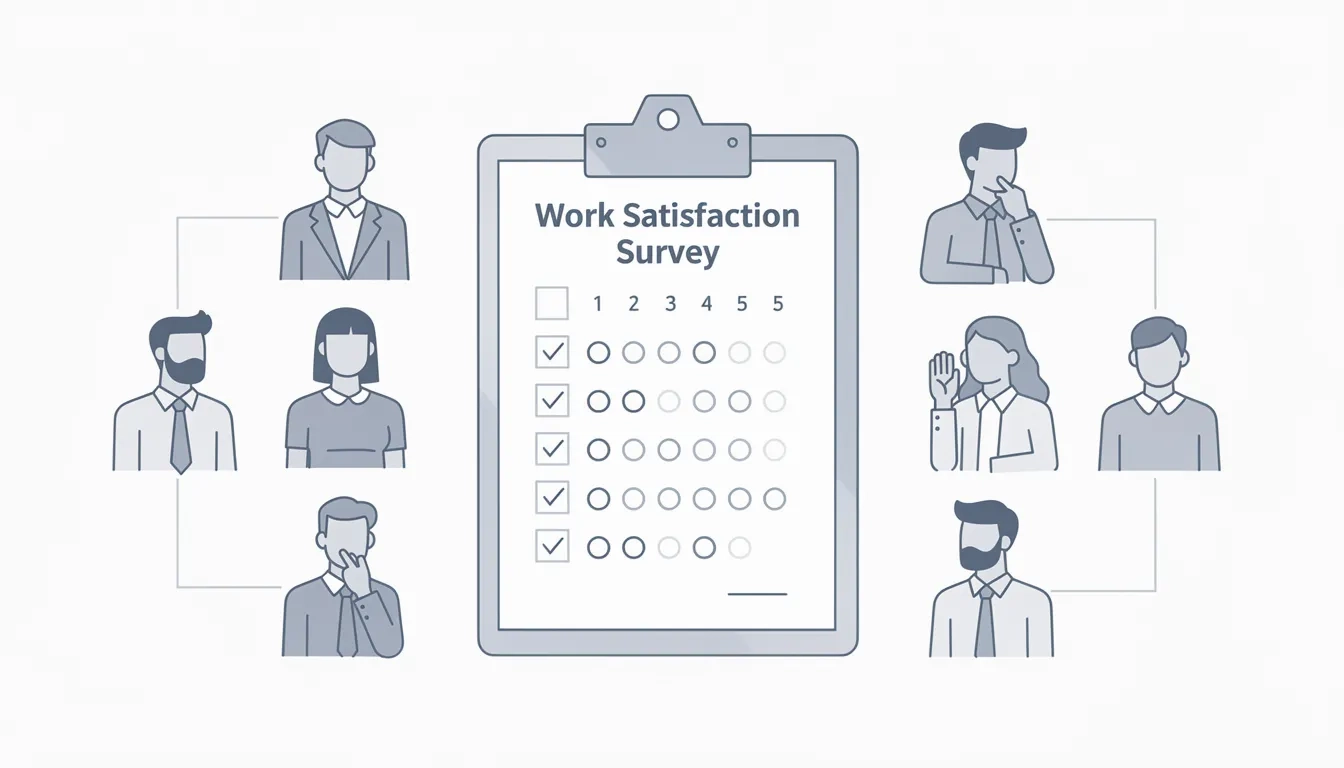
Dental hygienists — a profession that rarely appears on anyone's dream career shortlist — score higher on job satisfaction than corporate lawyers, software architects, and investment bankers in nearly every major survey. PayScale data puts their meaningfulness score at 86%. That figure deserves more attention than it gets, because it punctures the assumption most students carry into college: that the highest-paying major is the one most worth choosing.
What "Satisfied" Actually Measures
The word "satisfaction" gets used loosely, so it's worth understanding what researchers are actually asking. The National Science Foundation's 2023 National Survey of College Graduates, analyzed by the American Academy of Arts and Sciences, asked respondents to rate their overall job satisfaction. PayScale's surveys go a layer deeper, asking separately about how meaningful respondents find their work.
These are different questions. Someone can be satisfied — stable job, decent pay, not miserable — without finding the work particularly meaningful. Teachers often show the reverse: high meaning, low satisfaction with compensation.
The sharpest metric is regret. "Would you choose the same major again?" tracks something closer to long-term wellbeing than a snapshot satisfaction score. It captures the accumulated verdict of years in a field, not just how someone felt last Tuesday.
Healthcare Majors: The Consistent Overperformers
Dental hygiene sits at the top of virtually every satisfaction ranking. PayScale's data puts overall satisfaction at 82% and meaningfulness at 86%. The job involves direct patient contact, a clear feedback loop (healthy teeth, grateful patients), and a 1.42% unemployment rate that makes job security almost irrelevant to worry about. The median salary of $107,342 is strong without being extraordinary — and yet the satisfaction numbers beat most far higher-paying fields.
Nursing follows closely, though the picture is more complicated than it first appears. According to the 2024 State of Nursing Survey, 79% of nurses would choose nursing again if they had to do it over. That looks strong until you note that roughly 40% of nurses report planning to leave their current position within the next year. Not the profession — their specific workplace. Nurses love what they do; they often hate where they're doing it.
| Major | Satisfaction Signal | Key Strength | Main Tension |
|---|---|---|---|
| Dental Hygiene | 82% satisfied, 86% meaning | Stability + direct impact | Limited salary ceiling |
| Nursing | 79% would re-choose | Global demand, patient care | Burnout in specific settings |
| Occupational Therapy | Top 25% of careers | Visible patient progress | Caseload pressure |
| Psychology | 3.5/5, top 32% of careers | Helping people directly | Grad school usually required |
| Veterinary / Animal Science | 3.7/5, top 20% of careers | Strong mission alignment | Emotional weight |
Occupational therapy tends to fly under the radar in these conversations. OT practitioners work with patients recovering from injury or illness — and the feedback loop is immediate and visible. Someone who couldn't button their shirt last month can now do it without help. That kind of concrete, daily impact on someone's independence is genuinely hard to replicate in most white-collar office environments.
Engineering: High Marks and High Pay
The American Academy of Arts and Sciences' analysis of NSF data puts engineering graduates at 91% job satisfaction — the highest of any broad academic field. That's not a coincidence.
Engineering satisfies multiple psychological needs at once. The work involves solving concrete problems with verifiable answers. It pays well: electrical engineers earn a median $115,000 annually, with a 1.9% unemployment rate. When work is challenging, compensated fairly, and produces something real, satisfaction tends to follow.
Not all engineering looks the same, though. Civil engineers consistently report among the highest meaning scores — they point to infrastructure, a water treatment plant, a bridge commuters use every morning. Software engineers report high satisfaction early in their careers that tends to dip by year five as work shifts from building things to reviewing pull requests in meetings.
STEM majors overall are the least likely to regret their choice. Pew Research found that only about 24% of science and engineering majors say they wish they'd picked a different field to better prepare for their ideal job. That's a meaningful contrast with business and education majors, who express regret at noticeably higher rates.
Education and Social Work: Purpose Doesn't Always Pay
Here's where the data gets complicated. Students pursuing education, social work, and criminal justice report some of the highest confidence that their training prepares them for meaningful work. Public service students outpace STEM in how strongly they believe their skills will matter in the workforce.
But salary satisfaction is a real problem. Teachers and social workers typically know going in they won't get rich. That intellectual acceptance sometimes runs ahead of the emotional reality of living on a teacher's salary while managing $55,000 in student loans in an expensive city.
The pattern that shows up across surveys: education majors are among the most likely to eventually regret their choice — not because the work lacks meaning, but because the pay-to-debt ratio can feel punishing in practice. Social work is a somewhat different story at the graduate level. MSW graduates working in clinical or private practice settings report considerably higher satisfaction than those stopping at a bachelor's, partly because compensation is more competitive and partly because the caseload is more manageable.
- Education majors: high meaning scores, high regret rates — a tension driven by compensation reality
- Social work at bachelor's level: meaningful but financially strained
- Social work at MSW level: better outcomes when clinical practice is the path
The Humanities Surprise
The "useless degree" narrative has been loud enough for long enough that it's worth checking against actual numbers. The NSF's 2023 National Survey of College Graduates found that 87% of humanities majors with bachelor's degrees reported job satisfaction. The figure for all degree holders was 90%.
A three-percentage-point gap. Not the catastrophe the headlines imply.
The real weakness is salary satisfaction. Only 73% of humanities graduates felt happy with their compensation, compared to 77% across all degree holders — a gap that compounds over decades when engineering and finance peers pull ahead financially.
The non-obvious insight here: humanities majors who report the highest satisfaction almost universally work in roles that draw directly on their training — writing, research, analysis, teaching. The ones who drift into generic office work, disconnected from what they studied, report much lower satisfaction. The major itself isn't the issue; the mismatch between the major and the role is.
The Majors Where Satisfaction Disappoints
Some majors look attractive from the outside but consistently underperform on long-term satisfaction metrics. Digital marketing is a useful example. According to Study International's survey data, 42% of digital marketers plan to leave the field within two years due to burnout. The work is metrics-obsessed, the targets shift with every algorithm update, and the line between "creative work" and "performance anxiety" blurs quickly.
Business administration is one of the most popular majors in the country and one of the more frequently regretted ones. It's not that business careers are miserable — plenty are fine. The problem is that business administration as a degree is vague enough that many students graduate without a clear picture of where they're headed. That lack of direction makes it hard to build the sense of mission that tends to sustain satisfaction over a full career.
Computer science is a genuinely mixed case. Salaries are strong, unemployment is low, but entry-level roles have gotten harder to land in 2025 as companies compress junior development work with AI tools. And burnout inside major tech companies is well-documented. Graduates who chose CS primarily for the salary and feel indifferent about the problem-solving itself often report mid-career dissatisfaction that surprises them, and their employers.
How to Actually Choose
Here's my honest read on the research: it points to a clear pattern, but it doesn't produce a simple ranking you should copy. What it does reveal is a three-part test that the most satisfied graduates consistently pass.
The three traits high-satisfaction majors share:
- Impact visibility — You can see the effect of your work within days or weeks. Healthcare and engineering score high here. Financial analysis and most marketing roles score low, because the feedback loop stretches across quarters or years.
- Security floor — The unemployment rate in your field sits below 3%. Nursing (1.42%), electrical engineering (1.9%), and occupational therapy all clear this bar. A persistent low-grade fear about job loss quietly erodes satisfaction in ways that are hard to attribute until you're already unhappy.
- Credential-to-career alignment — Your specific degree maps directly to a job title. "I have a dental hygiene degree" translates cleanly. "I have a communications degree" usually doesn't, and the resulting career meandering costs years of direction.
Run any major you're considering through that test. A philosophy major (which, interestingly, shows low unemployment in recent Federal Reserve Bank of New York data) working as a UX researcher or legal analyst can clear all three if the role is chosen thoughtfully. A computer science major grinding through work they find pointless at a company they resent fails all three regardless of the paycheck.
The research is fairly consistent on one thing: choosing a major primarily for salary, then landing in a role that feels purposeless, is the most reliable route to career regret. Purpose isn't a luxury you add once the financial boxes are checked. It's structural.
Bottom Line
- Healthcare majors (dental hygiene, nursing, occupational therapy) lead on satisfaction across every major dataset — combining meaning, job security, and clear career alignment in ways few other fields match.
- Engineering scores the highest on broad satisfaction surveys at 91%, driven by problem-solving, strong compensation, and concrete results you can see.
- Humanities are underrated: 87% report satisfaction, with the gap to other fields driven almost entirely by salary disappointment, not meaningfulness.
- Before committing to any major, run the three-part test: Can I see my impact? Is the field secure? Does my degree name map to a job title?
- Picking for salary without caring about the work is the most reliable path to a career you'll regret. The data across multiple studies is clear on this.
Frequently Asked Questions
Which college major has the single highest job satisfaction rate?
Based on PayScale data, dental hygiene consistently tops individual-profession rankings with 82% satisfaction and 86% meaningfulness. Among broad academic fields, engineering leads with 91% satisfaction in the NSF's National Survey of College Graduates. The answer depends on whether you're measuring by specific occupation or by degree category — both ways, healthcare and STEM professions dominate the top spots.
Is it a myth that STEM majors are always the happiest graduates?
Partly. STEM majors as a group are the least likely to regret their choice and the most likely to report strong career-to-major alignment. But within STEM, outcomes vary widely. Computer science graduates in 2025 face a tighter job market than a few years ago due to AI-driven compression of entry-level roles. The "STEM = satisfied" shortcut holds on average, but specific fields and career environments matter a lot.
Why do humanities majors report lower salary satisfaction but similar overall satisfaction to STEM grads?
Because salary and satisfaction are separable. The NSF data shows humanities majors at 87% job satisfaction versus 90% for all graduates — a small gap. But only 73% of humanities graduates are satisfied with their pay, compared to 77% overall. Humanities graduates who land in roles that directly use their skills (writing, research, teaching, analysis) tend to report satisfaction that rivals STEM peers, even though compensation lags. The mismatch problem, not the major itself, drives dissatisfaction.
What should I do if my major isn't on the high-satisfaction list?
Focus on what the satisfied majors share: visible impact, a secure job market, and a degree that maps directly to a role. If your intended major can satisfy at least two of those three, you have a workable foundation. A lot comes down to the specific role and organization you end up in — someone with a theater degree who becomes a corporate training specialist and loves it will outperform any satisfaction survey's prediction.
Do people who major in fields they're passionate about end up more satisfied?
Generally yes, but passion alone isn't enough. The research points to passion plus viability as the combination that holds up. Education majors are often deeply passionate and still report high regret rates, because the financial reality creates friction that erodes satisfaction over time. The most durable careers tend to sit at the intersection of genuine interest, some natural aptitude, and a market that pays enough to remove financial stress from the equation.
How much does grad school change the satisfaction picture?
Noticeably, in some fields. Social workers, psychologists, and occupational therapists who pursue graduate degrees report meaningfully higher satisfaction than those stopping at a bachelor's level — primarily because advanced credentials open higher-paying and more autonomous roles. For nursing, the data shows that MSN and DNP graduates report higher satisfaction than BSN graduates. If you're considering a field where graduate education is common, factor that additional path (and cost) into your planning from the start.
Sources
- Job Satisfaction of Humanities Majors — American Academy of Arts and Sciences
- 9 Best Degrees That Lead to the Highest Job Satisfaction — Study International
- Findings From the 2024 State of Nursing Survey — Nurse.org
- Chapter 2: Public Views on the Value of Education — Pew Research Center
- College Majors With the Best and Worst Employment Prospects — CNBC