Entrepreneurship Activities for Students That Actually Work
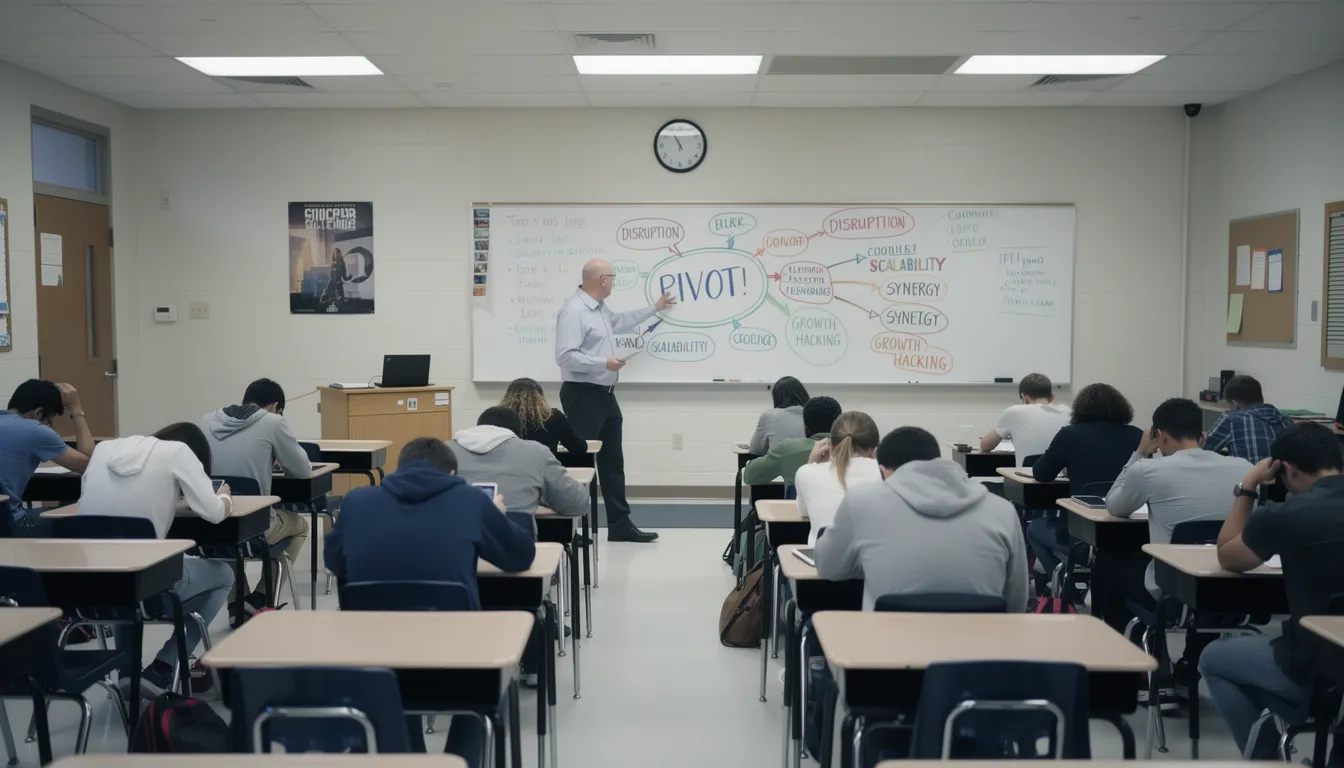
A 16-year-old in Delaware walked away from the Diamond Challenge with $11,000 and no product to show for it — just a pitch deck, a well-defined problem, and the ability to stay calm under a panel of judges asking hard questions. She hadn't incorporated a business or hired anyone. What she'd built was something harder to teach: the willingness to take an idea seriously enough to stress-test it in public. That's what good entrepreneurship education actually does.
Why Most Schools Teach This Wrong
Most school entrepreneurship programs treat the subject like content, not craft. Students read case studies about famous founders, memorize the four P's of marketing, and write theoretical business plans that no real customer ever sees. It's the equivalent of teaching swimming by reading about buoyancy.
The research backs this up. A 2022 study published in the European Journal of Educational Research, analyzing 240 undergraduate business students, found that entrepreneurship education explained 61.12% of variance in entrepreneurial intention — but only when it involved active learning, not passive instruction. Students who sat through lectures didn't change their career plans. Students who ran experiments did.
There's also a myth worth killing outright: you don't need to want to start a company to benefit from entrepreneurship education. The underlying skills — problem framing, iteration, tolerating ambiguity, selling an idea to skeptics — are valuable in every field. A future nurse who learns to identify an unmet patient need and design a solution is using the exact same cognitive muscle as a startup founder.
According to Realityworks, 93% of Gen Z have already taken steps toward exploring business ownership, and 75% say they want to launch something of their own. The appetite is there. What most schools are missing is the right kind of practice.
In-Class Activities That Actually Build Skills
The Envelope Exercise is deceptively simple and consistently effective. Each student receives an envelope with $2 inside and two hours to grow it. Some buy candy and resell it. Others offer to write notes for classmates. The point isn't the money — it's the forced removal of planning paralysis.
The Marshmallow Challenge (teams build the tallest free-standing tower using spaghetti, string, tape, and one marshmallow in 18 minutes) has become a staple at MIT and Stanford business programs for a reason. Kindergarteners beat MBA students at this task because kids prototype immediately, while educated adults spend most of their time negotiating and planning before anyone builds anything. Experiencing that firsthand hits harder than any slide deck on iteration.
More activities worth running in a class or club:
- Defining Problems Exercise — Students analyze photographs of everyday frustrations and write specific problem statements before suggesting any solutions; this trains them to slow down at the most overlooked step
- Two-Minute Pitch — Students get two random objects, invent a mashup product, and pitch it cold to classmates in under 120 seconds
- Get Out of the Building — Students interview 5 real people (not friends, not family) about a problem they're exploring; this activity, developed at Texas A&M and adopted by Cornell's flipped classroom model, consistently produces the biggest mindset shifts
- Business Thesis Exercise — Each team writes one sentence: "We help [specific customer] do [specific thing] so that [specific outcome]." Getting that sentence genuinely tight takes longer than anyone expects
- Value in Waste — Students receive discarded materials and must design a business model that converts them into something sellable, combining circular economy principles with real market thinking
"The activities that work are the ones where students can be wrong in front of their peers without it being a crisis. That low-stakes failure is the actual curriculum." — VentureWell instructor observation
The single most important element in any of these activities isn't the exercise design — it's whether students interact with people outside their classroom. Every format that involves real feedback from real humans beats the most cleverly designed simulation.
Competitions: The Fastest Path to Real Feedback
No classroom exercise fully replicates what happens when you put your idea in front of strangers who have no reason to be kind. That's what competitions do. The feedback is more useful than any grade, and the pressure is more productive than any simulation.
| Competition | Eligibility | Top Prize | Format |
|---|---|---|---|
| Diamond Challenge | Grades 9-12 | $11,000 | Pitch deck + live judge presentation |
| Conrad Challenge | Ages 13-18 | Recognition + resources | Team project, science/tech focus |
| Blue Ocean Pitch | Grades 9-12 | Scholarships + prestige | 5-minute video submission |
| Big Idea Competition | Grades 9-12 | ~$1,000 cash | Mission-driven business concepts |
| Young Entrepreneurs Academy | K-12 | Cash prizes | 12-session program, live pitch finale |
| Rice University BPC | Graduate students | $125,000 in capital | Best post-undergrad stepping stone |
The Diamond Challenge at the University of Delaware is the best entry point for serious high schoolers. You don't need a launched business — just a concept, a team of 2-4 people, and a pitch deck. It offers both a business innovation track and a social innovation track, so it works whether your idea is profit-driven or mission-driven.
The Conrad Challenge takes a different angle: teams apply science and technology to global problems across categories like aerospace, cybersecurity, energy, and health. It attracts students who are more engineer than salesperson, which is a useful counterweight to pitch-focused programs that sometimes reward polish over substance.
According to CollegeVine, placing in a nationally recognized business competition carries roughly the same college admissions weight as a varsity athletic award. It signals initiative and follow-through in a way that a high GPA alone doesn't.
Summer Programs Worth the Investment
Summer programs close the gap between knowing about entrepreneurship and actually doing it. The best ones run 2-4 weeks, and the sustained feedback loop is hard to replicate in a single-event format. The peer cohort matters too — being around other motivated students accelerates learning faster than any curriculum.
| Program | Duration | Best For | Approximate Cost |
|---|---|---|---|
| LaunchX | 4 weeks | Students who want to actually launch something | ~$1,995 (scholarships available) |
| Babson Arthur M. Blank School | 2 weeks | Broad foundation, strong faculty | ~$3,500–5,000 |
| Wharton Global Youth | 2-3 weeks | Finance-forward students, design thinking | ~$6,000 |
| Georgetown Entrepreneurship Academy | 2 weeks | Social innovation focus, DC exposure | ~$4,000 |
| Tufts Entrepreneurship Bootcamp | 2 weeks | Technical founders, Boston startup access | ~$4,500 |
LaunchX stands apart because it requires students to launch something real — not simulate a pitch, not write a plan for review, but actually find paying customers. Students who complete it consistently say it was the first time their ideas stopped feeling hypothetical.
Babson College has ranked number one in entrepreneurship education for over 30 consecutive years (U.S. News). The summer program through the Arthur M. Blank School brings that curriculum to high schoolers with faculty who are active practitioners, not guest speakers. The residential option matters: living alongside entrepreneurially-minded peers accelerates things in ways a commuter format doesn't replicate.
One honest tradeoff: the $3,500–6,000 price range for residential programs is a real barrier. LaunchX and Wharton both offer need-based scholarships. Students connected to entrepreneurship clubs or local small business development centers should ask about sponsored spots before paying full price.
Starting Something While You're Still in School
Here's my actual opinion on this: no activity teaches entrepreneurship better than running something with real stakes, even small ones. A resale side hustle you started at 15 teaches more about pricing psychology than a semester of economics, because you have skin in the game. The emotional stakes change how you process every piece of information.
The best student micro-businesses share three characteristics: startup cost under $100, a customer you can reach without paid advertising, and a problem you understand from personal experience. Some options that work well around school schedules:
- Subject-specific tutoring — not "general tutoring" but "AP Chemistry prep for students taking the SAT II"; the narrow focus commands higher rates and generates stronger referrals
- Resale arbitrage — buying underpriced items at thrift stores and reselling on eBay or Depop; students running this consistently make $400–700/month with no inventory risk beyond what fits in a bag
- Social media content for local businesses — restaurants and small retailers often pay $200–400/month for consistent posts they don't have time to create
- Campus or neighborhood micro-services — car detailing, plant care, moving help, errand running; the goal is recurring customers, not one-off jobs
The decision framework is simple: pick the option where your first customer is someone you already know, your startup cost is under $100, and you can run a real test this weekend. If all three conditions aren't true, simplify the idea. Don't optimize before you've sold anything.
The Customer Discovery Habit
Most students with business ideas spend their time planning, building, or designing. The students who actually make progress spend their time in conversations — asking potential customers about their problems, not pitching solutions. This is the highest-leverage early-stage activity there is, and it's the one most programs underteach.
Customer discovery, articulated by entrepreneur and author Steve Blank and adopted by programs at Cornell and Texas A&M, pushes students to conduct at least 5 interviews with real people before writing a single line of a business plan. The conversations feel awkward at first. Good. The discomfort is where the useful information lives.
The most common mistake is asking "would you pay for this?" instead of "tell me about the last time this problem cost you time or money." The first question is hypothetical and produces polite optimism. The second surfaces actual behavior — and that's the only data worth building on.
"The goal of customer discovery isn't to confirm what you already believe. It's to find out where you're wrong before you've spent six months building the wrong thing."
Building this habit while you're still in school — before real capital or real jobs are on the line — is the entire point. By the time a student reaches a serious venture, talking to strangers about their frustrations should feel like research, not rejection. It takes roughly 37 conversations to fully internalize. Start counting now.
Bottom Line
- Lead with activities that create friction: the Envelope Exercise, customer interviews, and live pitches teach more than any lecture or case study
- Enter at least one competition before graduating: the Diamond Challenge and Conrad Challenge are the most accessible on-ramps, and judge feedback beats any classroom grade
- Summer programs matter most for the peer cohort: Babson and LaunchX both put you alongside genuinely motivated students — that network compounds over time
- Run something real, even if it's tiny: subject-specific tutoring or resale arbitrage under $100 in startup cost teaches more than simulations ever will
- The single most important habit to develop is customer discovery — talking to real people about real problems before you build anything
Frequently Asked Questions
Do I need a business idea to join an entrepreneurship program?
No — and this is the biggest misconception about these programs. Most activities, including summer intensives at Babson and LaunchX, are specifically designed for students who don't have an idea yet. The exercises themselves generate ideas. Show up curious rather than prepared.
What's the real difference between an entrepreneurship club and a competition?
Clubs are lower-stakes practice environments: brainstorming sessions, guest speakers, small exercises with no external judgment. Competitions add outside pressure and blunt feedback from judges who don't know you. Both matter, but competitions accelerate growth faster because the feedback is specific and comes from people with real stakes in evaluating ideas honestly.
Isn't entrepreneurship education only useful if I want to start a company someday?
This is the most persistent myth in this space. Problem framing, iterative thinking, customer empathy, and pitching an idea clearly are used constantly inside companies, nonprofits, government agencies, and research labs. A student who has run 20 customer discovery interviews will be a more effective employee than one who hasn't — in virtually any field.
How do I enter competitions if my school doesn't have a business program?
The Diamond Challenge and Conrad Challenge both accept students from any school and don't require a faculty advisor to register. The Young Entrepreneurs Academy operates through community partners in dozens of cities and is easy to find with a zip code search. If you're in college, check whether your university has an entrepreneurship center — most do and nearly none are running at full capacity.
What's a realistic first project for a student with no business experience?
Start with something where you already know your first customer personally, your total cost is under $100, and you can test it within a week. Specific tutoring in a subject you're strong in is the cleanest starting point — low overhead, immediate market feedback, and it scales with referrals. Resale arbitrage is the second-best option if you'd rather sell products than services.
Sources
- 12 Easy Entrepreneurship Activities for Any Class - Realityworks
- 13 Class Activities to Stimulate Inventor-Entrepreneurs - VentureWell
- 15 Business Competitions for High School Students - CollegeVine
- Top 20 Student Business Plan Competitions - Lassonde Entrepreneur Institute, University of Utah
- Tips for High Schoolers Who Want to Be Entrepreneurs - Babson College
- Entrepreneurship Education Increases Entrepreneurial Intention Among Undergraduates - European Journal of Educational Research via ERIC
- Top 9 Business Summer Programs for High School Entrepreneurs - LaunchX