LSAT Prep on a Budget: The Best Free Resources for 2026
Test prep companies will sell you a live LSAT course for $8,750. Some pitch the idea that only their proprietary materials can get you into a T14 school. Both claims fall apart quickly under scrutiny.
James Lorié, Principal Test Developer at LSAC, the organization that writes and administers the LSAT, has said publicly that "taking more full practice tests is the most effective way to prepare for the LSAT." Not enrolling in a live course. Not buying a premium video subscription. Practice tests. And the people who write the exam give you access to those for free.
So before you hand over four figures to a prep company, let's look at what actually exists at no cost in 2026 — and how to use it.
What LSAC Actually Gives You for Free
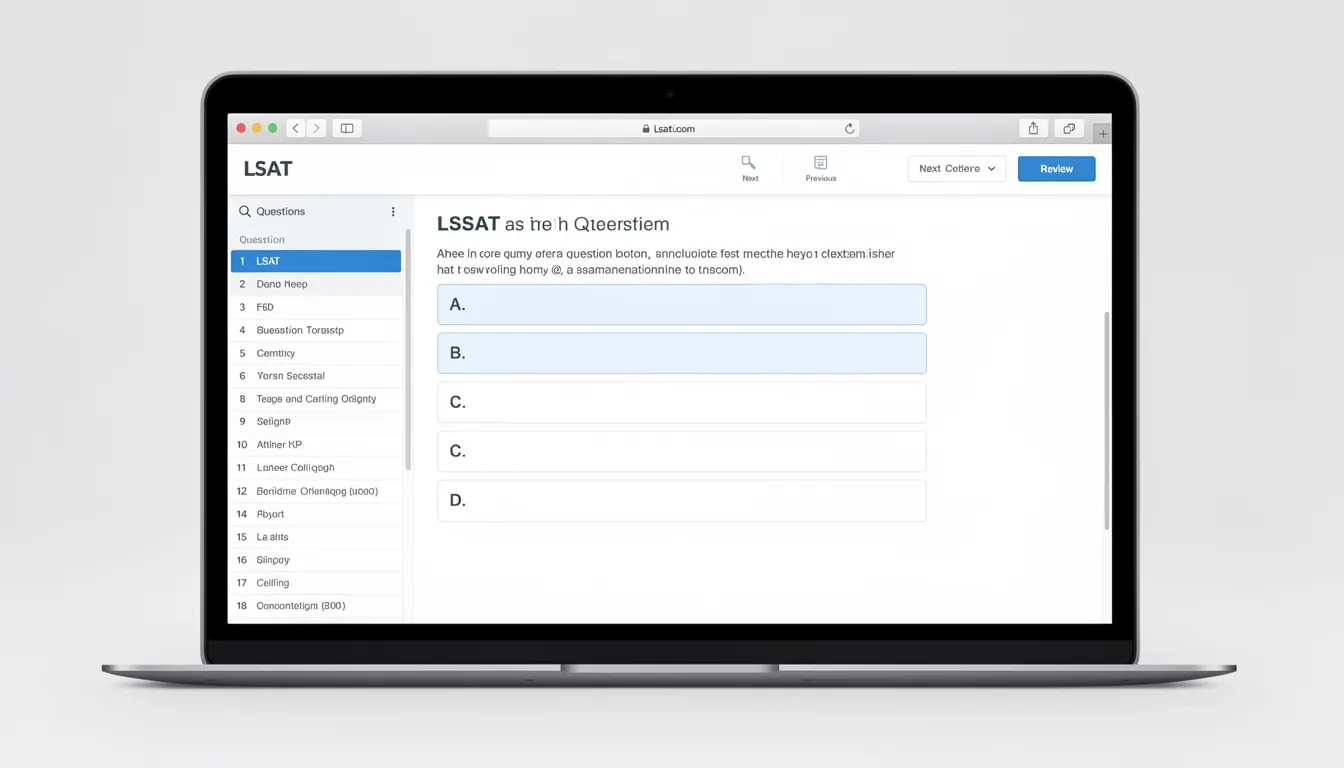
Your free LSAC account is where every budget test-taker should start. When you register at LSAC.org, you unlock LawHub, the official digital test prep platform, which includes full official PrepTests at no charge. You practice in the same interface you'll see on test day — timed or untimed, with score history and instant results.
That last part is underrated. A lot of students practice using PDFs or apps that look nothing like the actual exam. Then they show up on test day and waste the first section just adjusting to an unfamiliar screen. Practicing in LawHub eliminates that problem entirely.
If you need more tests later, LawHub Advantage unlocks the full PrepTest library for around $99-$120 per year. That's still less than one hour with most private tutors.
| Resource | Cost | What You Get |
|---|---|---|
| LSAC Free Account (LawHub) | $0 | Free official PrepTests, real exam interface |
| LawHub Advantage | ~$120/year | 60+ full PrepTests, full library access |
| Khan Academy LSAT | $0 | 13 full-length tests, video lessons, study plans |
| 7Sage Free Tier | $0 | Video lessons, explanation library |
| PowerScore LSAT Bibles (used) | $12–18 each | Deep instruction, all section types |
Khan Academy: The Free Resource That Punches Well Above Its Weight
Here's my honest take: Khan Academy's LSAT prep is the single best free resource available, and most people don't use it as seriously as they should.
Khan Academy built their LSAT program in direct partnership with LSAC. Every practice question comes from real past exams — not paraphrased, not approximated, but the actual official material. You get 13 full-length tests, video lesson walkthroughs, worked examples, and a personalized study plan that adapts based on your diagnostic results. All free.
One thing 2026 test-takers need to know: the LSAT format changed in August 2024. Analytical Reasoning (Logic Games) was removed from the exam and replaced with an additional Logical Reasoning section. Khan Academy reflects this change. A lot of older prep books, YouTube videos, and generic study guides haven't caught up, which means students using those sources are drilling an entire section that no longer exists.
The main limitation of Khan Academy is question volume. After working through all 13 practice tests, repetition kicks in. At that point, supplementing with LawHub Advantage or used PrepTest volumes makes sense. But most people who start Khan Academy never fully exhaust it before their test date anyway.
"Taking more full practice tests is the most effective way to prepare for the LSAT." — James Lorié, Principal Test Developer, LSAC
Building a Study Schedule Without Paying for One
Structured study schedules from prep companies cost $50–$300. You don't need them. Here's a framework built around the same principles, at zero cost.
Phase 1: Diagnose (Week 1)
Take one full practice test cold, before any studying. Score it honestly. This gives you a real baseline and shows which question types are costing you the most points. Skip this step and you have no idea where your time should go.
Phase 2: Concept Building (Weeks 2–6)
Work through Khan Academy's section lessons methodically. Don't drill full practice tests every day during this phase. The mistake most self-studiers make is taking test after test without stopping to understand why they're missing questions. Review is where improvement happens — not the test itself.
Phase 3: Full Tests and Review (Weeks 7–12)
Take one timed full-length test per week under realistic conditions. Then spend more time reviewing it than you spent taking it. A practical ratio: 37 minutes per section for the exam, 90 minutes reviewing wrong answers. If you're not spending that time with each mistake, the next test will look nearly identical to the last.
Phase 4: Polish (Final 2 Weeks)
Stop introducing new material. Repeat your weakest question types from earlier sessions. Run full test simulations that mirror test-day conditions down to the time of day.
Most test-takers targeting a meaningful score jump report spending 150–250 total hours preparing. That's 3–4 months at a moderate daily pace.
The Library Play Nobody Talks About
A Reddit user in r/LSAT described scoring a 167 on their first attempt using only library books and practice tests. A 167 puts you in approximately the top 5% of all LSAT takers globally. The story circulates, gets written off as luck. But it isn't, and the mechanism is straightforward.
Public libraries often carry the full LSAT PrepTest series. These are official past exams published by LSAC — each volume contains between 3 and 10 full tests with answer keys. Checking one out is free. Buying the same volume new runs $25–40. If your local branch doesn't have them, an interlibrary loan request can pull copies from libraries across your county or state at no charge.
Many branches also carry PowerScore's LSAT Bibles (Logical Reasoning, Reading Comprehension). The Logical Reasoning Bible remains one of the most thorough self-study books in the prep market, covering conditional logic, argument structure, and every major question type with worked examples. Finding a copy at your library is genuinely worth the trip.
One practical note: call before you go. The LSAT prep shelf tends to empty out near major test windows (particularly late summer and fall). If you're prepping in July or August, move fast.
Free Community Resources Worth Your Time
Reddit's r/LSAT is uneven but invaluable once you know how to use it. The community wiki contains curated study schedules, question-type breakdowns, and resource lists built by high scorers over years of active discussion. Searching for your specific weak area (say, "sufficient assumption questions" or "reading comprehension comparative passages") usually surfaces 10–20 threads of relevant advice from people who've already worked through the same problem.
For audio learners, three podcasts deliver real content rather than extended ads for their own paid products:
- Thinking LSAT (Nathan Fox and Ben Olson) — weekly strategy discussions, listener question breakdowns, and score review
- LSAT Demon Daily — short daily episodes focused on logical reasoning and reading comprehension analysis
- LSAT Unplugged (Steve Schwartz) — leans more toward process and motivation, useful if you're struggling with consistency
YouTube is mixed. The LSAT Demon channel has strong free explanation videos for individual questions. Search by question type or specific PrepTest number and you'll find what you need without wading through hours of generic content.
When Free Isn't Enough: Smart Upgrades Under $150
Free resources can carry most people through to a competitive score. But two specific situations call for targeted spending.
If your score plateaus after 4–6 weeks of practice: 7Sage's Core Curriculum (built by Harvard Law graduates) runs around $99 and goes significantly deeper on logical reasoning instruction than any free source. Their explanation videos for individual questions, especially harder conditional logic ones, are worth it if Khan Academy's explanations stopped clicking for you.
If you need more official tests: LawHub Advantage at ~$120 gives you 60+ full official PrepTests. That's more than 1,400 scored questions across complete exams, all written by the people who write the actual test — no third-party rewrites, no approximations. If you're 3–4 months out and running low on fresh material, this is where to spend.
For used books, the math is simple:
- Used LSAT PrepTest volumes: $8–15 on Amazon or eBay
- PowerScore LSAT Bibles (used): $12–18 each
Older PrepTest editions still work fine for practice. The August 2024 format change made Logic Games sections in older tests irrelevant to your score, but Logical Reasoning and Reading Comprehension material from any era is fair game.
What Not to Waste Your Time On
Some free resources aren't worth the time, regardless of cost.
Generic YouTube channels without LSAC affiliation, especially anything produced before August 2024, should be viewed skeptically. Logic Games walkthroughs are now off-topic for the current exam, and some channels still lead with them.
Third-party question banks that rewrite LSAT questions in "LSAT style" are a trap. The LSAT's exact phrasing is part of what makes it difficult. Practicing on paraphrased questions trains you on a slightly different task than the one you'll actually face.
Apps that promise to build LSAT skills through gamified logic puzzles aren't backed by outcome data. They didn't directly develop the skills the current LSAT measures before the format change, and they're even less relevant now.
Skip tutoring before you've seriously tried self-study. Most people who hire tutors do so before testing their own limits with free resources. That's paying for structure that a well-organized Reddit wiki and a three-month study plan would have provided.
Bottom Line
LSAC has handed you a real path to LSAT preparation that costs almost nothing. Use it.
- Create a free LSAC LawHub account and run a full diagnostic PrepTest before studying anything
- Do your structured prep through Khan Academy's free LSAT program — 13 official tests, zero cost, reflects the current exam format
- Pull library copies of PrepTest volumes and the PowerScore Bibles before buying anything
- Use r/LSAT's wiki and the Thinking LSAT or LSAT Demon Daily podcasts for ongoing strategy
- If you hit a plateau: LawHub Advantage (~$120/year) for more tests, or 7Sage (~$99) for deeper instruction
A 10-point score improvement through self-study is common. A 15-point improvement isn't unusual. What separates people who improve from those who stall isn't which prep course they bought. It's whether they spent real time understanding every answer they got wrong.
Frequently Asked Questions
Is Khan Academy's LSAT prep good enough to score above 160?
Yes, for many students. Khan Academy's material is official LSAC content, so the practice questions are identical to what appears on the real exam. Students targeting 160+ typically add LawHub Advantage for extra full-length tests once they've worked through Khan Academy's 13 built-in exams. The platform won't cap your score — running out of fresh practice material might.
How many hours of studying does the LSAT actually require?
Most first-time test-takers who reach their target score report 150–300 total hours of prep. That's roughly 3–6 months at an hour a day, or a more concentrated 2-month push at 2–3 hours daily. Your starting diagnostic score is the biggest variable: the wider the gap between baseline and target, the more hours you'll need. Don't plan the schedule before you take that first cold diagnostic.
Does it matter that Logic Games were removed from the LSAT in 2024?
Yes, and it's worth understanding what changed. Logic Games required the most specialized drilling of any LSAT section, and students often spent disproportionate prep time on it. With that section replaced by an additional Logical Reasoning section, all the major free resources now cover everything on the current exam without needing niche game-type drilling. If you're using prep materials from before August 2024, check whether they reflect this change.
Is there a myth about needing expensive prep to score competitively?
The myth is that free resources are a fallback for people who can't afford "real" prep. The reality is that the people who write the LSAT tell you the most effective study method (practice tests) and then give you access to those tests for free. Paying $8,750 for a live prep course doesn't change what the test measures or give you access to better questions — it buys you structure and accountability, which a disciplined self-studier can replicate without spending anything.
What's the biggest mistake budget LSAT studiers make?
Taking practice test after practice test without doing careful post-test review. The exam itself runs about 2.5 hours. If you're not spending at least equal time reviewing every wrong answer — tracing the reasoning, identifying the flaw in your logic — you're just reinforcing bad habits at speed. Score improvement lives in the review session, not the test session.
Is LawHub Advantage worth the $120?
If you've exhausted Khan Academy's free resources and still have 6–10 weeks before your test date, yes. You get 60+ full official PrepTests in the real testing interface. Compare that to buying individual PrepTest volumes at $25–40 each and the math clears quickly in LawHub Advantage's favor. If you're only 2–3 weeks out, spend that time reviewing what you already have rather than adding new tests.
Sources
- Presenting Free Official LSAT Prep: LawHub and Khan Academy | LSAC
- LSAT Prep & Study Guide: Best Practices & Free Resources (2026) | Leland
- How to Study for the LSAT Exam on a Budget 2026 | CRUSH The LSAT
- Khan Academy LSAT Prep Review: Is It Enough? | Test Prep Pal
- Khan Academy LSAT Test Prep Resources Coming to LSAC's LawHub | LSAC Blog