Best History Competitions for High School Students in 2026
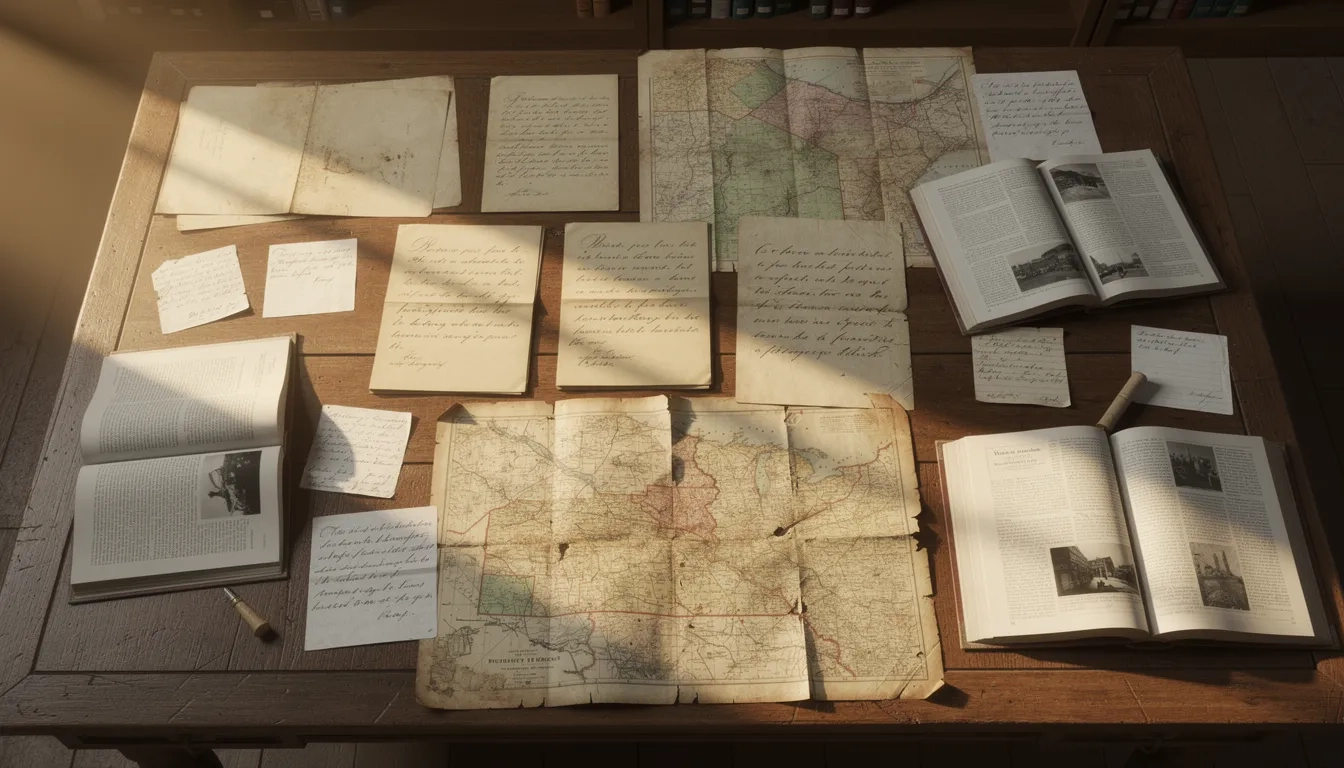
Every June, around 3,000 high school students travel to the University of Maryland, College Park for National History Day nationals. Some have been working on their projects since the previous September. A few fly in from overseas. One category finalist once submitted a paper on postwar Japanese-American citizenship petitions that she'd researched entirely through interlibrary loans — no archive trips, no special access. Just a specific question and months of work.
That kind of sustained, original thinking is exactly what colleges say they want to see. History competitions reward it more directly than almost any other extracurricular.
But which competition is right for you? A researcher, a writer, a public speaker, and a trivia obsessive should enter completely different events. This guide breaks down the best options for 2026, what each one genuinely demands, and how to choose.
At a Glance: 2026 History Competitions Compared
| Competition | Format | Top Prize | Key 2026 Deadline |
|---|---|---|---|
| National History Day | Research project (5 formats) | Special prizes + recognition | May 19 (nationals registration) |
| David McCullough Essay Prize | Essay (750–1,000 words or research paper) | $10,000 | June 22, 2026 |
| JFK Profiles in Courage | Essay (700–1,000 words) | $10,000 | January (annual cycle) |
| National History Bee | Individual buzzer quiz | Medals + IHO qualification | April 2026 |
| National History Bowl | Team buzzer (up to 6) | Plaques + IHO qualification | April 14, 2026 |
| Rumbaugh Historical Oration | 5–6 min memorized speech | $8,000 | July (annual) |
| Knight Essay Contest | Essay (800–1,200 words) | Scholarship award | February 15 |
| Concord Review / Emerson Prize | Long research paper (6,000–12,000 words) | $3,000+ | Rolling quarterly |
National History Day: The Flagship Competition
National History Day is the one most history teachers mention first, and the reputation is earned. It runs longer than any other competition on this list, it reaches all 50 states plus U.S. territories and international locations, and it demands the kind of work that actually builds historical thinking.
The 2026 theme is "Revolution, Reaction, Reform in History," timed specifically to the nation's 250th birthday. Students develop a project around this theme and submit in one of five formats: exhibit, documentary, performance, website, or paper. Projects are judged 80% on historical quality and 20% on presentation clarity, so a shaky display board won't sink you if the research is solid.
The structure is multi-stage. Projects start at the school level, move to regional and affiliate (state) contests, and the top two entries in each category from each affiliate qualify for nationals. The 2026 National Contest runs June 14–18 at the University of Maryland, with the awards ceremony on June 18 at the Xfinity Center. Student registration opened April 15 and closes May 19.
The biggest mistake students make: picking a topic they find interesting but haven't actually researched yet. By February they're scrambling. Students who consistently advance at regionals picked their thesis before October and had primary source documents in hand by November.
A winning NHD project doesn't cover a big event broadly. It makes a specific, arguable claim. Not "the Cold War changed American society" but "the 1953 Rosenberg execution reshaped how the American left publicly discussed civil liberties for the next decade."
The Essay Competitions Worth Real Attention
If sitting down to write a tightly argued historical essay sounds more appealing than building a display board, three competitions deserve your attention.
The David McCullough Essay Prizes, run by the Gilder Lehrman Institute of American History, offer the largest single cash prize in this space: $10,000 for first place, plus a $500 award to the winning school. Second place pays $5,000 (also plus $500 to the school). The 2026 submission deadline is June 22 at 8:00 p.m. ET.
There's one catch. You need to be enrolled in a Gilder Lehrman Affiliate School (the program covers thousands of schools nationally, but not all). If yours isn't affiliated, ask your department head — affiliate status is free for the school and usually takes about a week to set up. The institute's collection holds over 87,000 primary source documents, and the interpretive essay option (750–1,000 words) asks you to closely analyze just one of them.
Judges evaluate for historical rigor, use of evidence, and what they describe as "empathy and imagination." That language is a signal. A dry recitation of what happened won't score well. You need to actually argue something.
The JFK Profiles in Courage Essay Contest, administered by the John F. Kennedy Library Foundation, asks students to write 700–1,000 words about an act of political courage by an elected official since 1917. The top prize is also $10,000. First-place winners speak at the Kennedy Library in Boston — the kind of experience you're still describing in interviews years later.
"The best submissions aren't just admiring a politician. They're arguing about why that choice was genuinely difficult given the political pressures of the time."
The deadline falls in January each year. Start well before the holidays if you want to do this right.
The Knight Essay Contest (formally the George S. & Stella M. Knight Essay Contest, run by the Sons of the American Revolution) targets the American Revolution, Declaration of Independence, or Constitution. At 800–1,200 words, it's shorter than the McCullough competition. The deadline is February 15. The prize structure is smaller, but here's the thing: far fewer students know this competition exists. That asymmetry is worth something when you're calculating where to spend your effort.
Buzzer Competitions and the Path to the Olympiad
If your historical knowledge runs broad rather than deep — you can name the Treaty of Brest-Litovsk, explain its significance, and follow up with a question about the German home front — buzzer competitions are your format.
The National History Bee runs in two stages. Students take an online qualifying exam and must score at least 75 points to advance to nationals. The 2026 National Championships took place April 23–26 at the Crystal Gateway Marriott in Arlington, Virginia. There are two high school divisions: Varsity (grades 11–12) and Junior Varsity (grades 9–10). Entry fees run $330 for solo competitors up to $770 for a team of four.
The National History Bowl is the team version — up to six students per squad, covering a wider subject range that includes European history, military history, history of science, religion, and philosophy. The Bowl rewards teams that can cover each other's blind spots. Team registration for 2026 Nationals closed April 14.
Both competitions funnel top performers toward the International History Olympiad (IHO), and that's where the stakes get interesting. The 6th IHO held in Paris in July 2025 drew 432 competing students from 61 affiliations across 24 countries and 34 U.S. states. The format mixes buzzer rounds with multiple-choice exams and a "Hexathlon" event built around audio clues, historical maps, and crossword-style questions. Field trips to Versailles were part of the program.
The 7th IHO is scheduled for Summer 2027 (the event is biennial). Students currently in grades 9–10 should start qualifying rounds now to be in position.
The Rumbaugh Oration: Undercompeted and Underrated
Most students have never heard of the Joseph S. Rumbaugh Historical Oration Contest, which is exactly why it belongs on your radar. Run by the National Society of the Sons of the American Revolution, it asks students to deliver a 5–6 minute memorized speech on the American Revolution and its contemporary relevance.
First place pays $8,000. Second and third place pay $3,000 and $2,000. The 2026 entries must reference the nation's 250th anniversary, which actually gives competitors a natural angle rather than a constraint.
The judging criteria reward both historical accuracy and delivery. This isn't a classroom presentation — judges want persuasion. Students who've done competitive debate or theater have a structural advantage, but the real edge goes to anyone who picks a genuinely overlooked corner of the Revolution and makes it feel urgent. "Valley Forge" has been done to death. The role of free Black soldiers in the Continental Army at the Battle of Rhode Island in August 1778 has not.
The Concord Review: The Long Game
The Concord Review is the only peer-reviewed journal that publishes long-form history research papers written by high school students. Getting published is the goal; winning the Emerson Prize is the bonus.
Published papers typically run 6,000–12,000 words. The bar for acceptance is higher than any essay contest listed above, and the review process is not fast. But a Concord Review publication is unusually strong for a high schooler applying to humanities programs — it demonstrates that your work cleared a genuine editorial standard. The Emerson Prize (which recognizes the strongest papers across quarterly issues) has awarded over $3,000 to top finalists. Submissions are accepted on a rolling basis.
How to Choose the Right Competition
Here's a decision framework based on your strengths:
- Strong researcher, 6+ months of lead time: Start NHD in the fall. The multi-round structure provides feedback at each stage, and five format options mean you're not locked into writing an essay if a documentary suits your topic better.
- Strong writer with a finished or near-finished essay: Polish it for the McCullough or JFK contest. Don't start from scratch — start from something you already know works.
- Broad trivia knowledge, fast recall: Register for the History Bee qualifying exam. The online stage is low-stakes; the upside (nationals and potential IHO qualification) is significant.
- Strong public speaker: The Rumbaugh oration is genuinely undercompeted and pays more than most students realize.
- Serious long-form researcher aiming for academic recognition: Submit to the Concord Review. It takes months, but the payoff in application credibility is hard to replicate.
One thing I'd flag: don't spread yourself across five competitions at once. The students who win tend to go deep on one or two, not wide on everything.
My honest view: NHD remains the most valuable competition for developing actual historical thinking. The prize structure isn't flashy. But the process — building a thesis, tracking down primary sources, iterating through judge feedback across multiple rounds — teaches skills that no single-submission essay contest can match. If you're a junior right now and haven't started, September is your on-ramp.
Bottom Line
- National History Day (2026 theme: Revolution, Reaction, Reform) is the best all-around competition for building real historical skills. Start your project this fall for the 2026–27 cycle, with nationals in June 2027.
- David McCullough Essay Prize ($10,000 first place) has the highest cash value for a single submission. Deadline is June 22, 2026 — check whether your school is a Gilder Lehrman affiliate before you start.
- JFK Profiles in Courage rewards argumentation about political decision-making, not just narrative history. Deadline is in January; plan accordingly.
- History Bee and Bowl are the most direct path to the International History Olympiad (next edition: Summer 2027). Qualifying rounds happen this fall.
- Rumbaugh Oration pays $8,000 to first place and is dramatically underentered compared to essay competitions.
Pick competitions that match how you actually think. A researcher should not waste months on a buzzer contest, and a natural speaker shouldn't spend that time writing a 12,000-word paper.
Frequently Asked Questions
Do history competitions actually improve college applications?
Yes, and in a specific way. Admissions officers at selective schools look for evidence of sustained intellectual engagement beyond class grades. A National History Day national finalist or a published Concord Review author shows original research sustained over months, which is harder to manufacture than a test score. JFK contest winners are also listed publicly on the Kennedy Library website.
Can homeschooled students participate in National History Day?
Yes. NHD explicitly includes homeschooled students. You connect with your state or regional affiliate coordinator to find the correct entry point — the NHD website lists affiliate contacts for all 50 states, U.S. territories, Department of Defense schools, and several international locations.
Is the David McCullough Essay Prize open to all high schoolers?
Only students enrolled in Gilder Lehrman Affiliate Schools are eligible. But affiliate status is free for the school and typically takes about a week to set up. If your school isn't affiliated, bring it up with your history department — it opens access to other Gilder Lehrman programs beyond just the prize competition.
What's the difference between the History Bee and the History Bowl?
The Bee is individual; the Bowl is team-based (up to 6 students per squad). Both use buzzer formats, both are run by International Academic Competitions (IAC), and both funnel top performers toward the International History Olympiad. If you have a group of history-obsessed classmates, the Bowl lets you cover each other's weaker areas.
Does the International History Olympiad happen every year?
No. It runs in odd-numbered summers on a biennial schedule. The 6th Olympiad was in Paris in July 2025; the 7th is planned for Summer 2027. Students currently in grades 9–10 who want to compete in 2027 should start participating in History Bee and Bowl qualifying rounds this academic year.
Is the Concord Review worth the effort for most students?
It depends on your goals. If you're aiming for top-tier humanities programs or plan to study history seriously in college, a publication credit is unusually strong for a high schooler. If you're looking for a quick win or broad recognition, the time investment (often 6+ months for a paper of that length and depth) probably isn't the right trade-off compared to other options on this list.
Sources
- National Contest — National History Day
- Top 9 History Competitions for High School & Middle School Students — Polygence
- David McCullough Essay Prizes — Gilder Lehrman Institute of American History
- International History Olympiad
- Top 11 History Competitions for High School Students — AdmissionSight
- 7 Notable History Competitions for High School Students — Say Hello College