How to Start a Mental Health Awareness Club (And Keep It Running)
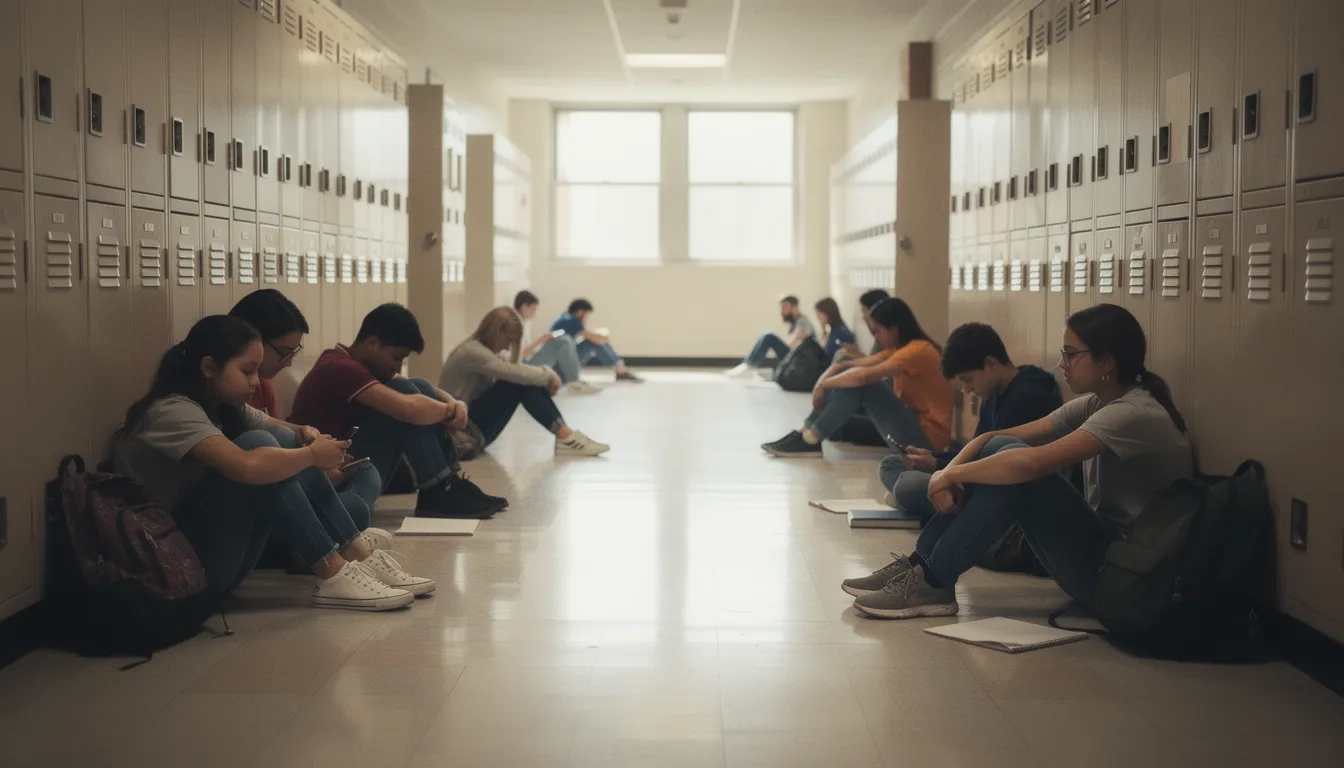
The idea usually comes after a friend's breakdown in the library, or a counselor mentions "stigma" for the hundredth time, or you read a statistic so bleak it won't leave your head. Then comes the plan: start a mental health awareness club. But here's what almost nobody tells you. Most of these clubs die quietly before spring semester. Not because of bad intentions. Because nobody mapped out what happens after the kickoff meeting.
This is that map.
The Numbers Behind the Urgency
According to CDC data, up to 40% of U.S. high school students report persistent feelings of sadness or hopelessness. One in five has seriously considered suicide in the past 12 months. And one in five of those students never gets professional help.
Those numbers explain why mental health clubs matter. They also explain why doing this right beats doing it enthusiastically.
Bring Change to Mind (BC2M), a nonprofit co-founded by actress Glenn Close and her daughter Jessie Close in 2010, has spent the past decade building one of the largest student-led club networks in the country. By 2024, they had 580 active clubs across 42 states. Their internal research found that members showed measurable reductions in mental health stigma — not vague self-reported improvements, but a genuine shift in how students think about their peers.
That's the goal. Not a warm space where people vent. A club that changes how a whole school talks about mental health.
What a Mental Health Club Actually Is (And Isn't)
This distinction matters more than people realize. A mental health club is not a support group. It isn't therapy. It's a peer-led space where students run awareness campaigns, organize events, and connect classmates to resources that might otherwise feel invisible.
Think of it as the PR department for mental health at your school. You don't provide clinical care; your school counselor does that. You provide visibility and community.
Erika's Lighthouse, one of the most established club frameworks available to schools, requires affiliated clubs to host at least four schoolwide activities per year. Not four meetings. Four events visible to the whole campus. A club that only meets internally is just a study group. A club that puts up a wall of anonymous worry notes in the hallway reaches students who'd never walk through any door marked "mental health."
Step One: Before the First Meeting
You need two things before anything else: administrative approval and a faculty advisor. In that order.
Talk to your principal, assistant principal, or student activities coordinator. Every school has its own process for recognizing new clubs. Some require a petition with student signatures (typically 10–25, depending on the school). Some just need a form and an advisor's name. Find out what yours requires, then do exactly that — not approximately that.
Finding an advisor is where most people cut corners. Don't just ask whoever says yes first. You want someone who is:
- Genuinely comfortable talking about mental health, not just tolerant of the topic
- Available to attend meetings consistently, not just willing to sign the paperwork
- Willing to go to bat with administration when things get complicated
School counselors are the obvious pick. But English teachers, PE coaches, and school nurses often make surprisingly good advisors because they already have trust relationships with students built outside a formal counseling context.
Once you have approval and an advisor, set up three leadership roles at minimum: president, secretary, and treasurer. The treasurer matters even if you have $0 in the bank, because you won't stay at $0 for long.
Independent Club vs. National Affiliate
Here's a decision most guides skip entirely. You can build a completely independent club, or you can affiliate with an established national program. Each has real tradeoffs.
| Model | Best For | What You Get | Key Tradeoff |
|---|---|---|---|
| Independent | Schools wanting full creative control | Total flexibility on focus and format | Start from scratch on resources, curriculum, and credibility |
| NAMI On Campus | High schools and colleges wanting structured programming | Curriculum, local affiliate support, mini-grants up to $1,500 | Must coordinate through a local NAMI chapter |
| Bring Change to Mind (BC2M) | High schools focused on stigma reduction | $500 grant, guidebooks, marketing materials | Narrower focus on stigma specifically |
| Erika's Lighthouse | Middle and high schools with strong faculty support | Free curricula, campaign toolkits, grants up to $500 | Requires 4 schoolwide events per year minimum |
My honest take: affiliate with an established program if you can. The ready-made resources alone save months of work. You get activity guides, campaign templates, and sometimes funding without writing a single grant proposal from scratch. Going independent makes sense if your school has unique needs that don't fit standard frameworks, or if you've already built something similar and know what you're doing.
If you're in California, NAMI California's partnership with the California Department of Education provides $1,500 mini-grants specifically to help student teams start and sustain clubs. That's real money, available to people who apply for it.
Your First Year, Quarter by Quarter
The first year is when most clubs build momentum or quietly disappear. Map it out before you start, because the planning pays off in February when everyone's tired and midterms are eating the schedule.
Q1: Establish and Recruit (Months 1–3)
- Secure official school recognition
- Hold 2–3 interest meetings focused on community-building, not events yet
- Elect leadership and set up a shared communication channel
- Lock in your full-year event calendar now, while energy is high
Q2: First Public Events (Months 4–6)
- Run your first schoolwide event — a guest speaker, a poster campaign, or a Mental Health Awareness Week activation
- Apply for grants from your affiliate program before deadlines close
- Meet with your school counselor to map existing resources so you're pointing students toward help, not duplicating it
Q3: Deepen the Work (Months 7–9)
- Run a second major event; stress relief during finals is a proven crowd-pleaser
- Evaluate what landed and what got ignored — adjust before next year
- Start recruiting incoming students so the club survives graduation
Q4: The Handoff (Months 10–12)
- Elect next year's leadership before the school year ends
- Document your budget, event recaps, and what worked
- Write a one-page "club manual" so next year's president isn't starting from zero
The handoff is where most clubs collapse. A club that dies when its founder graduates never really built anything.
Activities That Actually Move People
Not every activity is worth the effort. Looking across BC2M, NAMI, and Erika's Lighthouse programs, a few patterns stand out consistently.
High-impact, low-effort:
- Anonymous worry walls where students post stressors without their names — powerful because it shows how many people carry the same fears alone
- Finals week care packages with snacks, stress balls, and a card listing the counselor's number (a kit like this runs about $3 per student in materials)
- Lunchtime mental health trivia — unexpectedly effective at getting students to talk about topics they'd sidestep in any other format
Medium-effort, high-visibility:
- Guest speakers with lived experience of mental illness, not just clinicians presenting slides
- "Letters to a Friend" campaigns where students write encouragement to peers having a rough time
- A mental health resource card distributed schoolwide, with the counselor's contact and local crisis lines printed on it
One category that consistently underperforms: purely educational presentations during class time. Students tune out. The most effective programming is social, peer-to-peer, and slightly unexpected. Therapy dog events aren't a gimmick — they create a low-pressure entry point for conversations that actually matter.
Finding Funding for Your Club
You don't need a budget to start, but money helps things stick around. Here's what's available right now:
Grants to apply for immediately:
- BC2M: $500 upon club registration
- Erika's Lighthouse: up to $500 for approved clubs
- Youth M.O.V.E. Dare to Dream America: up to $1,000 for projects promoting mental health awareness
- NAMI California (for California schools only): $1,500 mini-grants through the CDE partnership
Fundraising that works without much overhead:
- Mental health-themed stickers and bracelets printed with crisis line numbers — students buy these
- Bake sales tied to a specific awareness event so the cause stays visible, not just the food
- A pay-it-forward snack station during finals where students donate to fund free food for classmates
A common mistake is overspending on the first event and scrambling for the rest of the year. Plan your biggest investment for your highest-visibility moment, keep routine activities cheap, and protect some budget for year-end.
Bottom Line
Starting a mental health awareness club is one of the most direct ways a student can change how a school community handles mental health. The clubs that last aren't the ones with the most energy at kickoff — they're the ones that built structure early and handed it off well.
If you're starting today, here's what to do first:
- Find out your school's exact club registration requirements before anything else. Requirements vary more than people assume.
- Choose an affiliate program. BC2M, NAMI On Campus, and Erika's Lighthouse all offer free resources, grant money, and frameworks that remove months of guesswork.
- Pick an advisor who genuinely cares, not just someone willing to sign the form.
- Plan four events for your first year before your first meeting. Put them on the calendar before someone else fills those dates.
- Build the handoff from day one. The real measure of a club isn't year one — it's whether it's still running when you're gone.
Frequently Asked Questions
Do I need personal experience with mental illness to start a mental health club?
No. The most effective founders are often students who care about their community rather than people with their own clinical history. What matters is commitment to peer education and stigma reduction, not personal credentials. That said, including members with lived experience tends to make programming feel more authentic and less like a health class.
What's the difference between a mental health club and a peer support group?
A peer support group exists to help its members process their own experiences. A mental health awareness club exists to change the culture of the school. The club refers students in crisis to professionals — it doesn't provide care itself. Conflating the two creates real liability issues and can burn out club members who aren't trained to handle acute distress.
Can middle schoolers start a mental health awareness club?
Yes. Erika's Lighthouse specifically offers age-appropriate curricula and support for middle school clubs, with content calibrated to that developmental stage. NAMI also has adaptable programming. Middle school is arguably where stigma-reduction work has the longest reach, since attitudes toward mental health form early and tend to harden fast.
How do I get students to actually show up?
Stop making the meetings the main thing. Clubs with the highest participation build visibility through schoolwide events, not internal gatherings. Students who'd never attend a "mental health club meeting" will absolutely show up for a finals stress-relief day or care package drive. Use meetings to plan those events — then make sure everyone on campus knows about them before they happen.
Is there any evidence that these clubs actually make a difference?
BC2M's research found significant, measurable reductions in stigma among club members — documented shifts in how students perceived and described mental illness in their peers. NAMI's Peer-to-Peer program participants showed improved confidence identifying depression and greater willingness to seek help themselves. These are outcomes from programs with more than a decade of data behind them.
What if my school administration pushes back on the idea?
Frame the club as student wellness programming rather than a mental health intervention. Administrators are often more comfortable with that language. Bring CDC data on student mental health rates — it's public, credible, and hard to argue with. Pointing to BC2M or NAMI On Campus as your model also helps, because administrators can look those organizations up and see a track record instead of relying solely on a student pitch.