Student Government: How to Run and Win Your Election
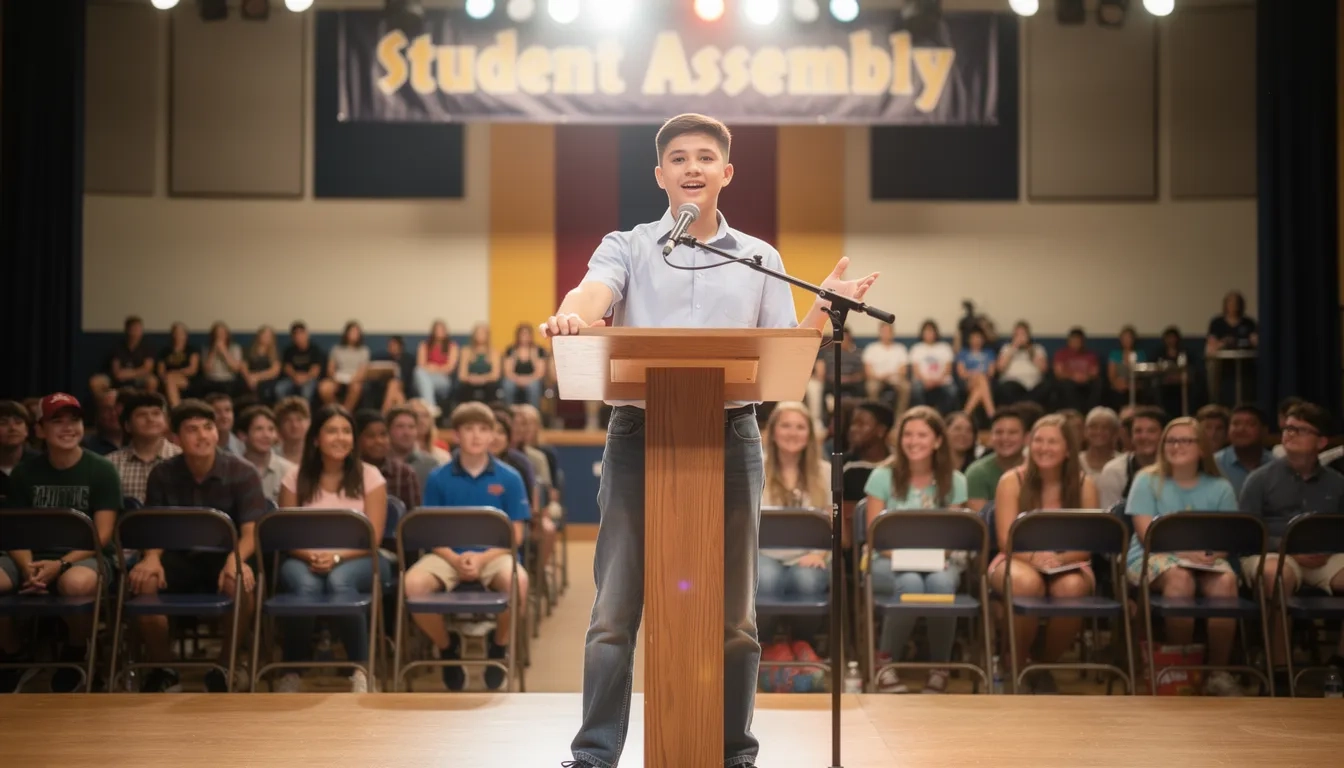
Most students who lose student government elections were well-liked. They had decent ideas, made posters, and showed up to everything. What tripped them up was running a campaign about themselves instead of running one for their voters. The difference between a candidate who says "I'll make this school better" and one who says "here's what 47 of you told me, and here's my specific plan" is where elections actually get decided.
Why Running Is Worth Your Time
Student government builds concrete, transferable skills that most extracurriculars don't touch. Budget management. Running meetings that don't fall apart. Negotiating between competing interests. The National Association of Student Personnel Administrators (NASPA) has tracked student engagement outcomes for years, finding that governance participants develop communication and leadership capabilities at rates well above non-participants.
When you can tell a college interviewer "I managed a $14,250 student activities budget and proposed a scheduling change that cut cafeteria wait times" — that's a different conversation than "I did extracurriculars." The specificity is the whole point.
There's also a harder lesson baked into this experience: institutions move slowly, bureaucracy is real, and some genuinely good ideas never happen. Learning that in high school or early college is useful. It builds patience and pragmatism that serve you far longer than any election result.
The Groundwork Phase: Start Before Anyone Else Does
The biggest tactical mistake candidates make is announcing their candidacy first and building relationships second. By then, you're already behind.
Relationships built before campaign season are worth ten times more than ones built during it. Students can spot a transactional friendship from a mile away. If someone they've never spoken to suddenly starts sitting with them at lunch two weeks before the election, they know exactly what's happening. That kind of move backfires.
Here's what a realistic pre-campaign timeline looks like for candidates who win:
- 6+ months out: Join one or two clubs. Attend student council meetings even as a non-member. Volunteer for school events (genuinely, not as a campaign strategy).
- 3-4 months out: Start informal conversations with classmates. Ask what they'd like to see changed. Don't pitch. Listen.
- 4-6 weeks out: Announce your candidacy once your platform is built from actual feedback.
- Final 2-3 weeks: Launch materials, make your case, and mobilize your supporters.
One non-obvious move worth considering: starting with a smaller position is often smarter than going straight for president. PrepScholar's student election guide recommends building through secretary or treasurer roles first. You learn how the body actually functions, and voters get a real track record to evaluate rather than just a promise.
Building a Platform That Students Actually Vote For
Here's the trap almost every first-time candidate falls into. They decide on a platform before asking anyone what they want. Then they're confused when voters don't respond.
Platform research means actually talking to people. Walk up to 12 classmates, not your close friends, and ask one question: "What's the one thing you'd change about this school?" Write down every answer. Patterns emerge fast. Those patterns are your platform.
The Modern Campus (Presence) student engagement blog makes a useful point: different student populations want entirely different things. Commuter students often care about midweek meal options or parking. Student parents prioritize childcare access. First-year students want help feeling less lost on campus. Your school's population shapes what you should actually propose.
The candidates who win are the ones who can point to real feedback. "I talked to 47 students and here's what they told me" is hard to argue against — and even harder to copy.
Specific proposals also outperform vague ones because they're harder for opponents to adopt wholesale.
| Vague Platform | Specific Platform |
|---|---|
| "I'll improve school spirit" | "Monthly themed Fridays, starting with a $500 activities budget" |
| "I want to help students" | "Free subject-organized tutoring board in the library" |
| "Better communication" | "Weekly 5-minute student council update video on Instagram" |
| "More student involvement" | "One new student club per semester with $200 seed funding" |
Any opponent can run on "school spirit." They can't easily run on your concrete, researched proposal.
Campaign Materials: One Slogan, Everything Else Is Secondary
Posters matter less than most candidates think. Done poorly, they actively hurt you. Done right, they reinforce what voters already heard from you directly.
The one-slogan rule is firm. Every piece of guidance on student elections agrees: pick one slogan and use it on every piece of material. Multiple slogans split your brand. You want a voter to encounter your name five times in three days and have the same phrase attached each time.
For physical materials, eballot's SGA campaign guide recommends printing more items than your expected voter count. If your grade has 87 students, print 100 or more stickers or pencils with your slogan. Items travel. They sit on desks in classrooms you'll never visit.
Social media in 2025 means TikTok and Instagram. A 45-second video walking through your three main proposals outperforms a week of flyers. Honest and direct beats polished. One well-lit take on your phone explaining exactly what you want to do and why is a better use of time than designing a three-color gradient poster.
The most underused tactic in any student election: walking through the cafeteria and introducing yourself to tables you don't normally sit with. Awkward, yes. Effective, extremely. You listen, ask one question, leave an impression no flyer can replicate.
The Candidate Speech: Three Minutes to Make Your Case
The typical student candidate speech is forgettable. "Hi, I'm [name], I care about this school, please vote for me." The audience mentally checks out within 30 seconds. You can do much better with a simple structure.
The speech arc that actually works opens with a real problem, establishes brief credibility, presents three concrete proposals, explains how you'll make them happen, then closes with your slogan:
- Hook (20 seconds): Name a specific problem you heard from students directly.
- Credibility (30 seconds): One or two concrete things you've already done.
- Platform (90 seconds): Three proposals. Not ten. Three.
- Implementation (20 seconds): The how, not just the what.
- Close (20 seconds): Slogan, your name, call to vote.
Time it out loud before the day. Running over signals disorganization. Running under signals low ambition. Target somewhere between 2:45 and 3:15.
One delivery detail most students miss: make eye contact across different sections of the room, not just at your friends in the front. Pick a face, hold it for one sentence, move to another section. It makes each listener feel addressed individually rather than watching someone read at a podium.
Voter Mobilization: The Final Week Is Where It's Actually Decided
Here's something most candidates don't realize until after they've already lost. In a typical school election, turnout is lower than anyone expects. A student body president at a school of 400 students might win with just 73 votes total.
Low turnout favors organized candidates. You don't need everyone to vote for you. You need your supporters to actually show up.
What the final week looks like for candidates who win:
- Post social media reminders with the exact voting date and time — not once, but three times across the week
- Ask 15 supporters to each personally remind three friends (that's 45 direct contacts without your effort)
- Position yourself near common areas on election day and remind people who pass by
- If your school uses an online voting platform, include a direct link in every reminder message
Most campaigns collapse right here. Candidates do the work, build the materials, nail the speech — then assume momentum carries itself. It doesn't. Personal outreach in the final five days is not glamorous, but it's where the actual election happens.
One firm rule on this: never pressure anyone, and never claim to know how others are voting. Remind, don't coerce. How you treat people during this stretch tells the student body a lot about how you'd govern.
After the Election: Win or Lose, What Comes Next
If you win, the first 30 days set the tone for everything that follows. Hold a short informal listening session — lunch-length, no formal agenda — where students can tell you what they want prioritized first. It shows you meant what you said about listening, and it gives you real material to bring to your first council meeting.
Don't try to accomplish everything at once. New officers often overpromise in month one, burn out by October, and deliver less than a focused effort on two things would have achieved. Pick your top priority. Move it forward. Document the progress publicly.
If you lose, the most important decision is whether to stay involved. Students who remain engaged after a loss — attending meetings, volunteering for events, contributing to the work — win in the next election cycle far more often than students who disappear after the results. One loss is data. Two losses suggest adjusting strategy. Three losses might mean the role isn't the right fit, and that's not failure; that's useful information.
The candidates who treat this as actual public service, rather than a credential to collect, are the ones who look back on the experience with real pride — whatever the outcome.
Bottom Line
- Start building genuine relationships six months before elections, not six days before announcing your candidacy.
- Research your platform by talking to students outside your social circle. The issues they raise are your platform.
- One slogan, specific proposals, targeted outreach. Simple and concrete beats broad and aspirational every time.
- The final five days of voter outreach matter more than any poster. Low turnout means an organized base wins.
- Whether the result goes your way or not: stay involved. Student government rewards persistence more than talent.
Frequently Asked Questions
Do I need to be popular to win a student government election?
Not in the way most students think. Broad name recognition across different social groups matters more than deep popularity within one. Students who cross social circles — the athlete who also volunteers, the honor student who's friendly with every club — consistently outperform candidates with narrower support. Depth with a small group won't overcome breadth on election day when turnout is low.
What if I don't have a great GPA — can I still run?
Many schools require a minimum GPA, typically between 2.5 and 3.0, to maintain eligibility for student government. Check your school's specific rules before announcing your candidacy. If you're below the threshold, addressing that first is a better use of your energy than building campaign materials.
Isn't student government just a resume line?
That's the cynical take. The honest answer: yes, it helps college applications and resumes, but only if you actually do the work. Admissions readers at competitive schools can tell the difference between a student body president who managed real budgets and ran real events versus one who showed up to a few meetings. The substantive experience is what pays off, not the title itself.
How long should my candidate speech be?
Two to three minutes, hard cap. Rehearse it enough that you don't need notes on the day. Most schools impose a time limit for candidate speeches, and running over signals poor preparation. Under two minutes signals you didn't take the opportunity seriously. Aim for a practiced 2:45.
Should I go negative against another candidate?
No. Going negative in a school election almost always backfires. Voters are watching how you treat people during the campaign, and that shapes their impression of you regardless of what you said about your opponent. It also burns a bridge you'll likely need — if you both serve on student council, you'll have to work together anyway. Compete on your platform, not against their character.
What's the most common reason student candidates lose?
Running a campaign about themselves instead of their voters. A candidate who talks about what they want to accomplish versus a candidate who talks about what students have been asking for — the second type wins more often than not. Frame every proposal in terms of what it does for your classmates. The moment a speech sounds more like a personal statement than a service offer, you've already lost half the room.