Is a STEM Degree Still Worth It in 2026?
Six years ago, a computer science degree was roughly as close to a guaranteed job as America offered. Companies were in bidding wars over CS graduates, starting salaries were crossing six figures, and the career floor felt solid. That floor cracked somewhere around 2022, and by 2026 it looks genuinely different. US entry-level tech job postings fell 67% between 2023 and 2024. Major tech companies now hire recent graduates at half the rate they did before the pandemic. So: is a STEM degree still worth it? Yes — but the question has to be much more specific than that.
The Salary Gap Is Still Real
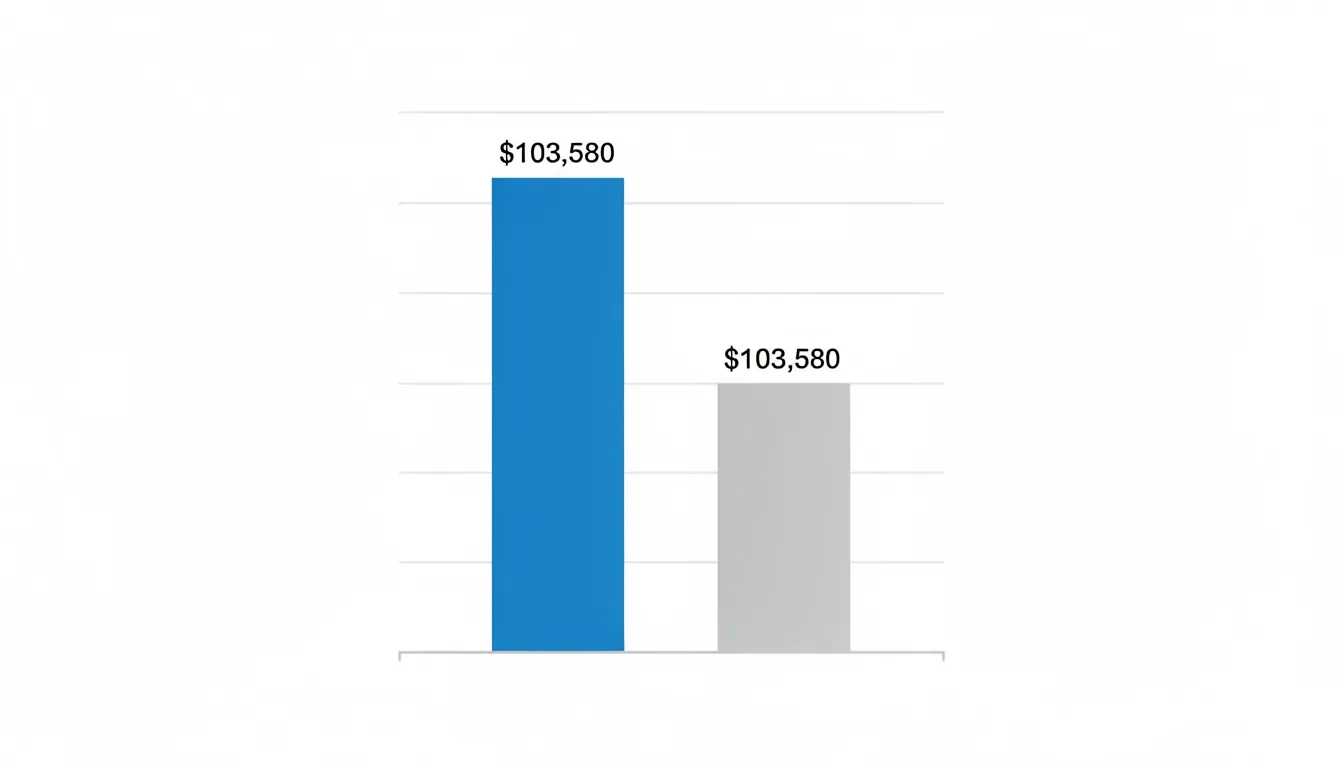
The wage advantage of a STEM degree hasn't disappeared, whatever the headlines imply. The median STEM salary hit $103,580 in 2024, according to BLS data, more than double the $48,000 median for non-STEM jobs. NACE projects average starting salaries of $81,198 for engineering graduates in the Class of 2026. Those aren't rounded estimates — they're the specific numbers hiring managers are benchmarking against.
STEM occupations overall are projected to grow 10.4% between 2023 and 2033, compared to 4.0% for all occupations. Some specific fields are growing much faster. Mathematical sciences: 28.4%. Data scientists: 36%. Information security analysts: 29%. Those are serious numbers.
The problem is that aggregate data hides two very different stories happening at the same time — one at the senior level, one at the entry level. The senior-level numbers are great. The entry-level numbers are genuinely rough, and that's where every new graduate starts.
The STEM Split: Which Fields Actually Win
"STEM" spans everything from aerospace engineering to microbiology, and lumping them together in 2026 misses most of what actually matters. The gap between the best-performing and worst-performing STEM fields is now wider than the gap between the average STEM field and the average non-STEM field.
| STEM Field | Unemployment Rate | Job Growth to 2033 |
|---|---|---|
| Civil Engineering | 1.05% | 5% |
| Nursing | 1.42% | 6% |
| Aerospace Engineering | 2.2% | 6% |
| Information Security | — | 29% |
| Data Science | — | 36% |
| Mathematical Sciences | — | 28.4% |
| Computer Science | 6.06% | — |
| Computer Engineering | 7.8% | — |
| Microbiology | — | 4% |
| Biological Technicians | — | 3% |
The fields with unemployment under 2% share a trait: they're grounded in physical infrastructure, human bodies, or hardware — work AI can assist with but not yet replace at scale.
CS and computer engineering tell a different story. Computer engineering carries the second-highest unemployment rate of any major. CS graduates face 6.06% unemployment at graduation — higher than fine arts majors (6.1%), despite eventually earning roughly double the median wage once employed. The bench life sciences aren't much better. Biological technicians are projected to grow just 3% through 2033, barely faster than what BLS projects for plumbers.
The table is stark. "STEM vs. non-STEM" is the wrong comparison. The right question is which branch of STEM.
The Entry-Level Trap
Here's the structural problem that doesn't show up in salary averages: companies are no longer building pipelines of junior talent.
SignalFire's 2025 State of Tech Talent report found that new graduate hiring at major tech companies fell more than 50% since 2019. In 2024, recent graduates made up just 7% of all new hires at the 15 largest tech firms — even after a hiring rebound. The average age of technical hires has increased by three years since 2021.
The cause is partly AI. Tasks that used to train entry-level people — debugging code, writing boilerplate, running routine data analyses — are increasingly what AI tools do automatically. A Stanford analysis found a 13% relative employment decline for workers aged 22-25 in AI-exposed occupations. Software developers in that age bracket saw a 20% employment decline from late 2022 to September 2025. Workers over 30 in the same roles saw 6-9% growth.
"Everyone is so panicked — even our juniors." — Rishabh Mishra, engineering graduate, describing his cohort of 400 classmates in which fewer than 25% secured job offers in 2024.
This isn't limited to one market. Entry-level job ads in Q1 2025 were 45% below the five-year average globally. True entry-level positions represented only 2.5% of all tech postings by April 2024. The entry-level years used to be how you learned your craft on the job. That path is narrowing, quickly.
What Peter Thiel Got Half Right
In February 2026, Peter Thiel made a claim that got real attention in tech circles. He argued that AI is worse for technical professionals than for creative ones. His exact words: "It seems much worse for the math people than the word people."
His reasoning: if what made technical skills valuable was the ability to execute mathematical operations precisely, and AI now does that, the scarcity that generated those salaries starts to erode. A LinkedIn Skills report from early 2026 offered some empirical backup — storytelling job postings doubled over the past year, and some tech companies now offer between $400,000 and $1.2 million in total comp for senior communications roles.
I think Thiel is half right. The middle of the technical talent distribution is under real pressure. But the top of that distribution is doing fine. AI researcher compensation has reached as much as $300 million over four years at some frontier labs (a package reserved for a very small group, but still). The engineers thriving today are the ones who can do technical work and explain why it matters to a non-technical audience.
Pure code execution is no longer the moat. The moat now is technical depth combined with the ability to communicate, prioritize, and make judgment calls — which is genuinely harder for a language model to replicate than writing a for-loop.
What Actually Changes Your Odds
If you're choosing a STEM path in 2026, here's a more useful framework than a yes/no answer: ask whether your target field has physical, regulatory, or domain constraints that resist automation.
Fields tied to physical work or human judgment — civil engineering, aerospace, nursing, embedded hardware — have sub-2% unemployment rates. That's not a coincidence. Security architecture, infrastructure, and hands-on engineering require contextual judgment that language models are genuinely bad at.
In software, specialization beats generalism now. General-purpose web development is the most commoditized technical skill in the market. Security, AI/ML infrastructure, and embedded systems require depth that takes years to build and can't be fully offloaded to a language model yet.
Here's where STEM graduates are actually finding traction right now:
- Sales engineering and technical pre-sales — companies need people who understand the product deeply and can talk to customers. Deeply undersupplied right now.
- Developer relations and technical writing — AI can generate text, but it can't build credibility with a developer community.
- AI product management — requires both technical judgment and the ability to communicate tradeoffs to business stakeholders.
- Domain hybrids — biotech with a chemistry background, fintech with quantitative analysis, climate tech with materials science. Harder to automate than pure technical skills alone.
About 62% of STEM graduates work outside their specific field eventually (often in finance, management, or consulting, where analytical training commands a wage premium without requiring a specific technical job). That's not a fallback. For many people, it's the career that actually works.
Treat internships as the primary credential. Companies are increasingly hiring people they've already tested. A 3.4 GPA with two substantive internships outperforms a 3.9 with none in most tech hiring pipelines right now.
The Alternatives Have Real Limits
Coding bootcamps have gotten a lot of press as alternatives to four-year degrees. The average bootcamp graduate earns $66,964 after completing the program. Switchup found that major tech companies hire bootcamp alumni at a 6.03% rate versus 6.60% for CS degree holders — nearly identical. Only 5% of employers still formally require a traditional college degree.
But that data comes from a different market. In an environment where 66% of enterprises are actively reducing entry-level hiring due to AI adoption, bootcamp graduates face a steeper climb than those statistics suggest. They're competing in the same flooded entry-level pool with less theoretical depth for roles above that level.
For a career pivot at 28, a bootcamp can save $60,000 to $100,000 and two years of schooling. That math often works. For a 17-year-old choosing a first career path, a STEM degree from a solid university still opens more doors long-term — especially for mid-career roles where foundational theory matters.
The skilled trades tell a genuinely different story. Journeyman electricians in major metro areas routinely earn above $75,000. HVAC technicians are projected to grow 9% through 2033. These roles are hard to automate, physically present, and currently undersupplied. Not a consolation prize. An actual option.
Bottom Line
STEM degrees still deliver a real wage premium. The $55,580 annual gap between median STEM and non-STEM salaries makes most degree costs look reasonable over a 30-year career. But the degree is no longer a ticket. It's a foundation. What you build on it matters more than it used to.
Here's what the data actually points to:
- Choose your STEM subfield deliberately. Physical and hardware-based fields, security, and data science have the strongest combination of low unemployment and high growth. Software generalism is crowded. The field you choose matters more than the degree itself.
- Start building a hiring pipeline early. Get into internships in your first or second year, not your senior year. Companies hire people they've already tested.
- Build communication skills in parallel with technical ones. The engineers landing senior roles in 2026 can write clearly and talk to customers. Technical execution is table stakes now; communication is the differentiator.
- Consider domain hybrids. STEM combined with deep industry knowledge — healthcare, finance, climate — creates a profile that's substantially harder to automate than pure technical skills alone.
The worst outcome is treating a STEM degree the way students treated it in 2016: as a credential that does the work for you. It doesn't do that anymore. But used thoughtfully, it still beats most alternatives.
Frequently Asked Questions
Is a computer science degree still worth it in 2026?
Yes, with real caveats. CS graduates face a 6.06% unemployment rate at graduation, and entry-level postings have dropped sharply since 2023. Once employed, the wage floor is strong — median CS wages are roughly double most liberal arts fields. The degree's value now depends heavily on what you do during school: internships and specializations matter more than the credential alone.
Which STEM majors have the best job prospects right now?
Nursing (1.42% unemployment), civil engineering (1.05%), and aerospace engineering (2.2%) lead the field. Data science and information security are projected to grow 36% and 29% respectively through 2033. Fields grounded in physical infrastructure, patient care, or hardware consistently outperform purely digital ones in both employment rate and growth.
Is AI replacing STEM jobs or creating them?
Both, but unevenly. AI is eliminating entry-level work in software development, data analysis, and some lab research. It's also creating new roles in AI infrastructure, security, and AI-assisted research. The World Economic Forum projects a net gain of 78 million jobs globally by 2030 — but the distribution heavily favors experienced specialists over new graduates.
Should I do a coding bootcamp instead of a STEM degree?
Depends on your situation. For a career pivot in your late 20s, a bootcamp can save significant time and money. For a first career path straight out of high school, a STEM degree still opens more doors long-term, particularly for roles above entry level. The hiring parity between bootcamp and degree holders largely reflects pre-AI market conditions that have since shifted against entry-level candidates across the board.
Do STEM salaries still justify the cost of a degree?
Generally yes. The $103,580 median STEM salary versus $48,000 for non-STEM creates a gap that covers most degree costs over time. The ROI is strongest in fields with low unemployment and high projected growth. It breaks down most severely in bench biological sciences, where PhD requirements delay earnings for years before reaching competitive salary levels.
Does the specific university matter for STEM careers?
More than most people want to hear. Large tech companies still recruit predominantly from a short list of schools for their on-campus pipelines. That said, the shift toward skills-based hiring — only 5% of employers now formally require degrees — means strong internship records, open-source contributions, and project portfolios carry increasing weight regardless of institution name.
Sources
- STEM and Healthcare Degrees Dominate 2026 Employment Rankings
- AI is wiping out entry-level tech jobs, leaving graduates stranded
- Peter Thiel says STEM people worse off, Palantir and LinkedIn Skills on the rise
- AI's Impact on Graduate Jobs: A 2025 Data Analysis
- Employment in STEM Occupations — U.S. Bureau of Labor Statistics
- Tech Layoffs: US Companies With Job Cuts in 2024, 2025 and 2026