Research Opportunities for HS Students: The Real Guide
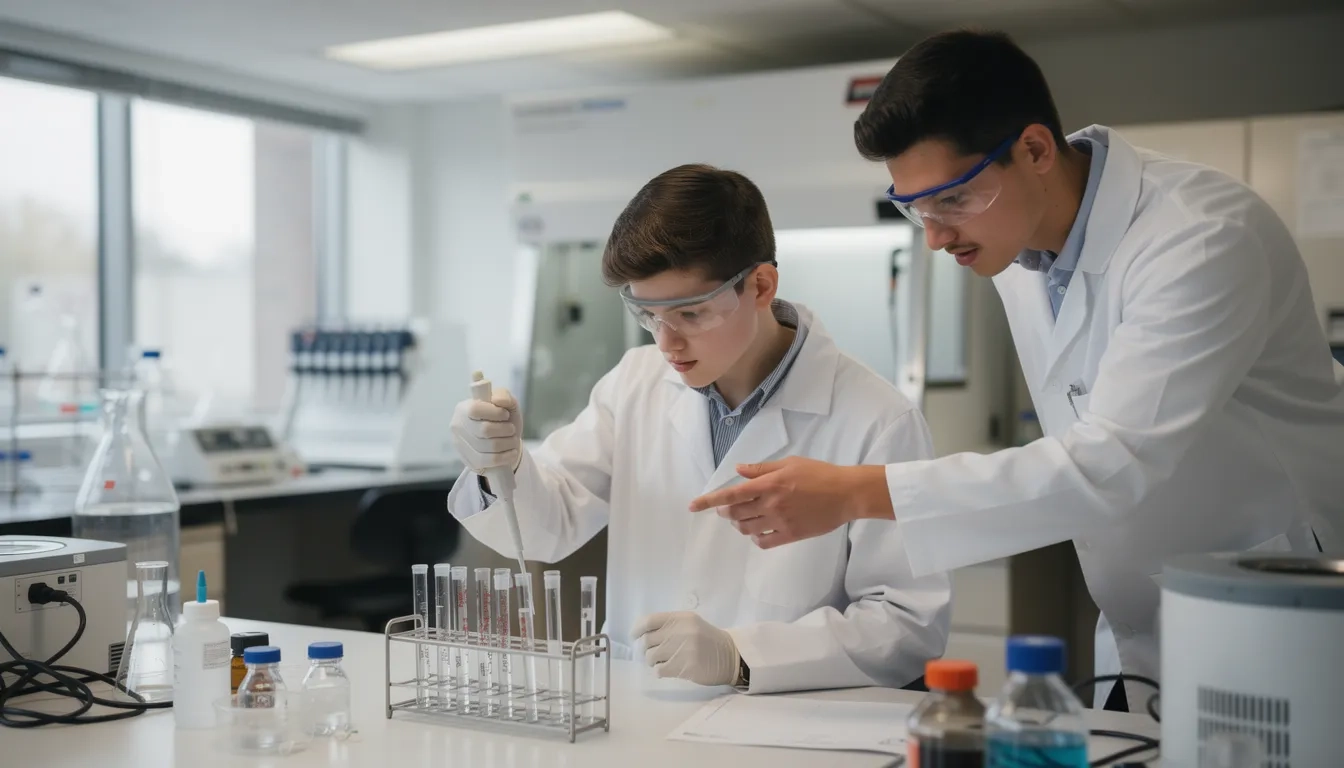
The Memorial Sloan Kettering Summer Student Program gets over 1,000 applications each year. They accept 20. That 2% acceptance rate is steeper than Harvard's — and the students who make it spend eight weeks doing real cancer biology research alongside working scientists. Not worksheets. Actual experiments with actual stakes.
High school research has become intensely competitive because college admissions offices have figured out something the students themselves often miss: research is one of the few extracurriculars that's genuinely hard to fake.
Why Research Hits Different Than Other Extracurriculars
Here's the uncomfortable reality: most high school "research" does nothing for a college application. Doing a science project for class credit doesn't count. Participating in a program and producing no tangible output doesn't count. What counts is verifiable contribution — a published paper, a science fair placement, a named acknowledgment in a lab's published work.
Only about 5% of high school students engage in original research, according to YRI Fellowship's program data. That rarity is the whole point. Admissions readers see thousands of students with club leadership roles and volunteer hours. They see very few with a peer-reviewed co-authorship.
College counselors often place extracurriculars in tiers. Research typically lands in Tier 2 — selective, impressive, and meaningful — but not because it's inherently less valuable than top-tier achievements like national science olympiad medals or Intel ISEF wins. It's because most high school research doesn't produce those kinds of verified, top-level outcomes. Get to a real output, and research climbs the tier ladder fast.
The Four Paths to Getting Research Experience
Not every path looks the same. Students find their way into research through four distinct routes, and the right one depends heavily on your location, budget, and how clearly defined your interests are.
Structured summer programs are the most common entry point. University- and institution-run programs place students in labs for 6-10 weeks. Some are free and fiercely competitive — RSI at MIT admits roughly 2.5% of applicants. Others charge tuition but offer more spots. The structure is the main advantage: you get a mentor, a defined project, and a deadline, which forces you to actually finish something.
Cold emailing professors is the scrappiest approach. And honestly, it works better than most students expect. You reach out to faculty at nearby universities, ask if they have room for a high school volunteer, and see who replies. Response rates sit around 5-15% per email. That means sending 20-30 emails to get 2-3 real conversations. The students who crack this route target assistant professors and postdocs over senior faculty whose inboxes are buried.
Online mentorship programs like Polygence and the Lumiere Research Scholar Program match students with PhD mentors for remote projects. They cost real money — Lumiere runs $2,800 to $8,900 depending on scope — but they're geographically flexible, which matters if you're nowhere near a research university. The tradeoff is that the research tends to stay theoretical. You're writing a paper, not running experiments.
Independent research through competitions like the Regeneron Science Talent Search is the hardest path and the highest ceiling. You design and run your own study, typically with a teacher sponsor and some external advisor. The top Regeneron STS prize is $250,000. Even reaching regional ISEF sends a clear signal that your work was externally evaluated.
Programs Worth Actually Looking At
The options range from fully funded prestige programs to paid online mentorships. Here's how the major ones compare:
| Program | Institution | Duration | Cost | Stipend/Perk |
|---|---|---|---|---|
| Research Science Institute (RSI) | MIT | 6 weeks | Free | Housing + meals |
| NIH High School Summer Internship | NIH, Bethesda | 8 weeks | Free | Stipend included |
| Jackson Laboratory Summer Program | JAX, Maine/CT | 10 weeks | Free | $7,500 |
| Simons Summer Research Program | Stony Brook | 7 weeks | Free* | None |
| Clark Scholars Program | Texas Tech | 7 weeks | Free | $750 stipend |
| Stanford SIMR | Stanford | 8 weeks | Free | None |
| Rockefeller SSRP | Rockefeller Univ. | 7 weeks | Free | None |
| NASA High School Internship | Multiple sites | Varies | Free | Paid |
| Lumiere Research Scholar | Online | 12 weeks | $2,800–$8,900 | None |
| Polygence | Online | ~10 sessions | Paid | None |
*Simons covers no housing, so factor in accommodation costs if you're not local to Stony Brook.
A few things stand out here. Jackson Laboratory's $7,500 fellowship — covering ten weeks in Bar Harbor, Maine working on genetics and genomics — is among the best-compensated programs available to a high schooler. The Clark Scholars Program at Texas Tech admits only 12 students per year, making it one of the more exclusive spots outside the RSI tier. Crucially, Clark accepts students from STEM and the humanities, which almost no other program in this tier does.
Deadlines cluster heavily in December through February for summer programs. If you're reading this in March, you've likely missed the most competitive free programs for the current summer. Build your target list in October.
How to Cold Email a Professor Without Getting Ignored
Cold emailing is, at its core, a numbers game. But the numbers improve a lot with the right technique.
Don't email the department's most prominent researcher. The Nobel laureate's inbox is a black hole. Target assistant professors, postdoctoral fellows, and research scientists instead. Their labs are often actively growing. They want motivated, reliable help. They actually read their email.
Before writing a single word, spend 45 minutes on Google Scholar looking at the lab's most recent publications — filter to the last two years. You want to know what they're working on now, not five years ago. Then reference something specific in your email: a finding, a method, a question their work raises that you find genuinely interesting.
The email itself should be short. Three or four paragraphs, total. Introduce yourself, name the specific paper or project that drew your interest, mention any relevant skills or coursework (AP Bio counts, basic Python counts), and make a low-friction ask: "Would you be open to a 15-minute call, or to me volunteering a few hours a week?" Add an easy out — something like "I completely understand if the lab isn't taking students right now" — so you come across as considerate, not pushy.
Send emails between 7:30 and 8:00 AM on weekdays. For summer research, the December-through-February window is when faculty are planning ahead. Email in April and you're too late for most labs.
What Actually Makes Research Matter
Here's where a lot of students get burned. They treat participation as the goal. It isn't.
"Vague research experience doesn't differentiate applications. Only publications, competition placements, or clear contributions provide real admissions value." — YRI Fellowship
The output is the point. "I worked in a chemistry lab" is meaningless without something to show for it. What actually differentiates: a paper you co-authored, a poster presentation at a university symposium, a science fair award at the regional or national level, or a named acknowledgment in a published study. These things are checkable. An admissions reader can look them up.
YRI Fellowship reports that 87% of their program participants achieve peer-reviewed publication. Most mentorship programs don't track this metric at all, which tells you something about how seriously they treat outcomes versus the experience itself.
Before committing to any program, mentor, or lab, ask one question: "What have past student participants produced?" If they can't point to specific papers, presentations, or awards, the research is more performative than substantive.
Real research also takes real time. Plan for 5-10 hours per week over at least 10 weeks — that's 50-100 hours minimum to get to anything publishable or presentable. Treating it like a casual weekend club activity produces nothing worth including in an application.
A Word on Cost and Access
The paid mentorship programs represent a genuine tension. Lumiere charging up to $8,900 for 12 weeks of remote research guidance is a lot of money. Students with that budget can essentially buy structured access to a PhD mentor and a polished paper outcome. Students at under-resourced schools, competing without that financial cushion, are at a real disadvantage on paper.
But the free options are real and they're good. RSI, NIH HS-SIP, Simons, Stanford SIMR, Jackson Lab — these charge nothing and provide meaningful research environments. They're just hard to get into. Programs like ASDRP (Aspiring Scholars Directed Research Program) in Fremont, California specifically target underrepresented students in STEM, operate at no cost, and have virtual participation options.
If money is the constraint, the cold email path is free and can absolutely lead to real outcomes. The barrier isn't your budget — it's your persistence and the specificity of your outreach.
Bottom Line
- Start in October of junior year, not spring. Most elite free programs close in December or January.
- Cold emailing works if you send 20-30 personalized emails and target junior faculty over senior professors.
- Participation without output is nearly worthless for admissions. Aim for something verifiable: a published paper, a science fair placement, or at minimum a documented poster presentation.
- The best free programs (RSI, NIH, Jackson Lab, Clark Scholars) are real and highly achievable with a strong application.
- Research matters most for STEM-focused students targeting top-30 schools. If your differentiator is elite athletics, exceptional arts, or entrepreneurship, you may not need it to stand out.
Frequently Asked Questions
What grade should I start looking for research opportunities?
Sophomore year is the right time to start exploring options, but most formal programs require applicants to be current juniors or rising seniors. Use 10th grade to read about research areas that interest you and identify labs or programs you want to pursue. Junior fall is when applications open for most summer programs.
Do I need coding or lab skills before applying?
Not for most programs. Many structured summer programs are designed for beginners with strong academic records and genuine curiosity. What matters more is your ability to articulate why a specific research topic interests you. That said, even a semester of Python or a year of AP Biology gives you a concrete talking point in both applications and cold emails.
Are online mentorship programs as valuable as in-person university lab placements?
Honestly, usually not, if your goal is hands-on science. Online mentorship programs produce written papers, which can be published in student or peer-reviewed journals — and that has real value. But a student who co-authored a paper in an actual lab under a working scientist is generally in a stronger position than one who wrote a literature review remotely. Both are better than doing nothing.
Is it a myth that research guarantees admission to top colleges?
Yes. Research is a differentiator, not a guaranteed pass. Plenty of RSI alumni don't get into MIT. Plenty of students with zero formal research get into MIT every year. What research does is give you something concrete to write about in essays and something verifiable in your application. One compelling data point among many — not a bypass code.
Can I do research outside of STEM fields?
Absolutely. The Clark Scholars Program at Texas Tech, for instance, accepts students in the humanities and social sciences. Independent research in history, economics, linguistics, or psychology can lead to presentations and publications just as meaningful as lab science outputs. The Regeneron competitions are STEM-specific, but academic journals and undergraduate research conferences exist in virtually every discipline.
What should I do if I get no responses to my cold emails?
Revisit your email before sending more. The most common problems are: too long, too generic (didn't mention the professor's actual work), or targeted the wrong people (emailing full professors instead of postdocs or assistant professors). Revise, personalize each email from scratch, and send another batch. A 5-15% response rate is normal. Thirty emails with 5% response rate gets you 1-2 conversations — enough to change your trajectory.
Sources
- 30 Research Opportunities + Internships for High Schoolers in 2026 | CollegeVine Blog
- Is Research Worth It for High School Students? An Honest Assessment | YRI Fellowship
- Cold Emailing Professors for Research: Template & Tips | Polygence
- 30 Game-Changing Research Programs for High Schoolers | Admissionado
- 9 Best Online Research Opportunities for High School Students | Pioneer Academics