SAT Tutoring vs Self-Study: Which One Actually Moves Your Score?
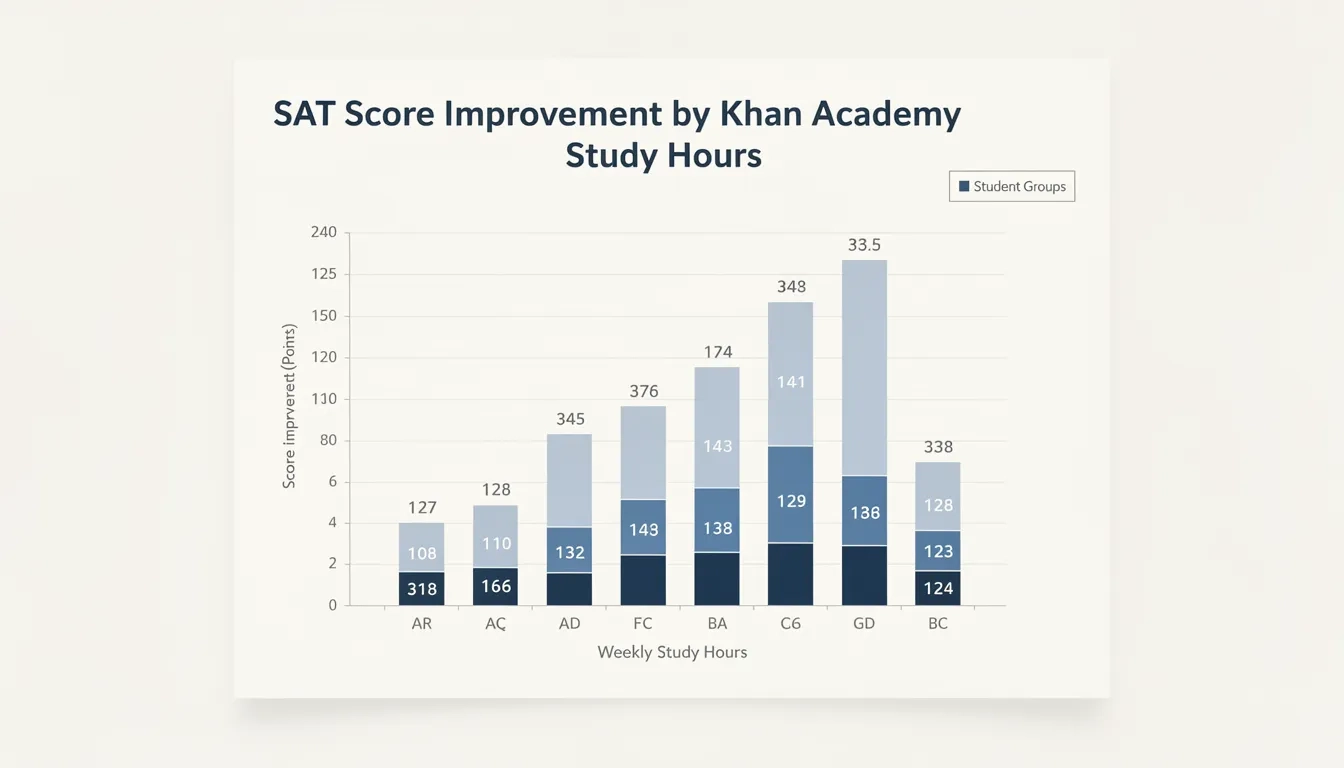
Most students approach SAT prep backwards. They ask "should I get a tutor?" before they've taken a single practice test. The honest answer is: nobody can tell you that yet — because the question that actually matters is whether you're analyzing your mistakes, not whether you have someone sitting next to you while you make them. College Council tracked 412 students through SAT prep and found that learners who built deliberate error review into their process improved by an average of 230 points. Students who just drilled questions without systematic reflection gained around 40. The feedback loop, not the format, does the work.
What the Score Data Actually Shows
The most widely cited benchmark in SAT prep comes from a 2017 study conducted jointly by College Board and Khan Academy. Students who completed 20+ hours of structured practice on Khan Academy's free platform improved an average of 115 points. No tutor. No course fee. Just deliberate, scheduled practice.
Private tutoring clears that mark — but by how much depends on tutor quality and student follow-through. According to College Council's data, 1:1 tutoring that focuses on individual error patterns (rather than generic content review) produces average improvements of 180 to 280 points. Group courses typically fall in between, yielding 120 to 180 points over a 10-to-16-week program.
These are averages, and averages hide real variation. A student who spends $4,000 on an elite tutor but skips practice sets between sessions will often underperform a self-studier who puts in 40 focused hours on Khan Academy. The label on the prep method matters less than the quality of the work inside it.
The Case for Self-Study
Self-study is genuinely underrated for students already scoring above 1200. Khan Academy's SAT prep tool, built in direct partnership with College Board, offers official practice tests, adaptive question sets, and video explanations calibrated to the actual exam. There is no more accurate prep resource at any price.
The 2017 study found 20 hours of Khan Academy practice correlated with 115 points of gain. For a student targeting movement from 1250 to 1350, that alone can close the gap.
Where self-study breaks down is accountability. Research cited by NYC Math Tutoring found that approximately 40% of students who attempt self-study abandon their plans within the first month. The material isn't the problem. The absence of external structure is. It's easy to reschedule a solo study session when nothing visible changes if you skip it.
The other common failure is the "reps without reflection" trap. Completing 800 practice questions without reviewing mistakes produces almost no score movement. Students who see real results from self-study build in at least 30 minutes of error analysis after every session — studying not just what they got wrong, but why the wrong answer seemed plausible and what mental shortcut led them there.
Self-study works best for:
- Students starting at 1250+ aiming for 1400 or slightly above
- Students with genuine time-management discipline and a 6+ month runway
- Budget-constrained students who will actually commit to the process
- Students whose errors fall in discrete, identifiable subject areas (e.g., comma rules, quadratic equations) rather than scattered problem-solving gaps
The Case for Tutoring
A skilled tutor doesn't just reteach content. They watch you solve problems in real time, catch recurring error patterns you can't see from the inside, and adjust instruction on the fly. That's genuinely hard to replicate alone.
Here's a concrete example: a student keeps missing questions about systems of equations. Self-study suggests reviewing systems of equations. But a good tutor watching that student work might notice they understand the algebra fine — they consistently misread what the question is asking for. That's a reading comprehension issue pretending to be a math problem. Different diagnosis, different fix, different 6 weeks of practice.
The ROI on tutoring is most compelling in specific situations:
- You've been self-studying for 6+ weeks, taking timed practice tests, and your score isn't moving. That plateau usually signals an undiagnosed error pattern — something you keep doing wrong that you can't spot because you're too close to it.
- You're within 80-100 points of a score threshold that opens something concrete: a merit scholarship cutoff, an honors program minimum, or a reach school's middle 50% band.
- You have test anxiety that depresses your official test scores significantly below what you score in practice. SAT specialists who work in this range often coach mental frameworks and pacing strategies, not just content.
What tutoring rarely fixes: foundational math gaps from middle school. If ratio relationships or basic algebra aren't solid, a tutor will burn most of their sessions doing what Khan Academy's free curriculum handles just as well. Spending $100/hour to cover 7th-grade math is not a good trade.
The Real Cost Breakdown
Here's the honest numbers, not the marketing version:
| Prep Method | Typical Cost | Average Score Gain |
|---|---|---|
| Self-study (Khan Academy + free tests) | $0 | +60–115 points |
| Official prep books | $30–$80 | +80–130 points |
| Online self-paced course | $100–$1,400 | +100–160 points |
| Live group class | $600–$1,900 | +120–180 points |
| Private tutoring (15–25 hours) | $1,500–$4,000 | +150–250 points |
| Elite specialist tutor | $6,000–$8,000+ | +200–300+ points |
Per-point cost is a useful way to reframe the math. Twenty hours of free Khan Academy practice producing 115 points costs essentially nothing per point. A private tutor at $2,500 who moves your score 200 points costs $12.50 per point. An elite tutor at $8,000 producing 200 points of improvement costs $40 per point.
Score improvements don't exist in isolation, though. A 200-point jump from 1300 to 1500 can be the difference between a partial scholarship and a full one at certain schools. Depending on the institution, that gap could be worth $50,000 or more over four years. Cost-per-point math looks different when you run it against that denominator.
Private tutoring rates also vary by tutor type, per data from Private Prep's 2026 cost report. College student tutors typically run $45-$75/hour. Independent professional tutors charge $75-$150/hour. Company-affiliated tutors from brand-name prep services run $100-$300+/hour. Geography matters too: New York City rates can hit $300+/hour for the same profile of tutor that might charge $90/hour in Indianapolis.
A Decision Framework
Start with a diagnostic before spending anything. Take one full-length official SAT practice test under timed, test-day conditions (the Bluebook app has four free official tests as of 2025). Your score on that test tells you more about the right prep path than any article can.
From there, here's how to read the data:
Score below 1050: Self-study first. Students at this level often have foundational gaps in reading comprehension and algebra that require volume practice and repetition, not a tutor's strategic coaching. Spend 6-8 weeks on Khan Academy, take two more tests, then reassess.
Score 1050-1300, goal of 1400+: Start with 4-6 weeks of structured self-study targeting your two weakest sub-areas. Take two timed practice tests. If you're not moving at least 30-50 points, bring in a tutor — and bring your annotated practice tests with you so sessions focus on your specific patterns, not a generic curriculum.
Score 1300+ aiming for 1500+: At this range, score movement is less about content gaps and more about strategy, pacing, and eliminating specific error types. A specialist who has documented results moving students from 1350 to 1500 is more valuable than a general tutor or a brand-name prep course. Ask prospective tutors directly what percentage of their students hit 1500+ and what their starting scores were.
The 6-week rule: Try genuine self-study for 6 weeks before hiring anyone. Not casual browsing through prep materials — real scheduled sessions, timed practice tests, and 30+ minutes of mistake analysis per session. If you've done that honestly and you're still spinning your wheels, a tutor makes sense. If you haven't done it yet, you don't have enough signal to know what you actually need.
The Hybrid Approach Most Students Should Use
Here's my actual recommendation: start with self-study, layer in targeted tutoring only where you're demonstrably stuck.
College Council's data from 412 students shows that a hybrid approach — self-study as the base, tutoring sessions focused on persistent error patterns — produced average improvements of around 230 points. That outperforms either method used in isolation.
The structure that tends to work well in practice:
- Take a diagnostic test and identify your two lowest-scoring sub-areas
- Spend 4-6 weeks on Khan Academy targeting those areas specifically
- Take two full timed practice tests and mark every wrong answer with a note on what went wrong
- Bring that annotated test to a tutor and ask them to focus on patterns — not a general content tour
- Continue self-study independently and use tutoring sessions to work through sticking points that aren't resolving
"The tutor teaches your mistakes, not the SAT." — College Council
That's the right mental model. A tutor who lectures through SAT content section by section is expensive and largely redundant — you can get that from a book or a YouTube channel. A tutor who watches you work, identifies the three errors you keep making, and builds your sessions around eliminating those is worth real money.
One thing worth naming directly: students from families in the top income quintile score roughly 400 points higher on the SAT than peers from the lowest quintile, a gap that College Board data has documented consistently. A big portion of that gap traces to unequal access to paid prep resources. Khan Academy's free platform was built specifically to address this, and the 2017 College Board study confirmed it works. If cost is a genuine constraint, 40+ disciplined hours on Khan Academy is a legitimate, research-backed path to meaningful improvement.
Bottom Line
- Take one full official practice test before spending anything. Your score tells you which path makes sense — low scorers need foundational repetition, mid-range scorers often benefit from targeted self-study, and students near 1400+ may be ready for specialist tutoring.
- Self-study works, but only with disciplined error analysis built into every session. Volume of practice without reflection produces minimal gains.
- Don't hire a tutor until you've done 6 weeks of honest self-study. That test gives you the data to make tutoring sessions far more efficient.
- The hybrid model (self-study base plus tutoring sessions focused on your specific error patterns) is the highest-ROI approach for most students chasing a 150+ point improvement.
- Budget constraints don't have to limit outcomes. Khan Academy is free, built with College Board data, and has the research to back it up.
Frequently Asked Questions
How many points can SAT tutoring realistically improve my score?
Most students working with a qualified private tutor over 15-25 hours of instruction see improvements of 150-250 points. The range is wide. Students who complete consistent practice between sessions and review mistakes carefully tend toward the upper end; students who show up without doing assigned work between sessions tend toward the lower end. Tutor quality and specialization matter significantly — a tutor with documented results at your target score range will outperform a generalist.
Is Khan Academy really good enough for SAT prep, or is it just a budget option?
It's genuinely good, not just a consolation prize. Khan Academy built its SAT prep curriculum directly with College Board, which means the practice questions are calibrated to the real exam in a way most paid courses can't match. The 2017 College Board study found 20+ hours of Khan Academy practice produced average gains of 115 points — competitive with live group courses costing $600-$1,900. For many students, especially those starting below 1300, it's the best first step regardless of budget.
Myth vs. reality: Does a more expensive tutor always produce better results?
No. This is probably the most common misunderstanding in SAT prep. Elite tutors charging $300-$400/hour have polished marketing and impressive credential lists, but tutor effectiveness is best measured by documented score results at your specific starting range. An independent specialist at $90/hour who has moved 30 students from 1350 to 1500 is more useful than a brand-name tutor at $250/hour whose experience is mostly with students starting below 1100. Ask directly: what's their average score gain, and at what starting scores?
How far in advance should I start SAT prep?
Four to six months is the realistic floor for most students aiming for moderate improvement. Students targeting 1500+ from a starting score below 1300 should consider 8-12 months, especially if adding tutoring to the mix. Starting early creates room for multiple practice tests, adjustment periods between study phases, and the option to retake the official exam without deadline pressure.
What should I do if my score isn't improving after weeks of studying?
A plateau after real effort is a diagnostic signal, not a failure. It usually points to one of three things: you're drilling without analyzing mistakes (the fix is adding structured error review), you have a specific foundational gap in one area that needs targeted attention, or test anxiety is compressing your score below your actual ability on test day. Each of those has a different fix. If 6 weeks of honest, structured practice hasn't moved your score, that's exactly the right moment to bring in a tutor — not at the start, but with that data in hand.
Can self-study alone get someone to a 1500+ score?
Yes, but it's uncommon without serious discipline. Students starting at 1300+ with strong study habits who commit to 40-60 hours of structured prep — full timed practice tests, rigorous mistake analysis, targeted sub-section work — can reach 1500+ through self-study alone. The limiting factor is almost always consistency and quality of review, not access to expert instruction. Students who get there tend to treat their wrong answers like a forensic investigator treats evidence: every error has a root cause, and finding it is the whole game.