How to Write a Winning Science Olympiad Trial Event
Most trial events written for Science Olympiad never make it past the first tournament. Not because the science is bad or the questions aren't clever. More often, it's because the author never understood what the process actually demands. Writing a trial event is closer to shipping software than writing a test: you release a first draft, real users break it in ways you didn't anticipate, and then you iterate.
Understanding the Development Pipeline
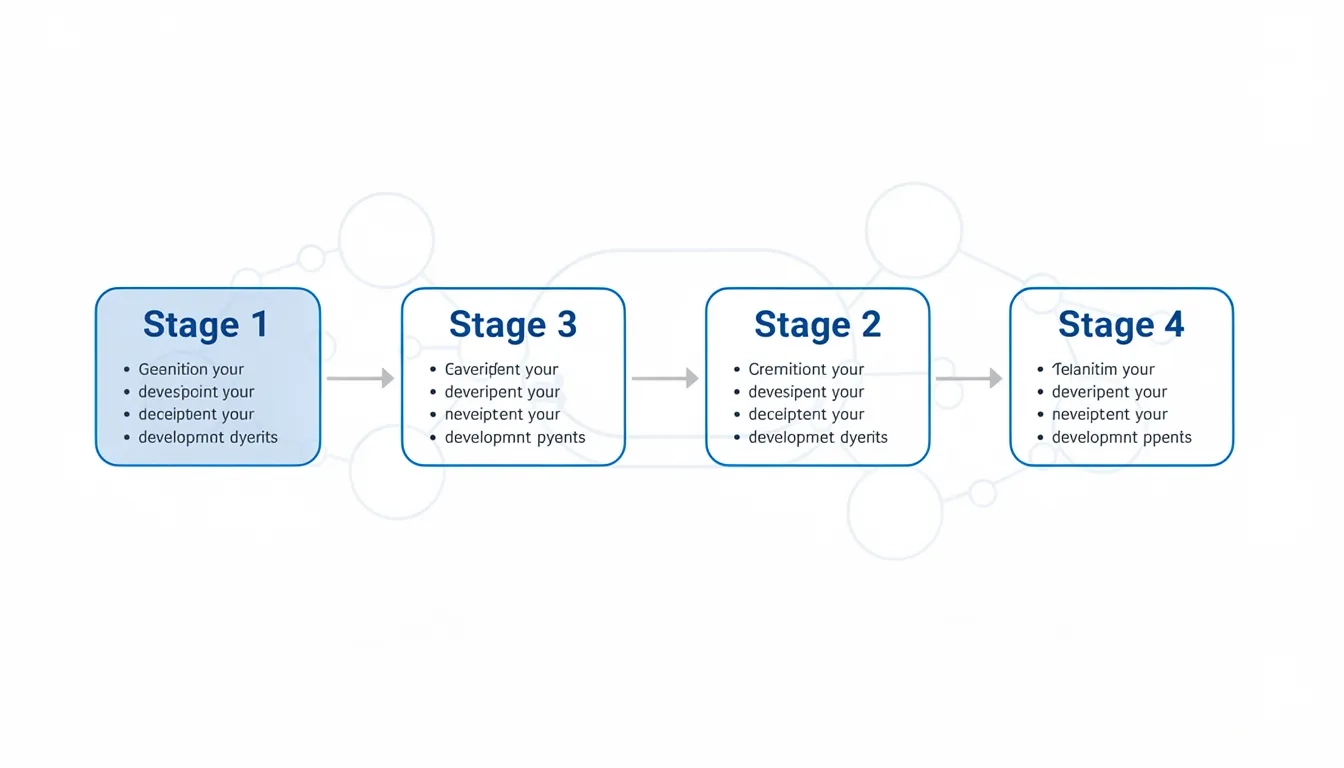
Science Olympiad uses a four-stage pathway to turn a rough concept into a national event. Most first-time authors don't realize this pipeline exists until they've already submitted something underprepared.
The stages run: Creative Concept → Promising Pilot → Featured Trial → Current Event. Each stage has documented requirements. A Promising Pilot must have run successfully in at least two states. A Featured Trial needs evidence of testing across five or more states before the National Office considers it for national rotation.
The 2026 season's Featured Trials (Botany, Code Craze, Ping Pong Parachute, and Protein Modeling C) each went through multiple years of community piloting to reach that stage. None of them appeared fully formed at a single invitational and immediately got adopted.
"This process is intentionally multi-step and multi-year so the events are of the highest caliber." — Science Olympiad National Office
Trial events at the national tournament don't count toward team points, and any team member can participate only once per trial event. That structure lets Science Olympiad gather wide feedback without affecting competitive standings.
The key mindset shift: you're not writing a finished product. You're writing draft one of something you'll refine over two or three competition seasons.
Choosing a Concept With Real Staying Power
Before drafting a single rule, check Science Olympiad's Event History Chart to confirm your idea isn't redundant with an existing or recently retired event. The community at Scioly.org (a separate forum from the official website, maintained independently by competitors and coaches) is a useful early gut-check. If experienced coaches are already saying "this is basically Fermi Questions with a biology coating," it's better to hear that before investing 40 hours in a rules document.
Strong event concepts typically fit one of three profiles: emerging science topics that the current 23-event rotation doesn't address, novel test formats that reveal student thinking in a genuinely different way, or hands-on builds with clearly measurable outcomes that hold up across varied supervision environments.
Weak concepts fail in two predictable ways. Too narrow: testing a sliver of content that even dedicated student teams can't reasonably prepare for in a season. Too broad: essentially a general science bowl with a theme stapled on. Both produce the same result at pilot tournaments — competitors who feel the event wasn't worth their preparation time.
Work through these four questions before committing to a concept:
- Can a motivated student team prepare effectively in 20-30 hours of dedicated study?
- Does this topic have enough depth to meaningfully separate top competitors from average ones?
- Does it cover ground that none of the existing 23 events already address?
- Can a supervisor with a general science background run this without specialized equipment or domain-specific training?
That fourth question gets skipped constantly. An event requiring rare lab hardware will hit a ceiling at regional tournaments, where resources vary dramatically across competing schools.
Writing Rules That Actually Hold Up
The rules document is a legal contract before it's a teaching tool. Experienced competitors read your rules looking for ambiguities. They will find every single one you leave — this is not a criticism of the community; it's the culture that makes events sharper over time.
Follow the official Rules Template exactly. It includes required sections: event description, parameters (materials allowed, team composition, time limits), procedure, and scoring. Before writing your own rules, read three or four current national events from the Division C Rules Manual. Every national event follows the same architecture. Model yours on rules that have already survived years of competition stress-testing.
Specific language choices matter more than most authors expect:
- Use "must" for hard requirements and "may" for options. Never use "should" — it's ambiguous in competition contexts.
- Define all materials and resources a team is permitted to bring before the event begins.
- Write explicit procedures for when things go wrong: equipment failure, supervisor errors, disputed measurements.
The best event writers build a "What if?" checklist before finalizing anything. What if two teams finish at the exact same time? What if a build component fails mid-event? What if a supervisor misapplies the procedure? Answering those scenarios in your rules prevents improvised decisions on tournament day — and prevents the post-tournament arguments that follow improvised decisions.
Designing Questions That Test Actual Thinking
Science Olympiad's philosophy here is direct: events should prioritize critical thinking over recall. The organization explicitly asks event writers to design questions that require students to observe, describe, evaluate, analyze, apply, predict, interpret, infer, hypothesize, and make judgments. Questions that test memorization alone are what the organization is actively moving away from.
A practical breakdown of question quality levels:
| Level | What It Measures | Example |
|---|---|---|
| Recall | Pure memorization | "Name the enzyme that catalyzes the first step of glycolysis." |
| Application | Using concepts in new situations | "Predict the effect of doubling substrate concentration on enzyme reaction rate." |
| Analysis | Interpreting data, identifying patterns | "Given this titration curve, identify the equivalence point and explain the buffering region." |
| Evaluation | Critiquing reasoning or methodology | "The researcher's conclusion doesn't follow from this data. Identify the specific flaw." |
Targeting roughly 20% recall questions, 50% application, and 30% analysis or evaluation generates meaningful score separation. A test that's all recall collapses into a memorization lottery. A test that's all analysis without content grounding starts to feel arbitrary. Neither extreme serves competitors or event writers.
For build events like Ping Pong Parachute, scoring criteria must be precise enough that two independent supervisors would reach the same score. If any part of your scoring requires subjective judgment, write explicit calibration protocols directly into the procedure section.
Running the Pilot: What to Actually Expect
Your first competitive pilot will surface ambiguities you were convinced weren't there. Students will find edge cases. Supervisors will hit procedural gaps. Questions that seemed like 20-second items will eat 90 seconds under real competition pressure. None of this is failure — it's the feedback loop the entire process is built around.
Collecting structured feedback after every pilot is non-negotiable. Science Olympiad provides official evaluation forms for both participants and supervisors. Use them. But talk to supervisors in person after the tournament too. The most actionable insights don't show up in written forms; they surface in hallway conversations while people are packing up.
Track these signals across your first three pilots:
- Score distributions (if the top score is 6x the median, difficulty calibration needs work)
- Time usage (if 80% of teams are using the full 30 minutes, cut content; if most finish in 18 minutes, add questions)
- Rules disputes (every dispute is an ambiguity in your language, not a misreading by the competitor)
- Repeat entries (are the same teams voluntarily signing up at the next invitational?)
Advancing to Promising Pilot status requires documented successful runs in at least two states, with formal feedback submitted to the National Office. Many writers stall at this stage — not because the event is weak, but because getting pilots beyond your home state requires relationships with other state directors. The Science Olympiad community is small and relationship-driven. A genuinely exciting event generates word-of-mouth faster than the submission paperwork does.
Mistakes That Kill Good Events
Many promising events die in development for the same preventable reasons.
Ambiguous scoring is the most common fatal flaw. If two supervisors reading your rules would score the same student work differently, that gap cannot be patched on tournament day. Read your scoring section aloud to someone who has never seen your event. Every question they ask is a problem to fix before publication. Science Olympiad requires supervisors to spend at least 20 minutes in score counseling after every event — if your rules leave room for interpretation during that process, you'll lose credibility fast.
Insufficient piloting. One invitational run is not enough. Run the event at least three times, with different supervisor teams each time, before seeking state-level adoption. Each new group of supervisors surfaces issues the original team had normalized into invisibility.
Over-scoped content. Events that try to cover an entire scientific field produce score variance that feels random rather than meritocratic. Tight content scope makes better questions and produces cleaner competition results.
Timing miscalibration. Science Olympiad events run in approximately 30 minutes. First-time writers consistently build events that take 47 minutes when tested with actual students under competition conditions. Time your event with real students before finalizing anything.
The devil is in the details of the procedure section. Rules governing edge cases — late arrivals, equipment failures, measurement disputes — seem trivial during planning and become the only thing anyone wants to discuss when something unexpected happens at 10:47am on tournament day. Give the procedure at least as much attention as the question writing itself.
Bottom Line
- Understand the pipeline before you write a word. The Creative Concept → Promising Pilot → Featured Trial → Current Event pathway is multi-year by design. Set your expectations accordingly.
- Use the official Rules Template from day one. Model your structure on current national events that have already survived years of competition. Don't reinvent the format.
- Aim for 20% recall, 50% application, 30% analysis or evaluation. That ratio produces meaningful score separation. All-recall or all-analysis both fail in practice.
- Pilot at least three times with different supervisor teams. Each new group surfaces issues the original team has stopped noticing.
- The single most important thing: get your procedure airtight. A brilliant concept with ambiguous procedures will generate arguments on tournament day. A modest concept with clear, comprehensive rules will earn respect — and get invited back.
Frequently Asked Questions
Can anyone submit a Science Olympiad trial event, or is it only for educators?
Anyone can propose a trial event — coaches, teachers, college students, or community members with a strong science background. The National Office asks that you use the official Rules Template, include your contact information, and identify a state director willing to pilot the event at a tournament. There's no credential requirement, but you'll need to support the event through workshop presentations, resource development, and evaluation submissions across multiple seasons.
How long does it typically take for a trial event to become a national event?
The process is explicitly multi-year by design. Moving from a first local pilot to national inclusion typically requires four to seven years, depending on how quickly the event gains traction across states. Promising Pilot designation requires successful runs in at least two states; Featured Trial requires five or more. Authors who move fastest tend to be those who actively build relationships with state directors early, rather than waiting for attention to come to them.
Isn't it enough to run a trial event once at an invitational and get positive feedback?
This is the most common misconception. A single well-received pilot gets you feedback — it doesn't earn a designation. The formal pathway requires documented evaluation submissions to the National Office, interstate coordination, and iterative rules revisions across multiple competitive seasons. Many excellent concepts stall at the local level because their authors didn't realize how structured the advancement process is. Enthusiasm from one tournament is a start, not a finish line.
How do I know if my scoring system is actually fair?
Pilot it before the first tournament with a small test group, then check your score distributions after the real event. A well-calibrated trial event should show the median score landing around 60-70% of the maximum possible, with meaningful spread above and below. If nearly everyone clusters near the top or bottom, adjust difficulty before the next run. Tiebreakers should be written explicitly into your event rules — don't assume the standard tournament tiebreaker hierarchy (number of first-place finishes, then second-place, etc.) will cover in-event ties.
What's the biggest difference between writing a build event versus a study event?
Build events introduce complexity that study events don't: measurement consistency, equipment failure protocols, and impound procedures. The primary challenge is writing scoring criteria precise enough that two supervisors operating independently arrive at the same score. If your build event requires any subjective judgment — "assess the quality of the design" — it will fall apart in practice. For build events, precision in measurement specifications is your most important job. For study events, the primary challenge is calibrating question difficulty and producing an unambiguous answer key.
Should I model my trial event on an existing Science Olympiad event format?
Yes, for structure. Borrowing the formatting architecture from current national events (especially ones that have been in rotation for several years) reduces friction during the review process. The National Office and state directors are familiar with these conventions; a proposal that follows established formatting is simply easier to evaluate. Where you should be original is in the scientific content and question design — not in how you present parameters, timing, and scoring logic.