What Can You Actually Do With a Kinesiology Degree?
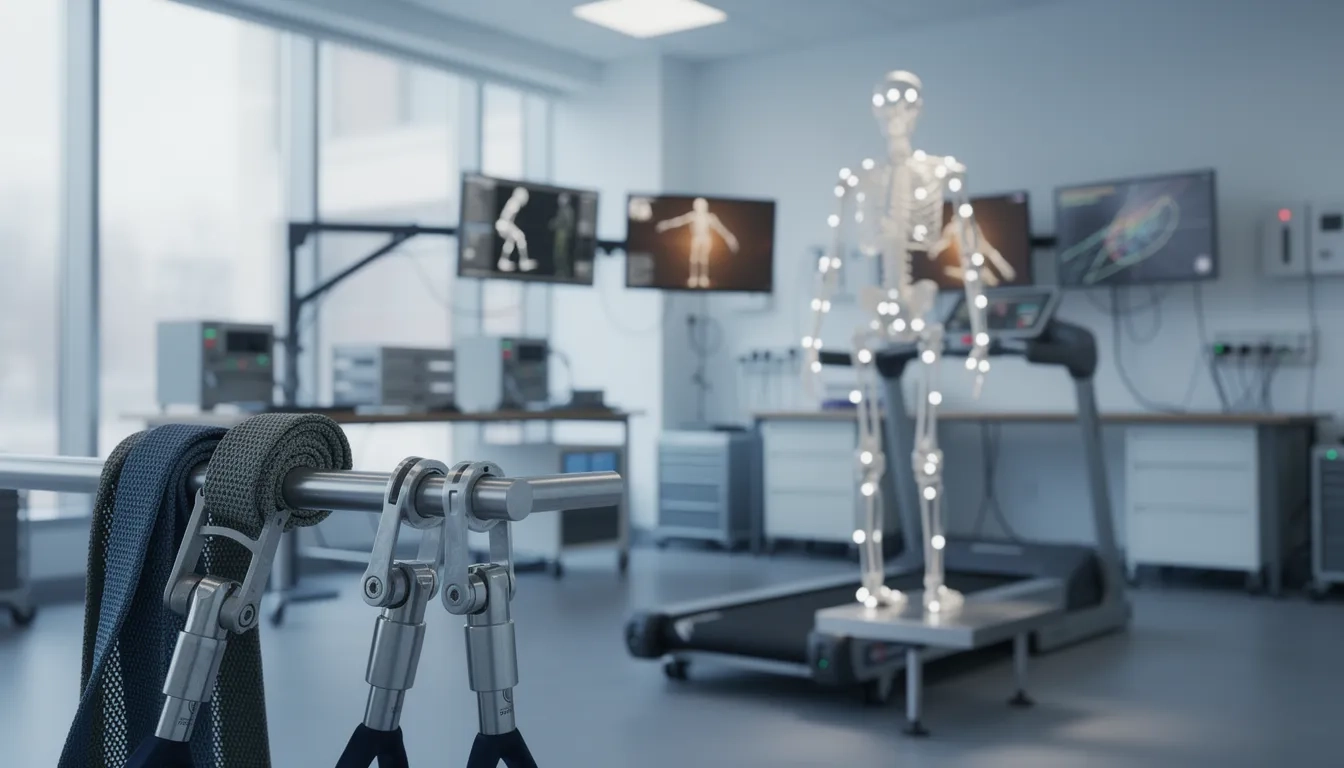
A kinesiology degree sounds like it locks you into a gym floor. It doesn't. Walk through any hospital's rehab wing, a Division I athletics building, or a corporate HR department running a wellness program, and you'll find kinesiology grads in all three — often earning wildly different salaries for what started as the same 120 credit hours.
That range is the part nobody explains well. So let's fix that.
The Real Spread of Jobs a Kinesiology Degree Opens
Kinesiology is the science of human movement: biomechanics, exercise physiology, motor control, anatomy. That foundation feeds two very different tracks — one clinical, requiring more school, and one applied, where you can start working the day you graduate.
Here's how the major paths stack up on pay and how much additional schooling they demand, based on U.S. Bureau of Labor Statistics data for May 2024:
| Career path | Median annual wage | Extra schooling needed | Projected growth (2024-34) |
|---|---|---|---|
| Physical therapist | $100,510 | Doctor of Physical Therapy (3 yrs) | 15% |
| Occupational therapist | $98,340 | Master's or doctorate | 14% |
| Athletic trainer | $60,250 | Master's (as of 2022 CAATE rule) | 11% |
| Exercise physiologist | $58,160 | None required, certification helps | 9% |
| Fitness trainer/instructor | $40,510 | None, certification expected | 12% |
Notice the gap between the top and bottom rows: roughly $60,000 a year, and it's almost entirely explained by graduate school, not by which undergrad major you picked. The bachelor's degree gets you in the door. What you do after it decides the paycheck.
Read the growth column carefully too — it's easy to assume the highest-paying rows are also the safest bets, but growth rate and total job volume aren't the same thing. Physical therapy's 15% growth looks dramatic next to exercise physiology's 9%, yet PT starts from a much larger base of existing jobs, and the exercise physiology field is small enough that even modest growth translates into real competition for the roughly 1,700 annual openings BLS projects. A fast-growing niche field can still be harder to break into than a slower-growing, larger one.
The Clinical Track: PT, OT, and Athletic Training
This is where kinesiology majors go if they want to treat patients directly, and it's the most structured of the paths.
Physical therapy requires a Doctor of Physical Therapy now, full stop. That wasn't always true. Twenty years ago a master's degree got you licensed; the field moved the goalposts, and today every accredited program requires the DPT. Kinesiology is one of the most common feeder majors because its coursework — biomechanics, exercise physiology, anatomy — maps directly onto DPT prerequisites.
Occupational therapy works differently: it's about helping people relearn daily living and work skills after injury, illness, or disability, not just restoring range of motion. It also now requires a master's or doctorate, and OT roles are projected to grow 14% through 2034, per BLS.
Athletic training used to be a bachelor's-level career. As of 2022, the Commission on Accreditation of Athletic Training Education requires a master's degree for new entrants. If you're set on this path, plan your kinesiology bachelor's as a bridge into an accredited AT master's program, not a terminal credential.
The single biggest planning mistake kinesiology students make is assuming the bachelor's degree alone opens clinical doors. For PT, OT, and athletic training, it's a prerequisite — not a destination.
A few things worth knowing before you commit to this track:
- Cohort sizes are small and competitive. DPT programs routinely reject 70-80% of applicants at popular schools.
- Clinical hours matter as much as GPA. Programs want to see 100+ hours of shadowing or volunteer work in a PT, OT, or AT setting.
- Licensure exams follow graduation — the NPTE for PT, NBCOT for OT — so the degree alone doesn't make you employable in these roles.
- The debt math is real. A three-year DPT program frequently costs $90,000-$150,000 in tuition alone; weigh that against the $100,510 median salary before assuming the doctorate pays for itself quickly.
- Accelerated 3+3 tracks exist at some universities, letting strong kinesiology students enter a DPT program after their junior year instead of finishing a full bachelor's first — worth asking about if you're committed to PT early.
The Fitness and Performance Track
If more school isn't in your plan, kinesiology still opens real, well-paying work — you just move sooner and lean harder on certification.
Exercise physiologists design programs for people managing chronic disease: cardiac patients, diabetics, cancer survivors in recovery. Most work in hospitals or are self-employed, and BLS projects about 1,700 openings a year nationally through 2034 — modest in absolute terms, but the median wage ($58,160) beats fitness training by nearly $18,000.
Strength and conditioning coaching is the glamour path, and it's genuinely competitive. Entry-level college assistant roles often start in the $35,000-$45,000 range, but head strength coaches at Division I programs can clear $70,000 to $120,000, according to career-outcomes data compiled by MajorMatch. The credential that actually gets you hired here is the National Strength and Conditioning Association's CSCS — most D-I athletic departments won't interview candidates without it.
Personal training and group fitness are the lowest floor and the fastest entry — you can be certified and working within weeks. BLS puts the median at $40,510, with 12% projected growth through 2034, driven mostly by aging clients and corporate gym partnerships (think Life Time or Equinox-style corporate accounts, not just neighborhood gyms).
Which of these actually pays enough to live on?
Depends entirely on the city and the credential stack. A CSCS-certified strength coach in a metro market with a corporate wellness client roster on the side can out-earn an entry-level exercise physiologist. Certifications, not just job titles, move the salary needle in this track.
The tradeoff people underweight is income stability, not just the median number. Personal training and strength coaching often run on 1099 or seasonal contracts — a college strength coach's income can shrink in the off-season, and a self-employed trainer's calendar empties out every January-through-March lull once New Year's resolution clients drop off. Exercise physiology roles, by contrast, are more often salaried hospital or clinic positions with steadier pay, which is part of why the median wage sits higher despite lower earning ceilings than elite coaching gigs.
The Non-Obvious Paths People Skip
This is where a kinesiology degree quietly outperforms its reputation. The movement-science background transfers into rooms that have nothing to do with a gym.
- Corporate wellness — designing health programs, biometric screenings, and incentive structures for employers trying to cut insurance costs. Wellness coordinator roles often pay $50,000-$70,000 and skip the certification maze entirely.
- Sports business and management — ticket operations, athlete development, facilities management. Your kinesiology coursework signals domain credibility even in a business-adjacent role.
- Medical and PA school — kinesiology's heavy science load (anatomy, physiology, biomechanics) satisfies most pre-med and physician assistant prerequisites, making it a legitimate pre-health major, not just a pre-PT one.
- Ergonomics and occupational health consulting — companies pay well for someone who can redesign a warehouse workstation to cut repetitive-strain injury claims.
- Research and academia — a master's or PhD opens biomechanics lab work, often funded through university or NIH grants.
- Government and military human-performance roles — the Department of Defense, VA hospitals, and federal prisons all hire kinesiology-trained exercise specialists and human performance program managers, often on the GS pay scale, with GS-9 to GS-11 roles ($50,000-$75,000-ish depending on locality) representing a stable, benefits-heavy option most students never even consider searching for.
I'd push back a little on the conventional advice here, which treats kinesiology as a "pick your clinical specialty now" major. It isn't. The degree is closer to a pre-professional science major with an unusually wide fan-out — more like biology than like a trade certificate.
What You Need Beyond the Degree
The credential, not the diploma, is usually what gets you hired in the applied track. Employers in fitness and performance roles screen resumes for specific certifications before they screen for GPA.
Here's the rough decision framework I'd use if I were choosing:
- Want maximum earning potential and don't mind more school? Target PT or OT — plan your kinesiology electives around DPT/OT prerequisites starting sophomore year.
- Want to work immediately and build toward performance coaching? Get your CSCS or ACSM certification before graduation, not after — most programs let you sit for the exam in your final semester.
- Want flexibility across industries? Add a business or public health minor; it's what separates a wellness coordinator resume from a personal trainer resume.
- Unsure yet? Take an internship in a clinical setting and a corporate/performance setting before senior year. The two environments feel completely different day to day, and that's information a syllabus can't give you.
Common Mistakes Kinesiology Students Make
Most of the regret I hear from kinesiology grads traces back to a handful of avoidable planning gaps, not a bad major choice.
Mistake one: treating the degree as a terminal credential when the target career needs a master's or doctorate. This hits PT, OT, and athletic training hopefuls hardest, since all three raised their entry requirements over the last two decades.
Mistake two: skipping certifications because "I already have a degree." Employers in fitness, performance, and wellness roles use certifications like CSCS, ACSM-EP, or NASM as a screening filter — a kinesiology degree without one often gets passed over for a less-educated candidate who has the credential.
Mistake three: picking exercise science over kinesiology (or vice versa) based on the name alone. The curricula overlap heavily at most schools; what matters more is checking your target program's prerequisite list line by line before you enroll.
Bottom Line
- Map your target career backward from its licensing requirement, not forward from your major — PT, OT, and athletic training all now require graduate school.
- Get certified before you graduate if you're heading into fitness, performance, or strength coaching; CSCS and ACSM credentials do real hiring work that a bachelor's alone doesn't.
- Don't discount the non-clinical paths — corporate wellness, sports business, and ergonomics consulting pay reasonably well and skip years of additional schooling.
- Shadow before you commit to a doctorate-level track. Clinical and performance settings feel nothing alike day to day, and 100+ hours of exposure will tell you more than any course catalog.
The single biggest lever on your future salary isn't which movement-science major you picked. It's whether you plan the post-bachelor's step — grad school, certification, or industry pivot — before senior year rather than after.
Frequently Asked Questions
Is a kinesiology degree worth it in 2026?
Yes, if you treat it as a stepping stone rather than an endpoint. Entry-level roles requiring only the bachelor's average around $54,000-$55,000, but pairing the degree with a certification or graduate program pushes median pay well past $58,000, and into six figures for PT and OT.
Can you become a physical therapist with just a kinesiology degree?
No. A kinesiology bachelor's satisfies most DPT prerequisites, but you need a Doctor of Physical Therapy — typically three additional years — plus passing the NPTE licensure exam before you can practice.
What's the highest-paying job with a kinesiology degree?
Among roles that don't require a doctorate, exercise physiology and strength and conditioning coaching at the college level pay best, with D-I head strength coaches reportedly earning $70,000-$120,000. Roles requiring further schooling, like physical therapy ($100,510 median) and occupational therapy ($98,340 median), pay considerably more.
Is kinesiology the same as exercise science?
They overlap heavily but aren't identical. Kinesiology tends to go deeper into biomechanics and motor control theory, while exercise science leans more toward applied training and assessment skills — check your target grad program's prerequisites before assuming either major covers you.
Do I need a certification if I already have a kinesiology degree?
For most applied fitness and performance roles, yes. Employers routinely screen for credentials like CSCS, NASM, or ACSM-EP alongside the degree, since these certifications signal hands-on competency the coursework alone doesn't verify.
How much does a Doctor of Physical Therapy program actually cost?
Most three-year DPT programs run $90,000-$150,000 in total tuition, before living expenses. That's a meaningful debt load against a $100,510 median starting salary, so it's worth comparing in-state public program costs against private program sticker prices before committing.
What jobs can I get with just a bachelor's in kinesiology, no grad school?
Realistic options include exercise physiologist, personal trainer, strength and conditioning assistant, corporate wellness coordinator, and rehabilitation aide. Clinical roles like PT, OT, and (as of 2022) athletic training all now require graduate-level credentials beyond the bachelor's.
Sources
- Exercise Physiologists - Occupational Outlook Handbook, U.S. BLS
- Athletic Trainers - Occupational Outlook Handbook, U.S. BLS
- Occupational Therapists - Occupational Outlook Handbook, U.S. BLS
- Physical Therapists - Occupational Outlook Handbook, U.S. BLS
- 2026 Best Career Paths After a Kinesiology Bachelor's Degree
- What Can You Do With a Kinesiology Degree? (2026)