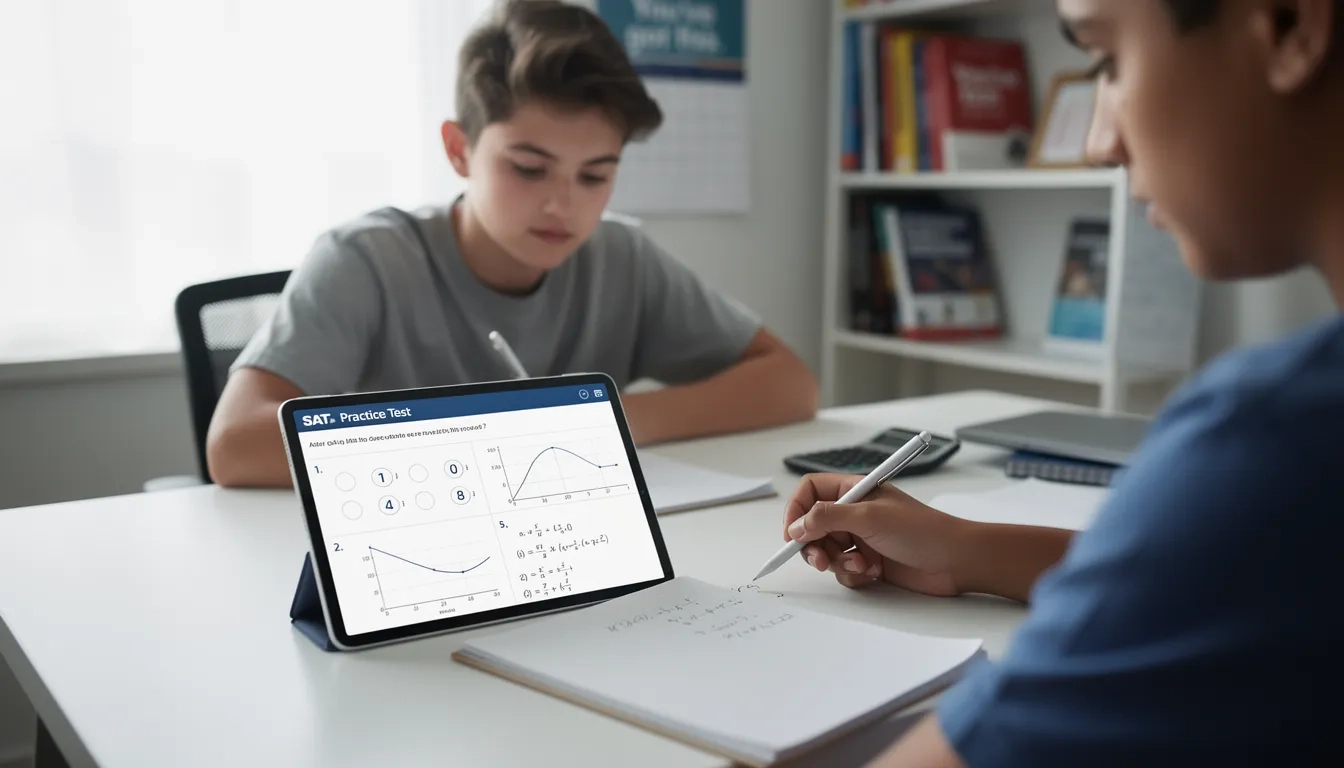
How Memory Palaces Work for Test Prep: A Science-Backed Guide
Four months after a six-week training program ended, memory athletes and regular people who'd learned one specific technique could still recall 50 words from a list. The untrained control group? 27. That's not a minor edge. That's the difference between passing and failing, and it came from a trick the ancient Greeks were already using before the Colosseum was built.
The technique is the method of loci, better known as the memory palace. It sounds like a gimmick you'd see in a Sherlock Holmes episode. It isn't. Neuroscientists have spent the last decade putting it under fMRI machines, and the results explain why some students memorize forty biochemical pathways in a weekend while others reread the same paragraph five times and still blank on exam day.
What a Memory Palace Actually Is
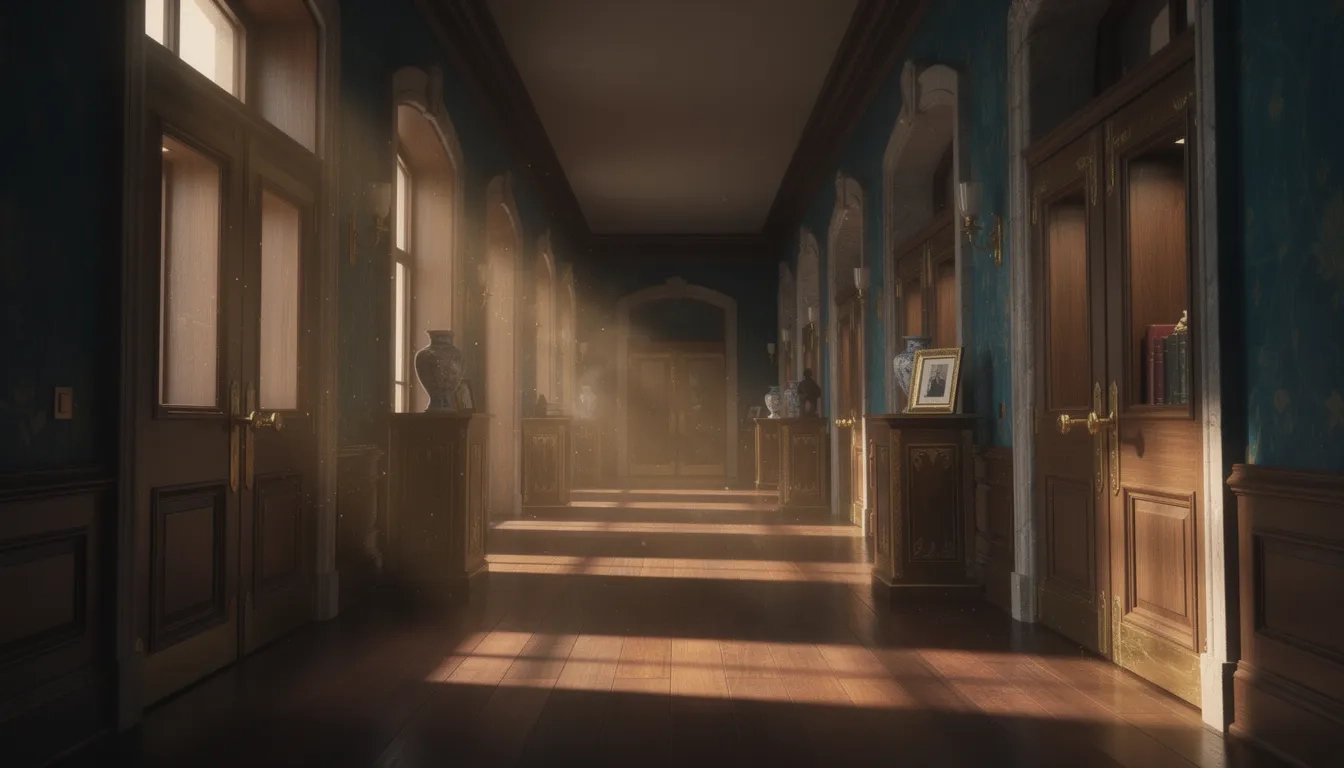
Strip away the mysticism and a memory palace is just this: you take a place you already know cold, like your childhood home or your commute, and you mentally "place" pieces of information at specific spots along a route through it. To recall the information, you walk the route in your head and pick each item back up where you left it.
Your brain didn't evolve to remember lists. It evolved to remember terrain, danger, and the layout of places that kept you fed or safe. Spatial memory is ancient, robust, and almost effortless compared to rote recall. The memory palace hijacks that circuitry and puts abstract facts inside it.
Simonides of Ceos gets credit for inventing the technique in the fifth century BCE, according to Roman rhetoric texts, after he reportedly identified funeral guests crushed under rubble by remembering where each had been sitting at a banquet table. Grim origin story. Remarkably durable technique.
A student prepping for the MCAT might place the steps of glycolysis along the hallway of their apartment: glucose gets "trapped" at the front door, split in half at the hallway closet, and so on to the kitchen where pyruvate walks out the back door into the mitochondria. Weird image. Sticky memory.
The Neuroscience: Why This Beats Rereading
Here's the part that surprised even the researchers. A widely cited Neuron study led by Nijmegen neuroscientist Martin Dresler put 17 of the world's top memory athletes and 50 untrained volunteers through brain scans, then gave the volunteers six weeks of method-of-loci training against two control groups.
The trained group's recall roughly doubled. But the brain imaging showed something counterintuitive: activity in the regions tied to spatial processing actually decreased after training, while connectivity between the hippocampus and cortex went up during rest.
Researchers describe this as "neural efficiency" — the trained brain does more with less firing, not more with more. Superior memory performance came from a quieter, better-organized network, not a louder one.
A 2025 preprint following up on this work, posted on bioRxiv and now under review at eLife, dug further and found method-of-loci training creates unique prefrontal representations tied to a person's specific palace, which is why two people trained on the same word list encode it in measurably different ways depending on the route they imagined.
There's a catch, though, and it matters for anyone gearing up for finals. A 2025 systematic review and meta-analysis in the British Journal of Psychology found a large effect size for immediate recall versus plain rehearsal, but flagged that the underlying study quality is low to very low, and that the benefit is task-specific rather than a general cognitive upgrade. In plain terms: it's excellent for lists, sequences, and vocabulary. It does not automatically make you better at solving novel physics problems or writing a persuasive essay under time pressure.
Building Your First Memory Palace for an Exam
Skip the elaborate palace hunting. Use somewhere you can already navigate on autopilot.
- Pick a real, familiar route. Your apartment, your parents' house, your walk from the parking lot to your desk. Fictional palaces work for memory competitors with years of practice; beginners do better with real geography.
- Fix 8 to 12 distinct stops along a path that only moves one direction (front door → hallway → kitchen → living room, not back and forth).
- Attach one vivid, slightly absurd image per stop. Boring images fade. A pancreas wearing a tiny insulin-pump backpack sticks; "the pancreas regulates blood sugar" written in a notebook does not.
- Walk the route without notes, out loud if you can, within an hour of building it. This first retrieval is what locks the encoding in.
- Re-walk it at increasing intervals — same day, next day, three days later, a week later — rather than once and done.
- Build a new palace per topic block, not one mega-palace for an entire semester. Cramming forty unrelated concepts into one hallway creates interference between stops.
For anything with an inherent sequence (the cranial nerves, the order of Reconstruction amendments, a chemistry reaction mechanism), the palace format is close to ideal because sequence is exactly what spatial routes encode natively.
Where It Wins, and Where It Doesn't
Not every subject bends the same way to this technique, and pretending otherwise is how people waste a study weekend. Here's the honest breakdown.
| Method | Best for | Setup cost | Weak spot |
|---|---|---|---|
| Memory palace | Ordered lists, vocabulary, named structures, sequences | High upfront (30-60 min per topic) | Poor for open-ended reasoning, essays, math derivations |
| Spaced repetition (Anki) | Discrete facts, definitions, foreign vocab | Low per card, ongoing | Doesn't teach relationships between facts |
| Rereading / highlighting | Nothing, reliably | Low | Creates false fluency; weakest evidence base of the three |
| Practice testing | Application, exam-format recall, weak-spot detection | Medium | Requires good practice materials to exist |
My honest take: a memory palace used alone is a party trick. Paired with spaced retrieval and real practice questions, it's one of the strongest combinations available for boards-style exams, and the medical education literature backs this up directly. A study published in the Journal of Pharmacology and Experimental Therapeutics on an approach called "Evolving Palaces" found pharmacology students who kept updating a personalized palace throughout the term outperformed peers using static study methods, reporting both better retention and more confidence walking into the exam.
Common Mistakes That Sabotage a Palace
Most people who try this once and give up aren't failing because the technique doesn't work. They're failing because of predictable, fixable errors.
- Chasing photorealistic images. Vividness helps, but polish doesn't. A crude, weird mental sketch that took three seconds to imagine beats a beautifully detailed scene that took three minutes.
- Reusing the same palace for conflicting material. If yesterday's biology facts and today's history dates share a hallway, they'll blur together. New topic, new building (or at least a new wing).
- Skipping the first retrieval walk. Building the palace and closing your eyes for the day is the single most common way people lose the whole session's work.
- Treating it as a substitute for understanding. A palace can help you recall that the citric acid cycle has eight steps in a specific order. It won't teach you why that order matters biochemically. Understand first, then encode.
- Deleting old palaces. Ghost images from a retired palace rarely interfere with a new one built somewhere else, so there's no need to "clear" your mental real estate between exams.
A Study Plan That Actually Uses This
For a board-style or licensing exam six weeks out, a workable rhythm looks like this: build 2-3 new palaces per week covering that week's densest content, review each palace the same day it's built and again 48 hours later, then fold the content into a spaced-repetition deck for the remaining five weeks so it surfaces on an algorithm's schedule instead of your memory.
Run timed practice questions weekly against material from palaces built two or more weeks earlier. That's the real test of whether the palace held up, not whether you can walk through it the day you made it. If a stop keeps failing recall, the image was too generic. Rebuild that one stop, not the whole palace.
Bottom Line
- Use a memory palace for ordered, discrete, list-like content (anatomy, drug classes, historical sequences, vocabulary), not for essay reasoning or math problem-solving.
- Build small, topic-specific palaces of 8-12 stops rather than one giant palace for the whole course.
- Walk the route within an hour of building it, then again at 24 hours and a week — the first retrieval is what locks it in, per Dresler's six-week training data.
- Pair palaces with spaced repetition and timed practice questions. Used alone, a palace fades under exam pressure; combined with retrieval practice, it's genuinely strong.
- Don't chase artistic imagery. Chase weird, fast, and specific.
Frequently Asked Questions
Does a memory palace actually work, or is it just a study trend?
It works, with real brain-imaging evidence behind it. A widely cited Neuron study found trained non-experts nearly doubled their recall after six weeks and retained the gains four months later, and a 2025 meta-analysis in the British Journal of Psychology confirmed a large effect for recall versus simple rehearsal. The caveat is that it's task-specific, not a general intelligence boost.
Can I use a memory palace for math or essay-based exams?
Not directly, and this is the most common misconception. Palaces encode sequence and discrete items extremely well, but they don't teach reasoning, derivation, or argument structure. Use them for the vocabulary and sequential steps within a math or writing course, then rely on practice problems and drafting for the reasoning itself.
How many items can one memory palace hold?
Most practitioners cap a single palace at 8 to 12 stops for reliability, though trained memory athletes stretch far beyond that using nested palaces. For test prep, several small palaces per topic beat one sprawling one, since interference between unrelated facts sharing a route is the main failure mode.
Do I need a real physical location, or can I imagine one?
Start with a real, memorized place. Fictional or invented locations work for advanced practitioners with years of repetition, but beginners get much more reliable encoding from routes their brain already knows without effort, like a childhood home or daily commute.
How long does it take to see results?
Individual palaces can be built and walked in under an hour, and the six-week training study showing roughly doubled recall used just 30 minutes of daily practice. You don't need months to get a usable skill, just consistent short sessions rather than one long cramming attempt.
Is a memory palace better than flashcards?
They solve different problems. Flashcards and spaced repetition apps like Anki are better for discrete, unrelated facts reviewed over weeks; memory palaces are better for ordered or structured material. The strongest students tend to use a palace to first encode a sequence, then feed the same content into spaced repetition for long-term maintenance.
Sources
- Ancient "Memory Journey" Technique Enhances Long-Term Memories
- Neuroscience Study Shows Memory Can Improve with Training
- The method of loci in the context of psychological research: A systematic review and meta-analysis
- Pharmacology Retention and Evolving Memory Palaces: How the Method of Loci can be Modified for Medical Students' Pharmacology Learning
- Study Hacks - Memory Techniques and Memory Palaces for Students
- Method of loci training yields unique prefrontal representations that support effective memory encoding